Detailed Explanation of Kudzu Planting Techniques and Management Methods
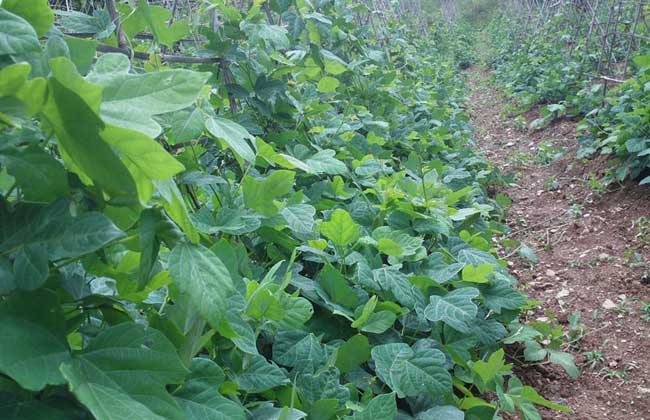
Kudzu, also known as fen ge, ge ma teng, etc., is a plant of the genus Pueraria in the legume family. It is rich in starch and isoflavones, and also contains more than ten kinds of trace elements essential to the human body, such as calcium, selenium, iron, copper, phosphorus, and potassium. It has effects such as staving off hunger, relieving external symptoms and reducing fever, promoting fluid production and quenching thirst, stimulating appetite and aiding digestion, and treating hemorrhoids and preventing cancer. Now let us take a look at kudzu planting techniques!
Kudzu Planting Prospects
Kudzu is a rare pollution-free green food, and every part of it is valuable. Kudzu root can be made into premium starch, kudzu flower is a good medicine for sobering up, kudzu leaf is high-quality feed, and kudzu residue is a high-grade fiber raw material. At present, kudzu root is very popular in the European, American, and Southeast Asian markets, and prices remain firm. The market price of kudzu starch is as high as 50 yuan per kilogram, and extracted kudzu flavonoids are 20,000 to 30,000 yuan per kilogram. Kudzu is suitable for planting in rural mountainous areas, has large market demand, and the prospects for artificial cultivation are promising.
Kudzu Variety Selection
Planting kudzu is for obtaining better economic benefits, so when selecting good varieties, high-yield kudzu seedlings should be chosen, such as high-yield fast-growing kudzu 119, Musheng kudzu, Gange No. 3, Songshi kudzu, and other varieties. Never plant wild kudzu or local varieties with coarse fiber just to save trouble, otherwise it will result in low benefits.
Kudzu Seedling Raising Techniques
1. Seedbed preparation: Choose a mountain plot or garden plot that is sheltered from the wind, faces the sun, has sandy soil, and is free from harm by livestock and poultry as the seedbed. Level the seedbed land into ridges 15-20 cm high and 60-100 cm wide, with no limit on length. Apply 1.5-2.5 kg of decomposed barn manure or farmyard manure per square meter. Turn the soil deeply and rake it level, with the middle of the seedbed slightly raised, and ditches on both sides 20-30 cm wide.
2. Seed arrangement operation: Before arranging the seeds, the seedbed must be fully moistened. Take the selected vine stems of excellent varieties, use one bud as one seed, cut the bud nodes into small sections 6-10 cm long, and scatter them on the prepared seedbed. To avoid overlap, cover them with fine soil 2-3 mm thick, in principle reaching a state where they are faintly visible, then scatter some decomposed barn manure, then cover with a layer of rice straw, and use bamboo strips or small bamboo sticks about 2 m long to insert into the seedbed in an arch shape, inserting one every 35 cm. Cover with agricultural film and fully cover the seedbed into an arch shape, then compact the surroundings with soil at the base.
3. Seedbed management: Because the temperature during the seedling raising period is relatively low, the water consumption of the seed stems is not large. If the ridge surface is dry after about 10 days, water once. After the planted roots sprout branches, water demand should be appropriately increased, watering about once every 3 days to keep the seedbed fully moist. The seedbed temperature should preferably be around 20°C. When the temperature reaches above 30°C, the film should be uncovered for ventilation or water should be sprayed to regulate it so that the temperature remains balanced. When the seed spikes sprout branches, uncover the covering rice straw to avoid direct sunlight, and provide appropriate shading at noon on sunny days to prevent scorching. When the seed spikes grow tender branches, unfold 3 leaves, and reach a length of 5 cm, seedlings can be lifted with soil. The lifting action should be gentle to avoid damage.
Kudzu Planting Management
1. Land selection and preparation: To obtain high yield in artificial cultivation of kudzu, the first step is to select good land. First, land previously used for sweet potato or soybean can be converted for planting. Second, choose sandy loam soil with a relatively thick soil layer and good drainage for planting. Begin preparing the land and forming ridges in mid-February. Before land preparation, apply 500 kg of barn manure, 500 kg of stove ash, 50 kg of calcium, magnesium, and phosphate fertilizer, or 200 kg of compound fertilizer per mu. During land preparation, as with sweet potato ridges, make ridges 60-70 cm high, with ridge length determined by convenience of field operations.
2. Reasonable close planting: From the end of February to mid-March, choose cloudy days without strong wind for transplanting. Before transplanting, water the seedbed thoroughly so that seedlings can be lifted with soil. Plant 500-700 plants per mu, with a plant spacing of about one meter. Before planting seedlings, first place the seedlings on the ridges according to the plant spacing, then dig small holes, put the seedlings into the holes, cover with 2 cm of fine soil, and press the soil firm with both hands.
3. Replanting and fertilizing: After the seedlings are transplanted, appropriately use diluted human and livestock manure water to settle the roots, and pay attention to inspection, replanting dead seedlings in time. When the seedlings grow to about 30 cm, they must be stimulated twice; 0.3-0.5% urea water can be sprayed, once every 15 days, and additional fertilizer can be applied appropriately afterward.
4. Intertillage and weeding: When the kudzu vines grow to 1-2 m, carry out intertillage and weeding. Although kudzu has strong stress resistance, some diseases and insect pests are still unavoidable, especially in the key season for tuber growth from June to August. To keep the leaves vigorous, carry out residue-free chemical control when necessary or use lime powder for control.
5. Harvesting and seed preservation: Kudzu can be dug in the same year or in the second year. Generally, the starch content is highest when dug in November-December. When digging, dig the large ones and leave the small ones, so that one investment can bring long-term benefits. Kudzu is mainly propagated asexually. For seed preservation, stout and pure plant vines can also be selected as seed stems for the second year. Generally, any part from 1.5 m above the root crown can be used as seed stems.