Forsythia Seed Propagation Methods and Key Points of Sowing and Seedling Raising Techniques
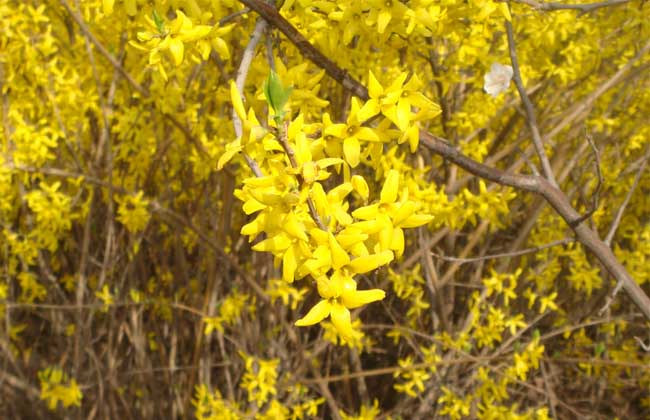
Forsythia likes light and has a certain degree of shade tolerance. It likes warm, humid climates and is also very cold-resistant, tolerant of drought and barren conditions, and afraid of waterlogging. It is not choosy about soil and can grow normally in neutral, slightly acidic or alkaline soil. Propagation methods include seeds, cuttings, layering, division and so on. Let's take a look at forsythia seed propagation methods together below!
Storage of Forsythia Seeds
Select superior individual plants that grow robustly, have short and thick internodes, bear dense and plump flowers and fruits, are free of pests and diseases, and are of pure variety as mother trees. Pay attention to observing the flowering and fruiting periods, and grasp the appropriate seed collection time. Collection must be timely to avoid the seeds falling off by themselves after maturity. Generally, mature fruits are collected from mid to late September to early October. Collect forsythia fruits that are fully developed and mature, with plump seeds that are large and heavy, then spread them thinly in a ventilated and shady place, and thresh after drying in the shade. After careful selection and removal of impurities, select neat, plump seeds free of pests and diseases, and store them for seed use. Storing forsythia seeds under different conditions has a great impact on their germination rate, such as storage in a desiccator being high.
Sowing Time for Forsythia
Forsythia seeds germinate easily; it should be said that the seeds are suitable for germinating at relatively high temperatures. Based on seed storage and germination conditions, combined with practical experience, the cultivation time can be arranged in spring or winter. Spring sowing is in early to mid-April, and winter sowing is carried out before the ground freezes.
Seed Propagation of Forsythia
1. Seed treatment: The seed coat of forsythia seeds is relatively hard. Without pretreatment, direct sowing in the nursery field requires more than 1 month before germination and emergence. Therefore, germination acceleration treatment can be carried out before sowing. This method can be used in newly introduced planting areas. The specific method is to select mature and plump seeds, soak them in warm water at about 30°C for about 4 hours, then remove them and mix them with 3 times their volume of wet sand, place them in a wooden box or small jar, cover the top with plastic film, and place them in a wind-sheltered, sunny place. Turn them twice a day and keep them moist regularly. After more than 10 days, the seeds sprout and can be sown.
2. Sowing method: After sowing, seedlings can emerge in 8-9 days, about 20 days earlier than seeds that have not undergone pretreatment. If the land is dry, first water the seedbed, and sow when the water has seeped down and the surface soil is slightly loose. Spring sowing is around “Qingming”, and winter sowing is before the ground freezes (the seeds do not need treatment and can emerge the next year). When sowing, on the prepared seedbed surface, open furrows 1 cm deep at a row spacing of 20-25 cm, mix the seeds with fine sand, evenly scatter them into the furrows, cover with soil and rake level, and press lightly.
3. Post-sowing management: Seedlings can emerge in 10-15 days, and the seed rate is about 2-3 kg per mu. The soil covering must not be too thick, generally about 1 cm, and then cover with grass to maintain moisture. After the seeds emerge, remove the grass immediately. When the seedlings are 10 cm tall, thin them to a plant spacing of 10 cm. In early April of the second year, when the seedlings are about 30 cm tall, they can be transplanted to the field.