What are the growing conditions for the star anise tree?
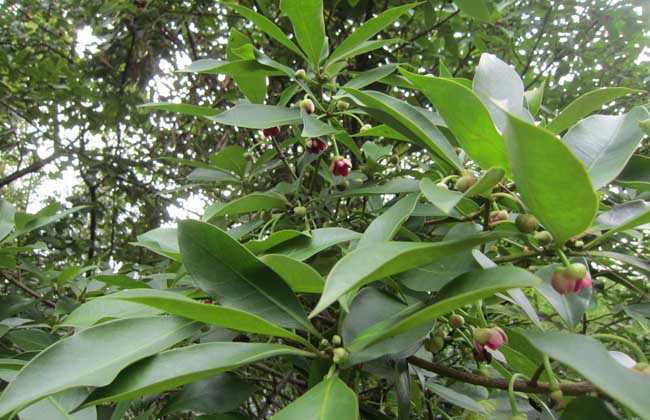
The star anise tree is an economic plant of the genus Illicium in the family Schisandraceae. It grows in humid, warm subtropical valleys and is distributed in Fujian, Guangdong, Guangxi, Guizhou, Yunnan and other places. Its fruit and seeds can be used as a seasoning and also as medicine, and it is also a spice used in making toothpaste, soap, perfume and cosmetics. Its economic value is very high. Let us take a look at the growing conditions for the star anise tree below!
Temperature conditions
The star anise tree is a subtropical tree species that likes warmth. Its suitable growth temperature range is 20-30°C, the coldest daily average temperature is above 10 degrees, the hottest average temperature is 25-28 degrees, the annual accumulated temperature is above 6000 degrees, and the frost-free period is more than 315 days. A short period of light frost has no major effect on plant growth. Places where it snows in winter have a great impact on the growth of the star anise tree. In February, when the temperature reaches 10 degrees, the star anise tree begins to sprout; in March, when the temperature rises to 13-15 degrees, it enters the leaf expansion period; in July, when the accumulated temperature reaches 3200 degrees, flower buds form, and when it is above 3400 degrees, flowering begins.
Humidity conditions
The star anise tree likes to grow under humid mountain climate conditions. It requires annual rainfall of 1200-2000 millimeters, evenly distributed, and relative air humidity above 80%.
Light conditions
The star anise tree is a shade-tolerant plant. Seedlings like to grow under shaded environmental conditions and are averse to long-day sunlight. Under 70%-80% shade, seedling growth is favored; under shade below 30%, seedlings grow poorly, their leaves turn yellow and they may even die. Seedlings need one year to grow under shaded conditions. As the plant grows, its demand for sunlight gradually increases. Once it enters the flowering and fruiting stage, the tree needs sufficient sunlight, but it is also averse to direct strong sunlight. Therefore, it is suitable for growth in valleys and hillsides in mountainous areas where sunshine duration is shorter and the forest is relatively closed.
Wind conditions
Wind has a great impact on the growth, flowering and fruiting of star anise. Because its wood is soft, its branches are fragile, its main root does not grow deep, and its lateral roots are mostly distributed within 50 cm of the surface soil, its wind resistance is not strong and it is easily blown down by strong winds. Moreover, strong winds are very unfavorable to the flowering and fruiting of star anise, because after the star anise tree enters the fruiting stage, fruit hangs on its branches throughout the year, and the second half of the year is also the flowering period. Once strong winds occur, they easily cause a large amount of flower and fruit drop, leading to reduced yield. When choosing afforestation sites, they should be arranged as far as possible at the foot of wind-sheltered mountains and the lower parts of hillsides, and afforestation at wind gaps must be avoided.
Terrain conditions
Terrain has a great influence on the growth of star anise, because terrain directly affects conditions such as sunshine duration, temperature, humidity, as well as rainfall and soil, which are closely related to the growth of star anise. From the perspective of large terrain, rolling low mountains are suitable for the growth of star anise. From the perspective of small terrain, good drainage is required, and only mountainous land with a slope of 15-25 degrees is suitable for growth. Low-lying land with standing water, a high groundwater table and poor drainage is also not suitable for the growth of the star anise tree. It grows well in hilly land and low mountain areas at an altitude of 300-700 meters.
Soil conditions
The content of nutrients in the soil directly affects the yield and quality of star anise. Star anise trees grown in soil rich in elements such as phosphorus, aluminum, zinc, sulfur, manganese and potassium have high yield and excellent quality. Therefore, it is suitable for growth in loose-textured, relatively deep, humus-rich, fertile and moist laterite soil.