What are the propagation methods for star anise? A complete guide
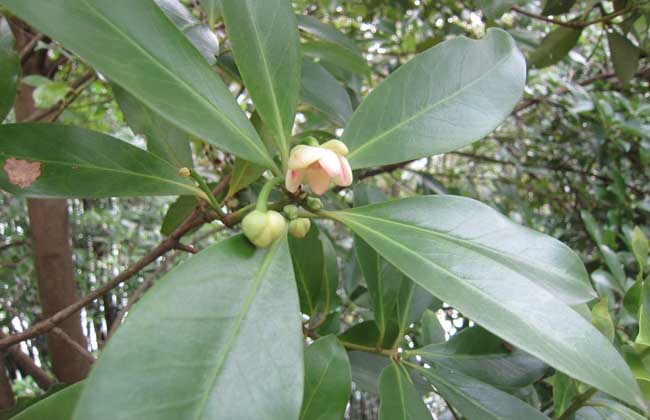
The fruit and seeds of star anise can be used as a seasoning and also as medicine, making it an economic plant with great planting prospects. Large-scale afforestation usually uses seed propagation, but to establish high-yield plantations and bear fruit earlier, methods such as grafting and division propagation can also be used. Let's take a look at the propagation methods for star anise below!
Grafting propagation of star anise
Cleft grafting is a commonly used method in star anise grafting, with a relatively high survival rate. When grafting, first cut the scion, 5 cm long, with more than 2 leaf buds, then use a grafting knife to make a downward slanted cut 2-2.5 cm long at 0.5 cm below the first bud on the back of the scion's terminal bud, reaching the xylem, then make a 30-degree small cut at the end of the back of the slant. Cut the rootstock flat at about 15 cm above the ground, choose the smooth side, use a grafting knife to shave off a little of the edge of the cut surface, then make a vertical downward cut along the outer edge of the xylem on the slanted side, with a depth slightly shorter than the scion's cut surface, then immediately insert the scion's cut surface facing the rootstock's incision, then tie and fix with a plastic bag from bottom to top, sealing the joint.
Division propagation of star anise
Division propagation of star anise is an efficient and fast seedling method, and the seedlings cultivated by this method survive quickly when planted in the mountains for afforestation, with many roots, strong seedlings, and a high survival rate. Usually in early spring each year, except for the thick main trunk, all the bases of the remaining low trunks are ring-barked, with a width of 2-4 cm, and soil is mounded 20 cm above the ring-barked area. This will cause a large number of fibrous roots to grow at the ring-barked area, and in the winter of that year, they can be cut off below the ring-barked area at the base and transplanted with soil for afforestation.
Seed propagation of star anise
1. Land preparation and fertilization: The star anise seedling nursery should be located on flat land or gentle sloping land at the foot of a mountain near a water source, surrounded by mountains, and with a humid environment. Choose loam soil with deep soil layers and loose, fertile texture as the seedling nursery. The previous crop is best as beans, sweet potato, taro vegetables, and other crops. If it is newly reclaimed wasteland, cut down the ground plants, spread them evenly on the ground, wait for them to dry, then burn them, then deep plow 25-30 cm, break up the soil clods, level and refine. After preparing the land, make beds 100 cm wide and 20 cm high, apply 2500 kg of farmyard manure, 50-70 kg of superphosphate, and 300-500 kg of human feces and urine per mu, spread on the bed surface, then turn into the bed soil, and level and refine the bed surface, ready for sowing.
2. Seed collection: Among star anise trees aged 20-50 years, select excellent plants as seed trees, requiring rapid growth, relatively low lower branches, a large crown, many branches and lush leaves, dark green leaf color, no pests or diseases, normal flowering, autumn fruit accounting for 90%, thick and uniform fruit, long fruit stalk, early and consistent maturity, and little difference in yield between on-years and off-years. When the autumn fruit changes from green to yellow, with the number of fresh fruits per kilogram at 90 or fewer, of which 3%-5% have cracked and exposed seeds, it is the harvest period. Spread the collected fruits in a cool, dry place indoors or in the sun to let them crack and thresh on their own, then sieve the seeds and process them promptly.
3. Seed treatment: Star anise production areas mostly use on-site seed collection and on-site seedling cultivation. Dig yellow clay near the seedling nursery, mix 1 part seeds with 3 parts sieved yellow clay, sprinkle water to moisten, so that the seeds stick to the moist yellow clay, place them in a humid place indoors, stir once every 3-4 days, sprinkle water when dry, keep the yellow soil moist, with the humidity best when the soil can be formed into a ball by hand. After 2 months, the seeds can germinate.
4. Timely sowing: Star anise seeds should be sown immediately after collection. If stored for a long time, the seed oil is prone to volatilize, and the germination rate will decrease. After 1-2 months of storage, the germination rate is only 60%. Usually sown from December to January-February of the following year. On the bed surface of the prepared seedling nursery, open sowing furrows at a row spacing of 20 cm, with a furrow depth of 5 cm, then sow in the furrows at a plant spacing of 4 cm, cover with turf or fine soil, and finally cover the bed surface with 3-5 cm thick rice straw or thatch to retain moisture and heat.