What conditions are needed for Paris polyphylla cultivation? Detailed explanation of growing environment requirements
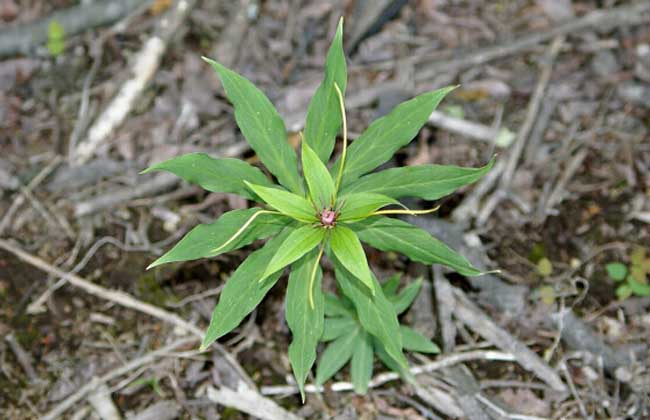
Paris polyphylla is the dried rhizome of Paris polyphylla var. yunnanensis or Paris polyphylla (seven-leaf one-flower) of the genus Paris in the Liliaceae family. Paris polyphylla var. yunnanensis is mainly produced in Yunnan, Guizhou, Sichuan and other provinces, while Paris polyphylla is mainly produced in Taiwan, China, Guizhou, Yunnan, Tibet, Sichuan and other places. It has high medicinal value and cultivation prospects. Let us take a look at the growing conditions for Paris polyphylla below!
Geographical environment
Wild Paris polyphylla grows in valleys and beside streams at altitudes of 700-1100 m, in shady, damp places under broad-leaved forests.
Soil conditions
Paris polyphylla grows best in well-drained, slightly acidic humus soil or fertile sandy soil. It cannot grow in alkaline or clay soil, and heavy, waterlogged, compacted soil is not suitable for planting.
Moisture conditions
Paris polyphylla prefers a cool, shady, damp environment with moderate moisture. It is both afraid of drought and of waterlogging. If soil moisture is too low, the stems and leaves easily lose water and the root system dries out and dies; if too high, pests and diseases easily occur and the rhizome rots.
Temperature conditions
Paris polyphylla plants are relatively cold-tolerant and suffer no freeze damage at low temperatures. From late February to early March, they can sprout and grow at a temperature of 5°C, and even at a minimum temperature of 2°C. At 1-2°C, no freeze damage occurs to the buds. Generally, the suitable temperature for seed germination, root growth and development, and terminal bud germination is 18°C-20°C, for seedling emergence is 20°C, for aboveground plant growth is 16°C-20°C, and for underground rhizome growth is 14°C-18°C.
Light conditions
Paris polyphylla is a shade-loving plant. It prefers slanting or diffused light and avoids direct strong light. Its growth requires a shaded environment; strong light will cause the leaves to wither. Generally, the seed germination and seedling stages require good shading, while in the two years before maturity, shading should be appropriately reduced and light increased, which is beneficial to the accumulation of secondary metabolites and dry matter.