Detailed Explanation of Paris polyphylla Seed Seedling Technology, Master the Key Points of Sowing and Seedling Raising
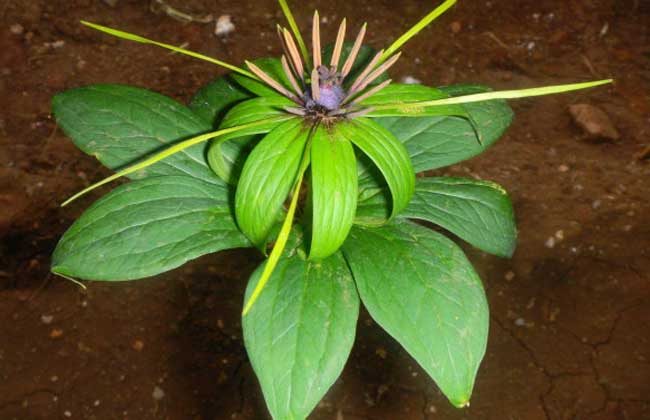
Paris polyphylla, also known as Qiyeyizhihua, Zaoxiu, Chixiu, Chongtai Gen, etc., is in great demand in the market and has very high prospects for cultivation. Its propagation methods generally include two types: seed propagation and rhizome propagation. Seed propagation is an effective seedling-raising method with large propagation quantities and low seedling costs, but it is technically demanding and takes a relatively long time for seedling raising. Now let us take a look at Paris polyphylla seed seedling technology!
Germination Promotion Treatment
After harvesting mature Paris polyphylla seeds with a 1000-grain weight of 40-70 grams, remove the outer shell, take out the seeds and put them into a mesh bag. At a sand-to-seed ratio of 5:1, store them indoors in layers of one layer of sand and one layer of seeds at a temperature of 20°C for germination promotion treatment. When the Paris polyphylla seeds grow new roots (April-May), they can be sown. The number of storage layers for the seeds should be below 5 layers; it is better to keep them thin than thick. They should be both loose and breathable, and also have water-retention capacity. Keep them moist frequently, but do not allow water to accumulate.
Seedbed Sowing
Broadcast sow at 250 seeds/sq m on a greenhouse seedbed, with a sowing rate of 8-8.5 kg per mu. After sowing, cover with soil 1-1.5 cm. After sowing, seedlings begin to emerge in May-June, and the emergence rate in the same year can generally reach more than 60%. Before sowing, the greenhouse seedbed should be weeded, disinfected and sterilized, and treated for insect control. The seedbed soil should be loose and fertile, and the soil layer of the seedbed surface should be 20-30 cm thick.
Seedbed Management
The seedlings of Paris polyphylla growing in the same year have relatively weak resistance, so management of water, temperature, and pests, diseases, and weeds must be strengthened. The seedbed soil is required to remain moist for a long time. The relative air humidity in the shed should be 50-80%, the temperature should be below 30°C, and the shade level of the seedbed should be about 50%. The occurrence of pests and diseases should be monitored at all times, weeds on the seedbed surface should be removed in time, and appropriate topdressing should be applied the next year according to seedling condition.
Transplanting and Temporary Planting
Thinning begins in June-July of the second year. Robust large seedlings can be gradually temporarily planted in open-field seedbeds at a plant-row spacing of 10 cm × 10 cm, watered thoroughly to settle the roots, and after survival they can be used for field planting the following year.