What are the propagation methods for Anemarrhena asphodeloides? A detailed explanation
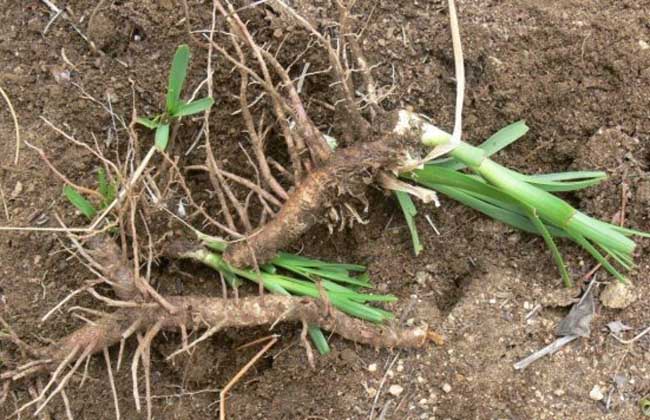
Anemarrhena asphodeloides, also called Mao Zhi Mu, is a perennial herbaceous plant of the genus Anemarrhena in the Liliaceae family. It is mostly propagated by seed and can be sown in every season throughout the year, mainly in spring or summer. In recent years, to shorten the growth cycle, many places have also adopted the division propagation method. Let us take a look at the propagation methods for Anemarrhena asphodeloides below!
Growth habits of Anemarrhena asphodeloides
Anemarrhena asphodeloides is a perennial herb that prefers a warm climate and can tolerate cold and drought. It is best grown in loose, fertile, well-drained sandy loam, and is not suitable for planting on shady slopes or low-lying land. Each year, when the average daily temperature in spring rises above 10°C, it sprouts and emerges from the soil. April to June is the period of vigorous growth, August to September is the period when the underground rhizomes swell and fill out, and the plants wither in November. The growth period is 230 days.
Division propagation of Anemarrhena asphodeloides
Division propagation of Anemarrhena asphodeloides is best carried out in early spring before sprouting or in late autumn after the plants enter dormancy. Dig out the 2-year-old rhizomes, cut them into segments with fibrous roots, with each segment bearing 2-3 buds, and open furrows for planting at a spacing of 5 cm × 20 cm, with a furrow depth of 1-5 cm. Place the cut propagation material flat in the furrows, cover with soil, press firm, and water. When planting in late autumn, to ensure safe overwintering, mound 6 cm-7 cm of soil over each plant. In the following spring, level the soil mounds to facilitate the emergence and growth of new buds. To save propagation material, you can also, in combination with harvesting, cut off the bud tips of the dug-out rhizomes to use as propagation material for division propagation, while the rhizomes are processed for medicinal use.
Seed propagation of Anemarrhena asphodeloides
1. Seed collection and storage: Anemarrhena asphodeloides begins to produce flower stems in the second year after sowing. A 2-year-old plant produces only 1 flower stem, while a 3-year-old plant produces 5-6 flower stems. Each stem spike bears about 150-180 flowers. The fruit matures about 60 days after flowering. For seed collection, choose robust plants grown for more than 3 years and free of pests and diseases. Mid-August to mid-September is the fruit maturity period. The maturity time is not uniform, and the fruits fall off very easily. Therefore, the fruits should be picked successively as soon as they just mature. After harvest, rub out the seeds, winnow away impurities, and store them for later use.
2. Seed selection: Experiments have shown that the germination rate of Anemarrhena asphodeloides seeds is not high. The germination rate of seeds collected the previous year is 40%-50%, so seeds stored for no more than 2 years should be selected for sowing.
3. Soaking to promote germination: Soak the seeds in early to mid-March. Soak the seeds in 60°C warm water for 8-12 hours, remove them and dry the outer skin, then mix thoroughly with 2 times their volume of moist fine sand. Dig a shallow pit in a sunny, warm place, pile the seeds in the pit, cover with 5 cm-6 cm of soil, then cover with agricultural film and pack the surrounding soil firmly. The suitable temperature for seed germination is relatively high, and how early or late germination occurs is related to the air temperature at the time. At an average temperature of 13°C-15°C, germination begins in about 25-30 days; at 18°C-20°C, germination occurs in about 14-16 days. When the radicles of most seeds have just emerged from the seed coat, they can be sown in the field. The sowing rate is about 3 kg per mu.
4. Sowing time: Anemarrhena asphodeloides can be sown in either autumn or spring. Autumn sowing is before the soil freezes, and spring sowing is in April.
5. Sowing method: On the previously prepared seedbed surface, open furrows at a row spacing of 20 cm and a furrow depth of 2 cm. Mix the pre-germinated seeds with ammonium sulfate at a ratio of 1:5, then evenly scatter them into the furrows, cover with soil and level it, and press lightly. Keep the soil moist. As long as the soil moisture is good and the temperature is normal, seedlings can emerge in about 10-20 days.