Where is the origin of Anemarrhena asphodeloides? A detailed explanation of the distribution of its main producing areas
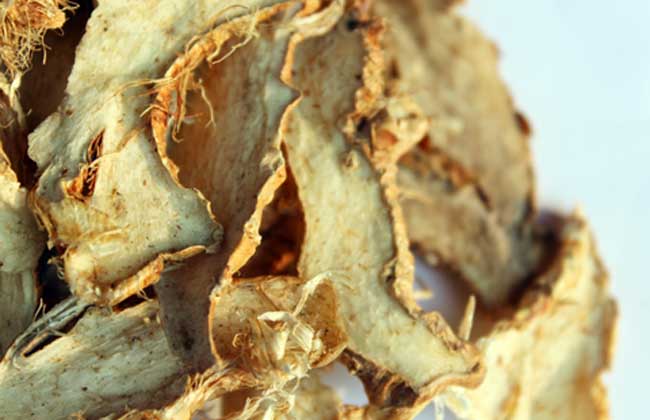
Anemarrhena asphodeloides is also known as rabbit oil grass, large reed water, mother grass, garlic clove grass, goat's beard root, ground ginseng, etc. It is a perennial herbaceous plant of the genus Anemarrhena in the Liliaceae family. Its rhizome is a famous traditional Chinese medicine, and it is divided into "hairy Anemarrhena" and "Anemarrhena flesh". Its producing areas are very widespread, and it is cultivated throughout the country. Let's take a look at the origin and distribution of Anemarrhena asphodeloides together below!
The origin and distribution of Anemarrhena asphodeloides
The main producing areas of Anemarrhena asphodeloides are mainly distributed in Hebei, Shanxi, Shandong, Shaanxi, Gansu, Inner Mongolia, Liaoning, Jilin and Heilongjiang, and it is also distributed in Korea. The two producing areas of Anguo in Hebei Province and Bozhou in Anhui Province are the most famous.
The producing area environment of Anemarrhena asphodeloides
Anemarrhena asphodeloides grows on hillsides, grasslands or roadsides below an altitude of 1450 meters in relatively dry or sunny places. It has strong adaptability, is cold-resistant, and can overwinter in the fields in the north. It likes warmth and tolerates drought. Apart from proper watering during the seedling stage, it should not be watered too much during the growth period. Especially during high temperatures, if the soil moisture is too high, growth will be poor, and the rhizome is prone to rot. The soil should preferably be loose humus loam. Low-lying waterlogged and excessively heavy soil are both unsuitable for planting.
The story and legend of Anemarrhena asphodeloides
Once upon a time there was a lonely old widow with no children. When she was young, she made a living by digging for medicinal herbs. Because she did not seek money or wealth and gave all the herbs she gathered to poor sick people, she had no savings at all when she grew old. She could endure this bitter life, but the old woman had a worry: no one could inherit her skill in identifying medicines. After thinking it over, she decided to beg along the streets, hoping to meet a reliable young man, acknowledge him as her godson, and put her mind at ease.
One day, the old woman came to a village begging and told the onlookers about her concern. In no time, the news spread that the old beggar woman wanted to acknowledge a godson and pass on her skill in gathering medicinal herbs.
Before long, a rich young gentleman found her. This young gentleman had his own calculations: "If I learn to identify medicines and treat illnesses, won't that give me one more way to curry favor with officials?" So he brought the old woman home and waited on her with good clothes and good food. But after more than ten days, the old woman still had not mentioned medicinal herbs. One day, he hypocritically called the old woman "Mom" and asked about passing on the medicine skill. The old woman replied, "Let's wait a few more years." This made the young gentleman furious. He shouted, "I've supported you for nothing for years. You want to cheat me out of food and drink, don't you? Get out!" The old woman was not angry either. She gave a cold laugh, changed back into her own ragged clothes, and left the young gentleman's house.
She began begging along the streets again. Not long after, a merchant found her and was willing to acknowledge her as his godmother. What this merchant had in mind was selling medicinal materials and making big money. He brought the old woman home and at first treated her to good food and drink, but after more than a month, when the old woman still did not talk about passing on the medicine skill, he could not hold back any longer and, like the young gentleman, drove the old woman out of his house.
In a flash, two years passed. The old woman still kept begging along the streets and telling people about her concern, and many people even took her for a madwoman or a swindler. That winter, she tottered into a remote mountain village and, because she was worn out both physically and mentally, fell down outside a family's door.
The noise alerted the head of the household. The head of the household was a young woodcutter. He helped the old woman inside, asked after her warmly, and, learning that she was hungry, quickly asked his wife to prepare a meal and bring it over. After eating, the old woman was about to leave, but the couple stopped her: "In this freezing weather, where are you going?" When the old woman said she still had to go begging, the kind couple felt great sympathy and urged her, "At your age, begging is so hard. If you don't mind that we are poor, then stay here!" The old woman hesitated for a moment, then finally nodded.
Time passed quickly, and in the blink of an eye it was warm spring with blooming flowers. One day, the old woman tentatively said, "Living in your home like this makes me feel uneasy. I'd better leave." The woodcutter became anxious: "You have no children, and we have no elders left. Let's make one family and live together. We'll acknowledge you as our mother. Isn't that good?" The old woman shed tears and finally told them the details. But the woodcutter and his wife did not mind: "We are all suffering people. What reward would we seek? It's enough if you can be comfortable, old lady."
From then on, the woodcutter and his wife busied themselves with work and were very filial to the old woman. In this way the old woman lived more than 3 years of happy times, reaching the advanced age of 80. In the summer of that year, she suddenly said to the woodcutter, "Child, carry me up the mountain to take a look." The woodcutter did not understand why, but still happily agreed to the old woman's request. He carried the old woman up slopes and down gullies, running here and there, so tired that sweat poured like rain, yet he still joked with the old woman from time to time, and the old woman was happy throughout.
When they came to a hillside overgrown with wild grass, the old woman got down, sat on a stone, pointed to a clump of wild grass with linear leaves and flowers striped white with purple, and said, "Dig up its roots." The woodcutter dug out a section of yellow-brown grass root and asked, "Mom, what is this?" The old woman said, "This is a medicinal herb. It can treat illnesses such as lung-heat cough and weakness with fever. Its uses are great. Child, do you know why I only taught you to identify medicines today?" The woodcutter thought for a moment and said, "Mom wanted to find an honest and kind person to pass on the medicine knowledge to, for fear that someone with bad intentions would use this skill to get rich and harm the common people!" The old woman nodded: "Child, you truly understand my heart. This medicine has no name yet, so just call it 'Zhimu'."
Later, the old woman taught the woodcutter to recognize many kinds of medicinal herbs. After the old woman passed away, the woodcutter changed his trade to gathering medicinal herbs, but he always kept the old woman's words firmly in mind and wholeheartedly delivered medicine to treat the poor.