How does Polygala tenuifolia propagate? Detailed introduction to propagation methods
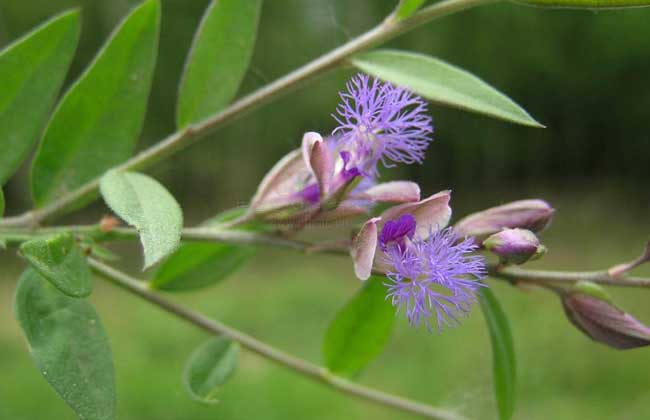
Polygala tenuifolia prefers a cool climate, tolerates drought, and dislikes high temperatures. It grows mostly wild in relatively dry fields, roadsides, hillsides and other places. It is best cultivated in sunny, well-drained sandy soil, followed by clay loam and calcareous loam. Clay soil and low-lying wet areas are not suitable for planting. Let's take a look below at the propagation methods for Polygala tenuifolia!
Seed collection of Polygala tenuifolia
Polygala tenuifolia is propagated by seed, either by direct sowing or by raising seedlings and transplanting. Because the capsules of Polygala tenuifolia split open when ripe, the seeds easily scatter on the ground, so the seeds should be harvested when the fruit ripens in July to August.
Direct field sowing of Polygala tenuifolia
Spring sowing is carried out in mid to late April, and autumn sowing in mid to late October or early November. On prepared ground, scatter the seeds evenly into the furrows and cover with 1 to 2 cm of soil. For drilling, open shallow furrows at a row spacing of 20 to 23 cm, with a sowing rate of 11.25 to 15 kg per hectare. After sowing, press lightly and water thoroughly. Seedlings begin to emerge about half a month after sowing; for autumn sowing, seedlings emerge in the spring of the following year.
Seedling raising and transplanting of Polygala tenuifolia
In early to mid March, drill the seeds on a seedbed and cover with 1 cm of soil after sowing. The seedbed must be kept moist, and the seedbed temperature should preferably be 15 to 20°C. Seedlings emerge about 10 days after sowing, and they can be planted out when about 6 cm tall. Planting out should be done on cloudy and rainy days or in the afternoon, at a row spacing of 22*5 cm.