Detailed Guide to Pest and Disease Control Techniques for Arisaema
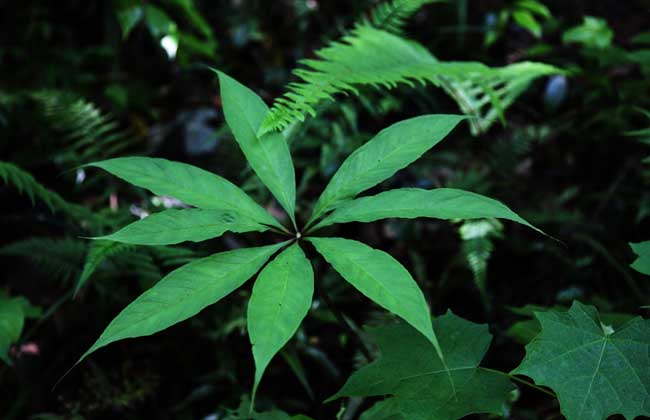
Arisaema, also known as Nanxing, Bai Nanxing, etc., is a perennial herbaceous plant of the genus Arisaema in the family Araceae. It is mostly wild, can be cultivated throughout north and south China, and is distributed in most provinces and regions except the northwest and Xizang, at elevations below 2700 m, growing under forests, in shrublands or grasslands. Now let us take a look at the pest and disease control techniques for Arisaema!
Viral disease
[Damage characteristics] Leaf symptoms often manifest as mosaic, irregular chlorosis or yellow streaks, causing longitudinal curling and deformation of leaf veins. Infected plants are stunted, chlorophyll in leaves is impeded, normal photosynthesis is affected, and tuber yield and quality are impacted. It is caused by multiple viruses. In Arisaema propagated by tubers, viruses can accumulate within the plant body, and some can be transmitted by aphids. When aphid populations in the field are large and the damage lasts a long time, the disease becomes severe.
[Control methods] (1) Use virus-free techniques, planting and propagating with virus-free seeds, or propagate with virus-free seeds. (2) Where conditions permit, advocate obtaining virus-free seedlings through heat treatment combined with shoot-tip virus elimination. (3) When aphids are found, promptly spray insecticides to kill them and reduce virus transmission.
Anthracnose
[Damage characteristics] Anthracnose is one of the main diseases in Arisaema growing areas, seriously affecting the yield and quality of Arisaema. It mainly damages leaves, petioles, stems and fruits. When leaves are infected, the leaf spots are round or nearly round, 2-5 mm in size, with the central part grayish white to light brown and the edges green to brown; black small dots are arranged in rings or clustered on the diseased parts. When stems and petioles are infected, light brown spindle-shaped sunken spots appear, densely covered with small black granules. When humidity is high, large numbers of orange-red conidia gather on the acervuli. When berries are infected, reddish-brown sunken spots also form.
[Agricultural control] Plant at a reasonable density, pay attention to ventilation and air permeability, fertilize with a scientific formula, increase the application of phosphorus and potassium fertilizers to improve plant disease resistance, irrigate at the proper time, strictly prohibit flood irrigation, drain promptly after rain to prevent excessive humidity, promptly remove infected leaves, and cut off the diseased spots of lightly infected leaves.
[Chemical control] Before disease onset, spray 1% Bordeaux mixture or 27% high-fat film emulsion at 100-200 times dilution for protection. During disease onset, choose 75% chlorothalonil at 1000 times dilution, 20% tricyclazole at 800 times dilution, 50% carbendazim-thiram at 600 times dilution, once every 7-10 days, for multiple consecutive applications. Fungicides should be used in rotation for better results.
Root rot
[Damage characteristics] Root rot usually occurs from May to October. In affected plants, the tubers rot, leaves wither and die, and it spreads very quickly.
[Control methods] Drain accumulated water from the field during the rainy season; after rain in the hot summer, promptly irrigate with well water to lower ground temperature; in summer, spray carbendazim at 1000 times dilution for prevention; when diseased plants are found, promptly dig them out and burn them, and disinfect the diseased holes with quicklime.
Stem blight
[Damage characteristics] After seedlings emerge, brown ring-shaped depressions and constriction occur at the junction of the corm and young stem near the ground surface below the soil. Low temperature and high humidity, and improper crop rotation, are the main factors causing the disease.
[Control methods] Commonly used agents include 70% thiophanate-methyl wettable powder at 500 times dilution and 75% chlorothalonil wettable powder at 500 times dilution, sprayed once every 7-8 days for three consecutive sprays, which can effectively control the disease. In the early stage of disease onset, spray 75% chlorothalonil wettable powder at 600 times dilution, or 38% oxadixyl-azoxystrobin at 800 times dilution, 64% oxadixyl wettable powder at 400 times dilution, or 50% iprodione wettable powder at 1000 times dilution, or 70% fosetyl-Al · mancozeb at 500 times dilution.
Phytophthora blight
[Damage characteristics] Phytophthora blight is a soil-borne disease caused by Phytophthora. The optimum temperature for disease onset is 20-25°C, and it is especially severe during the rainy season. Affected parts initially appear water-soaked, and the tissue discolors and turns brown. In the early stage of infection, the diseased tissue still maintains considerable toughness, and only later does the affected part rot, collapse and disintegrate.
[Agricultural control] (1) The most effective and simplest measure is to strengthen field sanitation management, remove diseased plants, diseased leaves and weeds at any time, and take them out of the growing area for burning. Plant residues must not be piled up in the growing area to avoid breeding pathogens. Try to avoid rain leaching, watering and splashing; even after rain leaching, be sure to spray promptly for prevention. (2) Strengthen ventilation and cooling in the growing area; nitrogen fertilizer must not be applied excessively.
[Chemical control] Use 58% metalaxyl + zinc manganese (zinc manganese medar) at 400-600 times dilution, 72.2% propamocarb aqueous solution at 800-1000 times dilution, 50% iminoctadine wettable powder at 1000-1500 times dilution, 64% oxadixyl wettable powder at 400-500 times dilution, and 80% zinc manganese nabam wettable powder at 400 times dilution in rotation for control.
Red hawk moth
[Damage characteristics] The larvae damage leaves, biting them into notches and holes. When infestation is severe in July to August, they eat all the Arisaema leaves.
[Control methods] (1) When the larvae are young, spray 90% trichlorfon at 800 times dilution to kill them. (2) Avoid continuous cropping, and also avoid intercropping with plants of the same family such as Pinellia ternata and konjac.