How to Propagate Jack-in-the-Pulpit? Detailed Introduction to Propagation Methods
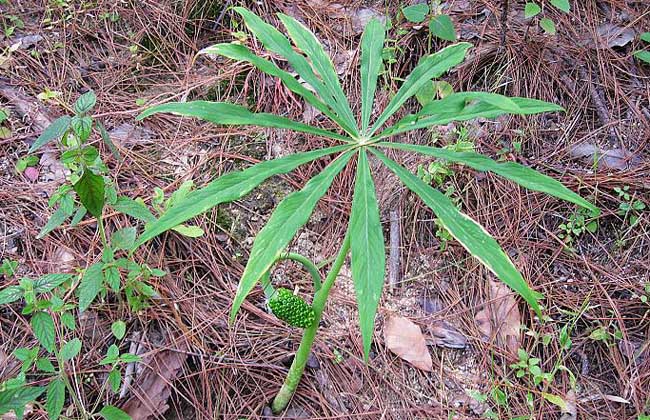
Jack-in-the-pulpit prefers moist, loose, fertile soil and environments. Its tubers are not frost-tolerant. For artificial cultivation, it is best intercropped with tall-stem crops, or planted in shaded understory, forest edges, or relatively shady and humid valley environments. The soil should preferably be loose, fertile, well-drained yellow sandy soil. Propagation is mainly by tubers, though seeds can also be used. Let's take a look at the propagation methods for jack-in-the-pulpit below!
Seed Propagation
In late autumn, select seeds that matured that year, place them in a basin and let them sit for 2-3 days, then rinse them clean with fresh water and air-dry them. Alternatively, the collected seeds can be briefly sun-dried to allow moisture to evaporate; once the seeds loosen, shake them out and sow while still moist. Sow at a row spacing of 12-15 cm. After sowing, cover with soil, press down, and water. Seedlings emerge in about 15 days. From Grain Rain to the Beginning of Summer the following year, when seedlings reach 10 cm, they can be transplanted. 2.5 kg of seeds are needed per mu.
Tuber Propagation
When harvesting in late autumn from October to November, select medium and small tubers and store them buried in fine sandy soil in a cellar or indoors. Plant around Grain Rain in April the following year. Dig holes at a row spacing of 20 cm and a plant spacing of 15 cm, with a hole depth of 4-6 cm. Place 1 tuber per hole with the bud pointing upward, cover with 3 cm of fine soil, then water. 30-50 kg of tubers are needed per mu, and the yield of finished medicinal material can reach 500 kg per mu.
Tissue Culture
The basic method of tissue culture for jack-in-the-pulpit is similar to that for Pinellia ternata (crow-dipper); the difference lies in selecting different culture media and adjusting the types and ratios of hormones.