Distribution of Belamcanda chinensis Producing Areas and Introduction to Its Main Producing Regions
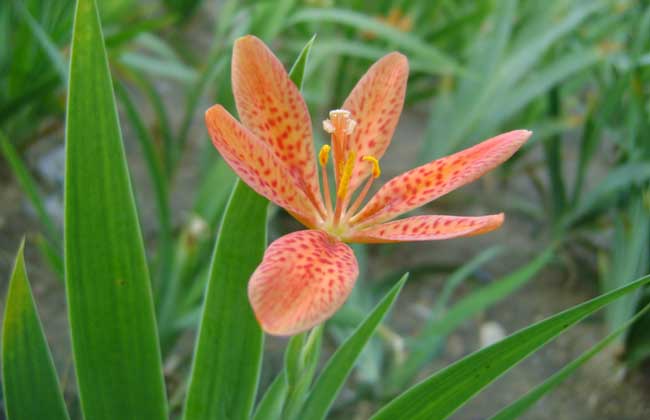
Belamcanda chinensis is a perennial herb of the genus Belamcanda in the iris family (Iridaceae). Commercial supplies come mainly from wild resources, and cultivated plants have also become an important source in recent years. Its producing areas are mainly distributed in Hubei, Henan, Sichuan, Guizhou and other places, and it is also found in other regions across the country. Products from Hubei are relatively good. Let us take a look together below!
Distribution of Belamcanda chinensis Producing Areas
Belamcanda chinensis is distributed in tropical, subtropical and temperate regions around the world. In China, its main producing areas are Jilin, Liaoning, Hebei, Shanxi, Shandong, Henan, Anhui, Jiangsu, Zhejiang, Fujian, Taiwan, China, Hubei, Hunan, Jiangxi, Guangdong, Guangxi, Shaanxi, Gansu, Sichuan, Guizhou, Yunnan, Xizang and other places. It is also produced in Korea, Japan, India, Vietnam, the Soviet Union and other places.
Producing Environment of Belamcanda chinensis
Belamcanda chinensis grows at forest edges or on hillside grasslands, mostly in places with lower altitude, but in the mountainous areas of the southwest it can also grow at an altitude of 2000-2200 m. It likes warmth and sunlight, is tolerant of drought and cold, and has no strict requirements for soil. It can be cultivated in dry hillside land. Fertile, loose sandy loam with higher terrain and good drainage is preferable. Neutral loam or slightly alkaline soil is suitable. Low-lying land and saline-alkali land should be avoided.
Efficacy and Effects of Belamcanda chinensis
Belamcanda chinensis is also known by other names such as Wushan, Wupu, Huangyuan, Wusha, Yegan, Wusha, Wuchui, Caojiang, Guishan, Fengyi and so on. It has the effects of clearing heat and detoxifying, soothing the throat, and eliminating phlegm. It is a commonly used medicine for treating sore and swollen throat. It can clear heat toxins and reduce swelling and pain, and is often used in combination with Arctium lappa fruit, Platycodon grandiflorus root, Glycyrrhiza uralensis and so on.