How to propagate Glehnia littoralis? Detailed propagation methods
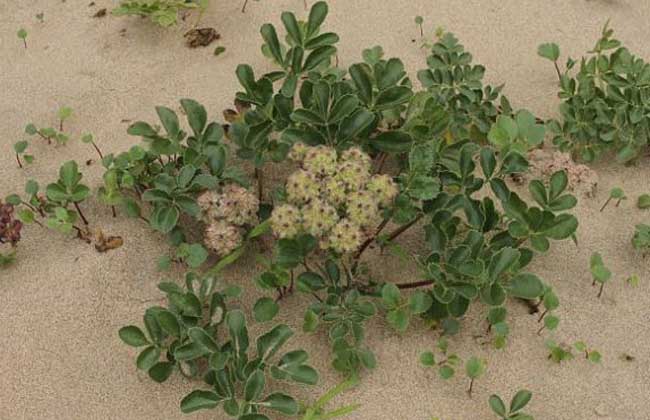
Glehnia littoralis is the root of the umbellifer (Apiaceae) plant Glehnia littoralis (beach silvertop), processed and dried for medicinal use. It has effects such as moistening the lungs and stopping cough, nourishing the stomach and promoting fluid production, and is used for dry cough due to lung dryness, damage to body fluids from febrile disease, thirst and other symptoms. It has strong adaptability to climate and prefers sunny, warm and humid environments. It is mainly produced in Laiyang and Weifang areas of Shandong, and is also produced in Hebei, Liaoning and other places. Let us now take a look at the propagation methods of Glehnia littoralis!
Seed treatment of Glehnia littoralis
Glehnia littoralis is a deep-rooted plant. Before sowing, the soil should be deeply plowed and raked level. Before sowing, remove the fruit wings from the seeds and soak them in warm water at 25°C for 4 hours, then take them out and cool them slightly, mix with two-thirds wet sand, place in a box and freeze. After thawing in spring, sow. Autumn sowing should be done before the ground freezes. Spring-sown seeds should not be treated by sand storage, otherwise they will not emerge that year.
Sowing methods of Glehnia littoralis
For autumn sowing, draw shallow furrows half a cm deep at a row spacing of 5-6 cm, place seeds 4-5 cm apart, cover with soil and water, then cover with rice straw. Before the ground freezes, water heavily once more and cover with a layer of barnyard manure. For spring sowing, around Qingming to Guyu, the method is the same as above, and the seeds do not need low-temperature freezing treatment; after sowing they will not emerge. If not treated, it is best to sow immediately after harvesting. On sandy loam, the sowing rate is 75 kg per hectare; on pure sand, 90-112.5 kg per hectare; on fertile soil with irrigation conditions, 52.5-60 kg per hectare can be sown. After sowing, on pure sand, press with yellow mud or small crushed stone to prevent wind from moving the sand and soil and causing losses. In waterlogged low-lying land, sand should be pressed down when the ground freezes. Autumn-sown seeds emerge in March of the following year.
Seedling stage management of Glehnia littoralis
1. Winter and spring management: For winter-sown Glehnia littoralis, after snow falls in winter, carry snow into the field to help preserve soil moisture. After the ginseng field has gone through winter rain, snow and freezing, the surface soil often becomes compacted after thawing in the following spring. Therefore, around "Jingzhe", before the seedlings emerge, lightly rake over the field with an iron rake to settle the soil and help emergence. If the soil is too wet, do not press it.
2. Thinning and final thinning: After the seedlings emerge, gently break the soil surface with a small hook, and combine this with removing weeds to loosen the surface soil and promote seedling growth. When the seedlings have 2-3 true leaves, thin them by the triangular seedling retention method, with a plant spacing of about 3 cm. If too sparse, the roots will be thick and loose in texture, with poor quality; if too dense, growth will be poor.
3. Drainage and irrigation: Glehnia littoralis has relatively strong drought resistance and fears waterlogging most. Generally, mild spring drought is beneficial for downward root growth, making the roots deep and long. With spring waterlogging, the roots grow slowly and become thick and short, hence the saying "spring waterlogging, no long roots." If severe drought occurs in spring, appropriate watering may be done, to the extent of soaking the soil through. In the late growth period and rainy season of Glehnia littoralis, special attention should be paid to promptly draining accumulated water to prevent root rot.
4. Reasonable topdressing: After final thinning of Glehnia littoralis, 50 kg of fermented soybean cake fertilizer can be applied per mu, mixed with 1 kg of trichlorfon powder, scattered between the rows, followed by loosening the soil and watering. Around "Xiaoshu", before rain, 10-15 kg of urea can be applied per mu. When flower buds appear on one-year-old ginseng, remove them promptly to promote root growth.