What is the flower language and legend of the dandelion? Read this one article to understand its symbolism
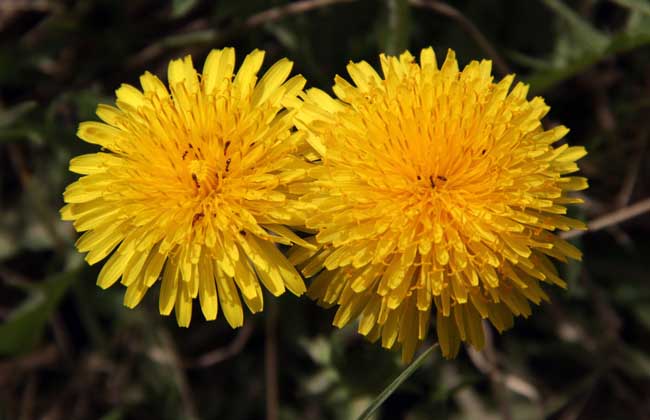
Dandelions grow by the roadside and beside ponds, and they are flowers we see often. When autumn comes, dandelions drift away with the wind, looking especially beautiful. But do you know what the dandelion's flower language is? What stories and legends does the dandelion have? Let's take a look together below at the dandelion's flower language and story legends!
The flower language of the dandelion
The dandelion's flower language: love that cannot stay.
1. Purple dandelion: A dandelion that is light purple, its flower language is "the legendary purple," its attribute is dark. Legend says that whoever can find a purple dandelion can obtain perfect love.
2. Flying Arrow Dandelion: A dandelion given the name Flying Arrow, its flower language is "aiming at the marble," its attribute is wind.
3. Autumn dandelion: The flowers of the autumn dandelion contain abundant nectar, so whenever the flowering season arrives, bees swarm to it, and therefore its flower language is temptation.
Legend one of the dandelion
It is said that long ago, a sixteen-year-old grown girl contracted a breast abscess. Her breast was red and swollen, and the pain was unbearable, but she was too ashamed to speak of it, so she could only endure it forcefully. Her mother found out about this matter. In feudal society, it had never been heard that a grown girl could contract a breast abscess, so she thought her daughter had done something shameful.
When the girl saw that her mother doubted her chastity, she was both ashamed and angry, and even more ashamed to face people, so she made up her mind and secretly fled her home at night to throw herself into the river and end her life.
By coincidence, at that time there was a fishing boat by the river, and on it an old man surnamed Pu and his daughter Xiaoying were casting nets to fish in the moonlight. They rescued the girl and asked clearly the reason she had thrown herself into the river.
The next day, following her father's guidance, Xiaoying dug up a kind of small grass from the mountain, washed it clean, pounded it into a paste, and applied it to the girl's breast abscess. Within a few days she recovered completely.
Afterward, the girl brought this grass back home to plant. In order to commemorate the fishing father and daughter, she called this wild grass dandelion (pugongying).
Legend two of the dandelion
There was a young daughter of a wealthy family named Zhaoyang, deeply loved by her parents. But by the time Zhaoyang reached seventeen or eighteen, she still had not found a husband she admired, and her parents were also unwilling to let their beloved daughter leave them, so they did not really take the matter to heart.
One day Zhaoyang was playing on the street with her personal maid, and she saw a handsome young man carrying medicinal herbs. The handsome herb-gathering young man also noticed the beautiful Zhaoyang, but they could only smile at each other, because the traditional ideas of that time were that men and women should not touch each other. When the young man's figure disappeared into the crowd, her heart had already been carried away with him.
After that, Zhaoyang often asked the servants about that herb-gathering young man. She learned that the man she admired was named Pu Gong. He had once read many books and was deeply knowledgeable, but later, because his parents died early, his family fell into poverty, so he made a living by gathering herbs. Pu Gong also often thought of Zhaoyang, but when he thought of his own impoverished family, he felt inferior.
Finally, one day Zhaoyang told her parents about this matter, but she met with strong opposition from her parents.
Her parents could not overcome their daughter's stubbornness, so they reluctantly agreed. After they married, because her parents and relatives still had much dissatisfaction with and discrimination toward Pu Gong, Zhaoyang and Pu Gong discussed it and made a decision they were willing to accept -- to wander to the ends of the world.
Zhaoyang and Pu Gong later wandered to a small mountain village with beautiful scenery. By the small stream in front of the tile kiln grew many blue wildflowers. They decided to live there. Although life at the tile kiln was hard, they lived very happily, and Zhaoyang also gave birth to a daughter. On the day Zhaoyang gave birth to her daughter, the blue wildflowers by the stream bloomed with unusual brilliance, so Zhaoyang gave her daughter the childhood name -- Lanruo.
However, because the situation was chaotic and unstable, before long Pu Gong was forced to join the army and go to war. This departure lasted eighteen years!
One day eighteen years later, a tremendous piece of good news reached Zhaoyang's ears like a spring breeze: Pu Gong had returned! And because of his outstanding military achievements, he had already become a great general. After hearing this, Zhaoyang was incomparably excited and joyful. This news she had awaited for eighteen years made her far too excited, and together with Zhaoyang's lovesickness having turned into illness, she fainted.
As Zhaoyang lay dying, with a gaze full of infinite attachment, she said to Pu Gong: "Take good care of Lanruo. Do you still remember the wildflowers all over the mountain? Take them to the front lines. They can not only be eaten, but can also heal wounds. When you miss me, they will flutter in the wind by your side!" After saying this, Zhaoyang turned into countless white flowers fluttering in the sky.
Later Pu Gong left the tile kiln with Lanruo and many wildflowers, marching and fighting for tens of thousands of li. Along the way he would take out those wildflowers and let them drift down with the wind upon the earth. From then on, that beautiful and self-strengthening wildflower could be seen everywhere across the mountains and plains.