Dandelion Complete Guide: A Comprehensive Introduction to Plant Knowledge
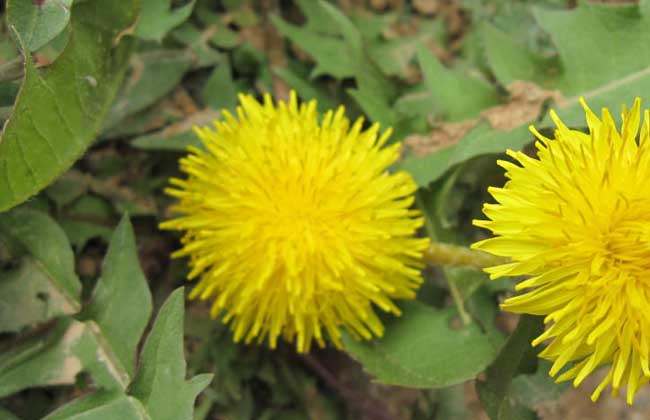
Dandelion is a perennial herbaceous plant of the Asteraceae family, with a capitulum inflorescence. Its seeds bear a fluffy ball formed of white pappus, and after the flowers bloom they drift with the wind to new places to nurture new life. The plant contains various health-promoting nutrients such as taraxol, taraxacin, choline, organic acids, and inulin, and has diuretic, laxative, jaundice-clearing, and cholagogue effects. Let us take a look at the complete guide and pictures of dandelion below!
Basic Information on Dandelion
[Scientific name] Taraxacum
[Other names] Hua Hua Lang, Pu Gong Cao, edible dandelion, bed-wetting grass, Western dandelion, Po Po Ding.
[Distribution] China, Korea, Mongolia, Russia.
[Family and genus] Plantae, Angiosperms, Dicotyledoneae, Sympetalae, Asterales, Asteraceae, Cichorioideae, Cichorieae, Taraxacum - perennial herbaceous plant.
Morphological Characteristics of Dandelion
[Root] Slightly conical, curved, 4-10 cm long, with a brownish surface, shriveled, and the root crown bearing brown or yellowish-white hairs.
[Leaves] Obovate-lanceolate, oblanceolate, or oblong-lanceolate, 4-20 cm long, 1-5 cm wide, with an obtuse or acute apex, entire or toothed margins, 3-5 lobes on each side, the base gradually narrowing into a petiole, the petiole and main vein often reddish-purple, sparsely covered with arachnoid white pubescence or nearly glabrous.
[Flowers] One to several scapes, equal to or slightly longer than the leaves, 10-25 cm tall, purplish-red in the upper part, densely covered with arachnoid white long pubescence; the capitulum about 30-40 mm in diameter; the involucre campanulate, 12-14 mm long, pale green; the anthers and stigma dark green; flowering period April to September.
[Fruit] The achene is obovate-lanceolate, dark brown, about 4-5 mm long, about 1-1.5 mm wide, with small spines in the upper part, small tubercles arranged in rows in the lower part, the apex gradually contracting into a conical to cylindrical beak base about 1 mm long; the beak 6-10 mm long, slender; the pappus white, about 6 mm long; fruiting period May to October.
Main Values of Dandelion
[Nutritional value] Raw dandelion is rich in vitamin A, vitamin C, and potassium, and also contains iron, calcium, vitamin B2, vitamin B1, magnesium, vitamin B6, folic acid, and copper. Every 60 grams of raw dandelion leaves contains 86% water, 1.6 grams of protein, 5.3 grams of carbohydrates, and about 108.8 kilojoules of calories. It contains various health-promoting nutrients such as taraxol, taraxacin, choline, organic acids, and inulin. It can be eaten raw, stir-fried, or made into soup, and is a plant used both as food and medicine.
[Medicinal value] Dandelion is sweet and slightly bitter in taste, cold in nature, and enters the liver and stomach meridians. It has diuretic, laxative, jaundice-clearing, and cholagogue effects. It treats heat toxin, carbuncles and swellings, sores and ulcers, internal abscesses, red swollen painful eyes, damp-heat, jaundice, painful dribbling urination, boils and toxic swellings, breast abscess, scrofula, toothache, red eyes, sore throat, lung abscess, intestinal abscess, damp-heat jaundice, and painful heat strangury. It treats acute mastitis, lymphadenitis, scrofula, boil toxin sores and swellings, acute conjunctivitis, cold with fever, acute tonsillitis, acute bronchitis, gastritis, hepatitis, cholecystitis, urinary tract infections, and other conditions.
[Beauty value] Dandelion is not only rich in nutrients and high in medicinal value, being an excellent food therapy vegetable and a good medicine for treating diseases, but it has also been fairly widely used in beauty care.
[Ornamental value] Dandelion has the effect of greening and beautifying the environment, and whether planted as ground cover or cultivated as a bonsai, it can achieve satisfactory ornamental results.
[Veterinary value] Dandelion is not only a food therapy vegetable and a good medicine for treating diseases for humans, but can also be fairly widely used in animal husbandry and veterinary medicine. It can serve as a precious feed additive and can also treat various diseases in many kinds of livestock.