Where are the production areas of cassia seeds distributed?
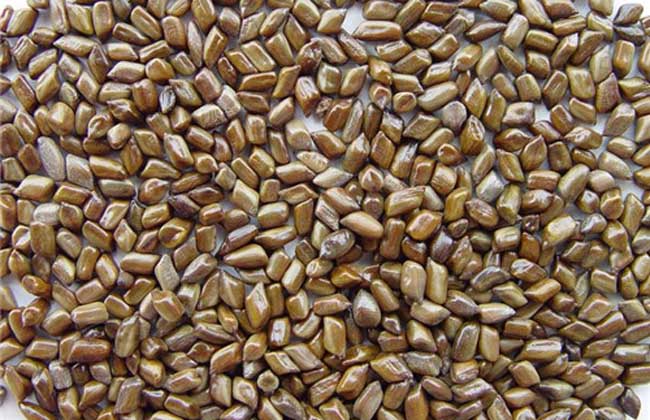
Cassia seeds are the dried mature seeds of the leguminous plants Senna obtusifolia (cassia) or Senna tora (small cassia), named for their function of improving eyesight. They are cultivated in areas south of the Yangtze River in China, with production areas mainly located in Anhui, Guangxi, Sichuan, Zhejiang, Guangdong and other places. Let's take a look below!
Production area distribution of cassia seeds
Commercial cassia seeds come from both wild and cultivated sources. Senna obtusifolia and Senna tora are distributed in most areas of the country, mainly produced in Bengbu, Wuhu, Heqing and Hefei in Anhui; Wenjiang, Jintang and Shiqi in Sichuan; Qingyuan, Gaoyao and Deqing in Guangdong; Jianqiao in Zhejiang and other places.
Production environment of cassia seeds
Senna obtusifolia is an annual, upright, robust herb, 1-2 m tall, with yellow flowers and slender, four-angled prismatic pods. Senna tora is a smaller plant with shorter pods. It grows on hillsides, roadsides and open fields, prefers a hot and humid climate, and is suitable for growing in sandy loam, humus soil or soil with medium fertility.
Character identification of cassia seeds
1. Large cassia seeds: Large cassia seeds are four-angled short cylindrical, with one end bluntly rounded and the other end slanted with a pointed tip, 4-6 mm long and 2-3 mm wide. The surface is brownish-green or dark brown, smooth and glossy. The dorsal and ventral surfaces each have 1 raised ridge line, and on both sides of the ridge line there is 1 light brown groove running obliquely from the hilum to the chalaza. The texture is hard. The cross section shows a thin seed coat, grayish-white semi-transparent endosperm, and yellow embryo. The two cotyledons overlap in an S-shaped fold. Intact seeds have no odor; when crushed they have a faint bean-like smell. The taste is slightly bitter and somewhat sticky. Those with plump seeds and a greenish-brown color are considered the best.
2. Small cassia seeds: Small cassia seeds are short cylindrical, 3-5 mm long and 2-2.5 mm wide, with 1 broad light yellow-brown band on each side of the ridge line. Those with plump seeds and a greenish-brown color are considered the best.