Detailed Explanation of Key Points on Pest and Disease Control Techniques for Anoectochilus roxburghii
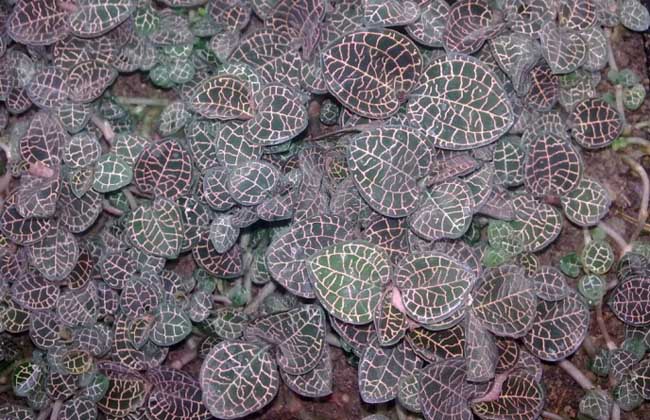
Anoectochilus roxburghii, also known as jinxianlan or jinsicao, is a perennial rare Chinese medicinal herb of the genus Anoectochilus in the orchid family (Orchidaceae), section Odontochilus. Because of its health benefits and medicinal value, Anoectochilus roxburghii is becoming increasingly popular nowadays. How to prevent and control pests and diseases during the cultivation of Anoectochilus roxburghii has also become a concern for many farmers. Let us take a look together at the pest and disease control techniques for Anoectochilus roxburghii!
Damping-off
[Disease characteristics] Damping-off is mainly caused by Fusarium. Yellowish-brown water-soaked lesions appear at the base of the stem of diseased seedlings, quickly spreading around the entire stem. The diseased tissue rots, dries up, and constricts into a thread-like shape. The disease progresses rapidly, and seedlings quickly collapse and die, showing the damping-off phenomenon.
[Control methods] Integrated control, or spraying with 75% chlorothalonil wettable powder at 600 times dilution, or 64% oxadixyl-mancozeb wettable powder at 500 times dilution, or 50% carbendazim wettable powder at 600 times dilution. Spraying should begin as soon as scattered diseased seedlings are seen to improve control effectiveness, once every 7~10 days, for 2~3 consecutive sprays.
Soft rot
[Disease characteristics] Soft rot is a bacterial disease, mainly harming the inner stem of the middle and lower parts and the petioles of leaves near the ground. It is difficult to detect in the early stage. In the mid-stage, brown necrotic spots appear on the epidermis about 3 cm from the stem base, and brown wet rot appears on the leaf veins. The leaves in the middle and lower parts of the plant turn yellow and become wilted under high temperatures. In the late stage, the entire plant wilts and dries up, remaining upright without falling over, and snaps easily when lightly bent by hand.
[Control methods] Spray with new planting element at a concentration of 200 ml/L, or agricultural antibiotic 751 aqueous solution at 100 times dilution. After rain, before rain, or after watering, promptly spray 14% copper ammonia complex aqueous solution at 300 times dilution, or 77% copper hydroxide wettable powder at 500 times dilution, or 50% copper sulfate wettable powder at 500 times dilution.
Snails and slugs
[Damage characteristics] Snails and slugs eat the soft tissues of Anoectochilus roxburghii, such as root tips and tender buds, seriously affecting growth.
[Control methods] ① Physical control: Install insect-proof nets on greenhouse ventilation openings to reduce opportunities for pests to enter the greenhouse and cause damage. ② Biological control: Use biological pesticides made from bacteria, fungi, viruses, plant extracts, antibiotics, etc., to kill the pests.
Red spider mites and mites
[Damage characteristics] Adults and nymphs suck sap on the leaves, causing yellow spots on the damaged leaf surface. In severe cases, the leaves turn yellow and scorched, until they fall off, and the plant dies.
[Control methods] ① Biological control: 20% compound liuyangmycin at 1000 times dilution or abamectin-sulfur at 2000 times dilution. ② Chemical control: Spray with 10% fenpropathrin at 3000 times dilution or 20% fenpropathrin emulsifiable concentrate at 2000 times dilution.
Black cutworm
[Damage characteristics] Larvae before the 3rd instar feed on the heart leaves and leaves of Anoectochilus roxburghii, chewing small notches or forming net-like holes. After the 3rd instar, the larvae bite through the tender stems of Anoectochilus roxburghii seedlings near the ground, causing missing plants and broken rows.
[Physical control] Set up sugar-vinegar liquid trap basins to trap and kill black cutworms and other pests. The ratio of sugar, vinegar, wine, and water is 3:4:1:2. A small amount of insecticide (chlorpyrifos or triazophos) must be added to the sugar-vinegar liquid. Cover it during the day and uncover it at night. In the early morning, search the surface soil near bitten-off seedlings and catch along the rows to capture dormant third-instar or older black cutworm larvae. Alternatively, use 90% trichlorfon crystal 150 g, add 1~1.5 L of water, then mix in 5 kg of crushed roasted wheat bran to make poisonous bait, and scatter it near the seedling roots in the evening to trap and kill.
[Chemical control] Drench roots with 90% trichlorfon crystal at 100 times dilution.
Mole crickets
[Damage characteristics] They bite and feed on seedling roots and stems in the soil, causing broken heads resembling tangled hemp, resulting in seedling death. They also create many raised tunnels in the surface soil, separating seedling roots from the soil, causing water loss, drying, and death.
[Control methods] Mix 1~1.5 kg of 5% phoxim granules with 20~30 kg of fine soil, spread in the planting furrow, or drench roots with 80% dichlorvos emulsifiable concentrate at 1000 times dilution.
Integrated Pest and Disease Control for Anoectochilus roxburghii
1. Cultivate robust aseptic test-tube seedlings: Because Anoectochilus roxburghii grows slowly and is difficult to propagate by seed due to infrequent flowering and fruiting, tissue culture is usually used for artificial propagation in production. Using biotechnology tissue culture techniques, selecting efficient culture media, and combining with optimal plant growth regulators, scientifically and reasonably hardening off the seedlings to cultivate robust aseptic test-tube seedlings.
2. Soil disinfection in greenhouses: Artificial cultivation of Anoectochilus roxburghii mainly uses greenhouse cultivation. Before planting, use sulfur or chlorothalonil smoke agents to disinfect the greenhouse soil and space.
3. Rational use of media: When transplanting tissue-cultured seedlings to the field, use rice husk burned until black, thoroughly burned but not turned white, as the medium. This rice husk has excellent water absorption and permeability, and is rich in Mg2+ and K+ ions. Its ability to accumulate nutrients can reduce the chance of aseptic seedlings and transplanted seedlings being harmed by pathogens, and helps bottle seedlings adapt to environmental changes.
4. Rational layout: Create the best external conditions conducive to the growth of Anoectochilus roxburghii and unfavorable to the occurrence of pests and diseases. When building greenhouses, according to the growth requirements of Anoectochilus roxburghii, choose both sides of mountain streams with dense forests to ensure shade, water for irrigation, wind protection and warmth in winter, reduced heat loss, and maintained humidity. Reasonably arrange beds, with bed height controlled at 0.3~0.5 m to ensure no water accumulation on the bed surface. Reasonably fertilize, apply more organic fertilizer and foliar topdressing to improve plant disease resistance. Higher air humidity helps the growth of Anoectochilus roxburghii and increases plant fresh weight, but the cultivation medium should not be too wet, as excessive moisture easily leads to soft rot. Attention should be paid to ventilation and light transmission measures.