What environmental conditions are needed for growing Anoectochilus roxburghii?
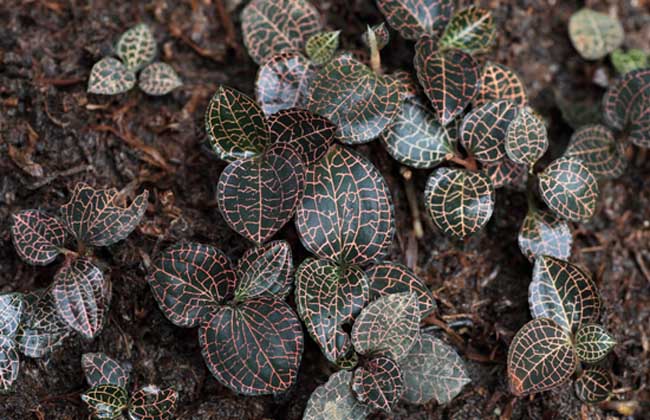
Anoectochilus roxburghii prefers cool, shady and damp conditions, and especially likes to grow in moist areas along ditches and on stone walls with loose soil among evergreen broad-leaved trees. It has certain requirements for temperature and light, which is one of the reasons why wild Anoectochilus roxburghii is relatively scarce. So when cultivating Anoectochilus roxburghii artificially, what kind of growing environment should be provided? Let's take a look together below!
Temperature
The suitable temperature for the growth of Anoectochilus roxburghii is 20-32°C, and it has strong adaptability to temperature. During cultivation, under greenhouse cover, a continuous 30 days of low temperature of 0-5°C still causes no obvious damage to Anoectochilus roxburghii. 15 days of daily temperatures above 34°C can easily cause leaf curling damage and quality loss in Anoectochilus roxburghii.
Moisture
Anoectochilus roxburghii likes moisture. Wild Anoectochilus roxburghii is naturally distributed in forest environments with high humidity and near some streams. Moisture is the most important factor affecting the survival of Anoectochilus roxburghii. Anoectochilus roxburghii can survive in environments with dry climate and soil lacking water. Artificial cultivation should keep Anoectochilus roxburghii in a micro-environment with relative humidity above 70%.
Light
Anoectochilus roxburghii is a shade-loving plant, and its light saturation point for photosynthesis is low, with a suitable light intensity of about 3000lux. 80% shade net + 80% shade net + 1 layer of plastic film. Under natural conditions, the canopy density of the upper tree layer is 70%-80%, and the coverage of the lower vegetation layer is about 40%.
Soil
Anoectochilus roxburghii is suitable for rooting in slightly acidic soil, and the soil should be loose, breathable and moist. Under natural conditions, Anoectochilus roxburghii is distributed in humus soil, yellow soil and red soil types. Because Anoectochilus roxburghii is mostly used for medicinal or food purposes, clean and suitable cultivation media must be used. For small-scale planting, peat soil and perlite are recommended.
Fertilization
Fertilize once every half month. It is best to use farmyard liquid fertilizer or biogas slurry, diluted to 1000 times. Spraying Zhuangjingling during the growing period can make the plant stems thick and strong, the leaves thick, the leaf color fresh and tender, and the plant lush, with a strong natural taste. At the same time, it can improve disaster resistance, reduce the amount of pesticides and chemical fertilizers, and lower residual toxicity.