How to propagate Scutellaria baicalensis? A detailed guide to common propagation methods for Scutellaria baicalensis
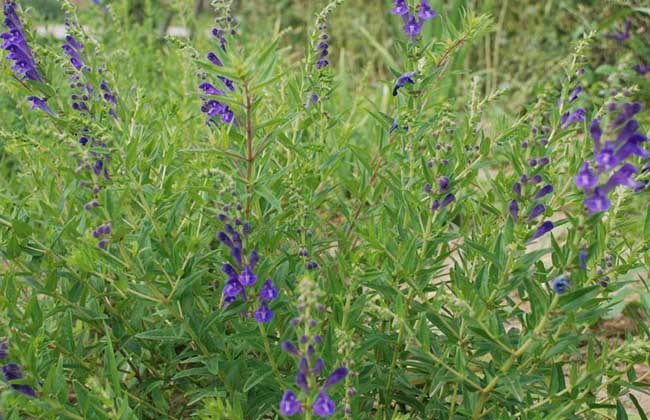
Scutellaria baicalensis is a common Chinese medicinal herb. It grows wild on hilltops, hillsides, forest edges, roadsides and other sunny, relatively dry places. Due to the gradual depletion of wild resources, it is now mostly cultivated artificially, and it can be grown in most provinces and regions of northern China. The propagation methods for Scutellaria baicalensis include cutting propagation, root division propagation and seed propagation. Let us take a look below!
Cutting propagation of Scutellaria baicalensis
The most suitable period for taking cuttings of Scutellaria baicalensis is May and June, when the plants are in a vigorous vegetative growth stage. Cut the semi-lignified young tender part at the upper end of the stems (cuttings taken from the middle and lower parts of the stems have a very low survival rate), cut them into 6—10 cm lengths, then remove the leaves from the bottom 2 nodes and keep the upper leaves. The cutting bed is best made of sand, or relatively loose sandy loam will also do. Generally, cuttings should be inserted as soon as they are cut, at a row spacing of 10×5 cm in the bed. Water promptly after inserting, and set up a shed for shade. Spray water frequently to keep the soil moist, but it should not be too wet, otherwise the cuttings will turn black and rot. With proper management, the survival rate can reach more than 90%, and they can be transplanted 40 days after cutting.
Root division propagation of Scutellaria baicalensis
At harvest time, pay attention to selecting high-yield, high-quality plants of Scutellaria baicalensis. Cut off the roots for medicinal use, and keep the rhizome part as propagation material. If digging and harvesting in winter, bury the rhizomes indoors in a cool place, and divide and plant the roots again in the spring of the 2nd year. If harvesting in spring, dig and plant immediately. Divide the rhizomes into several pieces, each with a few bud eyes, and then plant them in the field at a row spacing of 30×20 cm. Using this method on hillside land gives a relatively high survival rate, and after planting the management is the same as usual.
Seed propagation of Scutellaria baicalensis
1. Direct seeding method: Seed propagation of Scutellaria baicalensis is mainly by direct seeding. Direct-seeded Scutellaria baicalensis has straight roots and few root branches, and the commercial appearance quality is good, while also saving labor. Direct seeding is mostly carried out in spring. Generally, sowing is done when the ground temperature at 5 cm underground is stable at 12°C-15°C. In northern regions, this is mostly around early to mid-April.
2. Seedling raising and transplanting method: The seedling raising and transplanting method for Scutellaria baicalensis can save seeds, extend the growth time, and help ensure a full stand of seedlings, but it is relatively labor-intensive. At the same time, transplanted Scutellaria baicalensis has shorter main roots and more root branches, and the commercial appearance quality is poor. It is generally used when seeds are expensive or when direct seeding in dry land lacks water and it is difficult to emerge and keep the seedlings.