Where is the production area of Scutellaria baicalensis distributed? Introduction to the main production areas
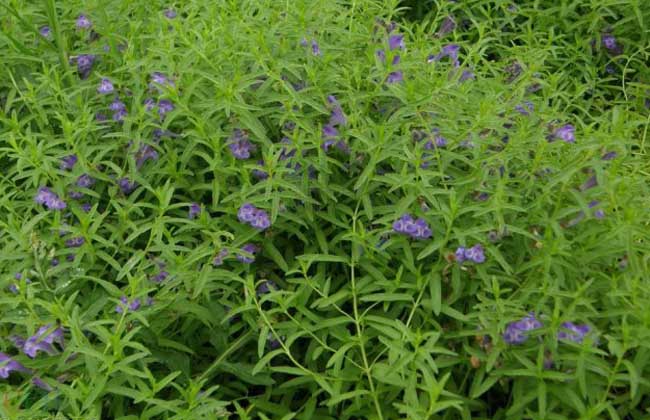
Scutellaria baicalensis, also known as Shancha root, Tujincha root, etc., is a perennial herbaceous plant of the genus Scutellaria in the Lamiaceae family. Its root is used as medicine, is bitter in taste and cold in nature, and has effects such as clearing heat and drying dampness, purging fire and detoxifying, stopping bleeding, and calming the fetus. Its production areas are mainly located in Heilongjiang, Liaoning, Inner Mongolia, Hebei, Henan, Gansu, Shaanxi, Shanxi, Shandong, Sichuan and other places. Let us take a look together below!
Production area distribution of Scutellaria baicalensis
The main artificially cultivated production areas of Scutellaria baicalensis are the four major production areas of Shandong, Shaanxi, Shanxi and Gansu, among which they are concentrated in Nanfan Town, Jiang County, Shanxi; Yaofeng Town, Xia County, Yuncheng City; Wan'an Town, Xinjiang County; Wanrong County; Xuedian Town, Wenxi County and other places; Shangluo, Shaanxi; Qiaonan Town, Linwei District, Weinan; Xiaoyi Town, Shangzhou District, Shangzhou City; Jingcun Town, Luonan County; Dihua Town, Danfeng County; Yecun Town, Shangluo City; Shangzhen, Danfeng County and other places; the Yimeng Mountain area in Shandong; Kushan Township, Ju County; Chayekou Town, Laiwu City; Fuguanzhuang Township and other places; Gansu mainly produces in Longxi, Weiyuan and Zhang County, and secondarily produces in Min County, Dangchang, Hexi and other places as the main production areas.
The production areas of wild Scutellaria baicalensis are mainly distributed in the central and eastern parts of Inner Mongolia, China, and most of the three northeastern provinces, Chengde in Hebei, Chifeng in Inner Mongolia and several other production areas of the largest scale. It is also distributed in Eastern Siberia in Russia, Mongolia, Korea and Japan.
The growing environment of Scutellaria baicalensis
Scutellaria baicalensis grows wild in sunny and relatively dry places such as mountaintops, hillsides, forest edges and roadsides. It likes warmth and tolerates severe cold. The underground part of adult plants can still safely overwinter at a low temperature of -35°C, and will not die from a high temperature of 35°C, but it cannot withstand continuous high-temperature weather above 40°C. It is drought-tolerant and afraid of waterlogging. If there is standing water in the field or too much rain, growth will be poor, and in severe cases the roots will rot and the plant will die. Land with poor drainage is not suitable for planting. The soil should be loam and sandy loam, and the pH should preferably be neutral or slightly alkaline. Continuous cropping is avoided.
Variety distribution of Scutellaria baicalensis
1. Scutellaria amoena: Scutellaria amoena is also known as Southwest Scutellaria, Small Scutellaria, Tiaoqin, Ziqin, Kuqin, etc. It is produced in south-central, central to northwestern Yunnan, southern Sichuan and northwestern Guizhou. It grows in grasslands under Yunnan pine forests at an altitude of about 1300-3000 m. Its root and rhizome are used as medicine. In addition, its stems and leaves can be used as a substitute for tea.
2. Scutellaria viscidula: Scutellaria viscidula is also known as glandular-haired Scutellaria, Xiri-Babu, Xiri-Hunqin, etc. It is produced in the largest amounts in Hinggan League, Chifeng City, Xilin Gol League, Ulanqab League, Ikh Juu League and other places. It grows in gravelly land, farmland, abandoned land and roadsides, and often forms clusters.
3. Scutellaria jinyunensis: Scutellaria jinyunensis is a perennial herbaceous plant of the order Lamiales and the family Lamiaceae. It is mainly produced in Ba County, Sichuan, and grows under forest shade at an altitude of 670-820 m.
4. Scutellaria kansuensis: Scutellaria kansuensis is a plant species under the genus Scutellaria in the Lamiaceae family. It is mainly produced in Gansu, Shaanxi, Shanxi and other places, and grows on sunny grassy slopes in mountainous areas at an altitude of 1300-3150 m.