How to propagate Coptis chinensis? A detailed guide to Coptis chinensis propagation methods
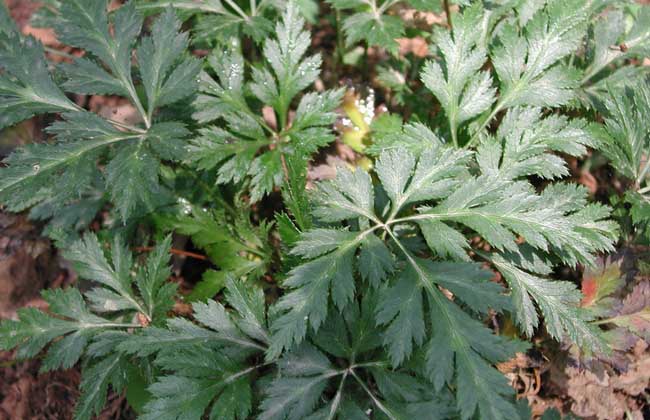
Coptis chinensis, also known as Weilian, Chuanlian, Jizhualian, etc., is a perennial herb of the genus Coptis in the Ranunculaceae family. It grows wild or is cultivated in cool, wet, shaded dense forests in valleys at an altitude of 1000-1900 m. It is a common traditional Chinese medicinal herb. Seed propagation is the main method, and division propagation can also be used. Let's take a look below!
Growing conditions for Coptis chinensis
Coptis chinensis prefers cool, humid and shaded conditions, and dislikes high temperatures and drought. It cannot withstand strong sunlight and prefers weak light. When the light is too strong, shading is needed. It is suitable for loose and fertile topsoil rich in humus and with a deep soil layer. The most suitable pH value is 5.5~6.5.
Division propagation of Coptis chinensis
Select 3-4 year old Coptis chinensis. Yalian (i.e. Coptis deltoidea) has 3-4 branches per plant, and Weilian has 10-20 per plant. These branches can be separated from the rhizome. Select seedlings with a rhizome length of 0.5-1 cm as division seedlings. Dig holes at a row spacing of 15×15 cm, with a hole depth of 6 cm, and plant 1 plant per hole. After planting, cover with fine fertile soil or humus soil, press firmly, plant straight and stable, and water thoroughly to help survival. In the same year after planting, 70% of the plants bloom and set seed, and all bloom in the second year. Division propagation has the advantages of fast growth, high yield of seeds and rhizomes, and good quality, and is worth promoting.
Seed propagation of Coptis chinensis
1. Seed selection and collection: Seeds produced by 2-3 year old Coptis chinensis plants develop poorly and have a very low germination rate, so they are not suitable for seed use. Seeds produced by 4-5 year old plants should be collected. Around Lixia in early May, when the follicles turn yellow-green and cracks appear but have not yet fully split open, harvest plump and full fruits in time.
2. Seed treatment: Coptis chinensis seeds are of the low-temperature type and have a long dormancy period of more than 9 months. They need to go through a low-temperature stage to break dormancy and germinate. At the same time, once the seeds are dried, they lose their germination ability. Therefore, wet sand stratification treatment must be carried out and stored under low-temperature conditions to complete the post-embryonic ripening stage. For example, first cut off the soon-to-split fruits together with the fruit stalks, place them indoors in a ventilated and cool place to spread and after-ripen for 2~3 days. After the follicles split open, beat out the seeds, winnow away impurities and remove shriveled seeds. Then, mix the seeds evenly with 3 parts moist fine sandy soil, put them into a wooden box, and store them in a cave. If there are only a small number of seeds, they can be placed fresh in a refrigerator and stored at a low temperature of 0-6°C for 180 days, and the germination rate can reach more than 90%.
3. Sowing method: It is best to sow in autumn from October to November. For broadcast sowing, fully and evenly mix fresh seeds with 20 times their volume of sifted fine humus soil and spread it on the seedbed surface. Sow evenly. After sowing, press lightly with a wooden board so that the seeds are in close contact with the soil, then spread a layer of finely crushed manure soil 0.5-0.7 cm thick, until the seeds are no longer visible. Finally, thinly cover the seedbed surface with a layer of rice straw to keep warm and moist and facilitate seedling emergence. Remove it in early spring of the following year after the temperature rises. Use 3-4 kg of seeds per mu, which can raise more than 500,000 seedlings.
4. Seedling stage management
① Build a shed: After sowing, build a low shed over each seedbed, 50-70 cm high. Use local materials. Set up posts and crossbars on both sides of the seedbed, and cover the top with shading materials such as small bamboo poles, branches and leaves, so that the shade density inside the shed is evenly distributed at about 80%. Using low sheds for seedling raising not only saves labor and materials, but also reduces rain erosion on the seedbed, which is beneficial to the growth of Coptis seedlings.
② Thinning: In March to April, when the seedlings grow 2 true leaves, carry out thinning, remove the weak and keep the strong, and maintain a plant spacing of about 1 cm.
③ Topdressing and earthing up: After thinning, apply 1000 kg of light human and livestock manure water per mu, or spray 3 kg of urea mixed with 1000 kg of water. Apply the same fertilizer once more in June to July. After application, spread a layer of fine humus soil about 1 cm thick around the seedling roots to stabilize the seedlings. In August to September, apply 50 kg of cake fertilizer powder mixed evenly with 250 kg of fine humus soil and spread it on the seedbed surface. In spring of the second year, from March to April, another topdressing of light manure water can be applied, or 3 kg of urea mixed with 1000 kg of water can be sprayed, with very good results.