Which regions are the main producing areas of Amomum tsaoko?
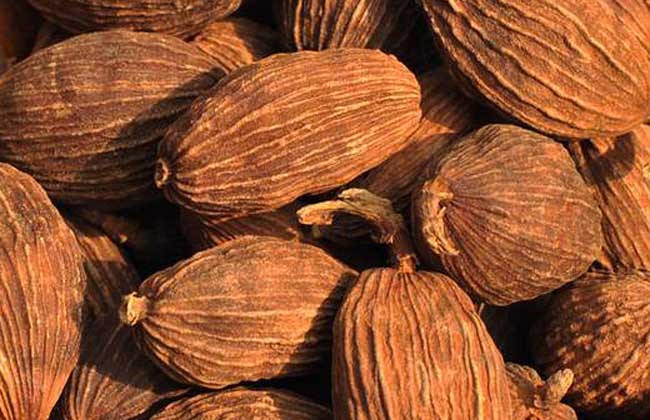
Amomum tsaoko, also known as caoguo ren, caoguo zi and so on, grows in shaded, damp forest areas of the tropics and subtropics, with Yunnan, Guangxi, Guizhou and other places in China as its main producing areas, and artificial cultivation is mainly carried out in Yunnan. It is a seasoning spice with a particularly rich and pungent aroma. Let us take a look below!
The producing areas and distribution of Amomum tsaoko
The producing areas of Amomum tsaoko are located in Yunnan, Guangxi, Guizhou, southern Sichuan, Guangdong and other places. Yunnan is the main producing area of Amomum tsaoko, mainly distributed in 31 counties of Honghe, Wenshan, Xishuangbanna, Dehong, Baoshan, Simao, Lincang and other prefectures and cities, as well as in the pristine ecological old forests of Ma'andi Township in Jinping County, with the largest output coming from Jinping Miao, Yao and Dai Autonomous County (known as the "Home of Green Fruits").
The producing environment of Amomum tsaoko
Amomum tsaoko prefers a warm and humid climate, fears heat, drought and frost, and has an average annual temperature of 15-20°C. It is suitable for growing in an environment with sparse trees (about 40% light transmittance), and is best cultivated at an altitude of 1000-2000 m, in shaded areas under forests or on moist, well-drained valley slopes beside streams with about 50%-60% shade, in loose, fertile sandy loam rich in humus.
The Home of Amomum tsaoko in China
Maguan County in Wenshan Prefecture, Yunnan Province, has a long history of Amomum tsaoko cultivation and a relatively large scale. The Amomum tsaoko fruits produced there have a rich flavor and are deeply favored by consumers. In 2001, it was named "The Home of Amomum tsaoko in China" by the Organization Committee of the Home of Chinese Specialties.
Maguan County in Wenshan Prefecture, Yunnan Province, has a history of Amomum tsaoko cultivation of 200 years. The cultivation is mainly distributed in townships such as Miechang, Gulinqing and Bazhai, among which Miechang and Gulinqing are the two townships with the largest amounts.