When is the best time to plant mint?
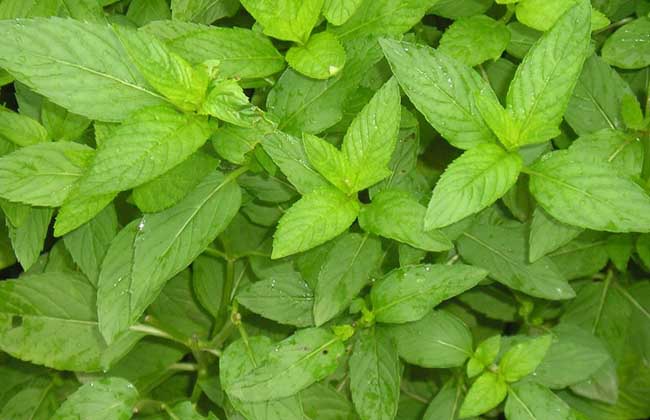
Mint is widely distributed in the temperate regions of the Northern Hemisphere. It is cultivated in many places across China, often growing in mountain wilderness, wetlands, and by rivers. Its rhizomes spread underground. It mostly grows at elevations of 2,100 m, but can also grow at elevations of 3,500 m. It is an aromatic crop with special economic value. Let's take a look at mint's growth habits and planting time below!
Mint growth habits
1. Temperature: Mint has strong adaptability to temperature. Its rhizomes overwinter and can tolerate low temperatures of -15°C. Its optimal growth temperature is 25°C-30°C. When the temperature is below 15°C, growth is slow; when above 20°C, growth accelerates. At 20°C-30°C, as long as water and fertilizer are suitable, the higher the temperature, the faster the growth.
2. Light: Mint is a long-day crop and loves sunlight. Long daylight hours can promote mint flowering and are beneficial for the accumulation of mint oil and menthol.
3. Soil: Mint is not very demanding about soil. Except for soil that is too sandy, too clayey, too extreme in acidity or alkalinity, or low-lying and poorly drained, it can generally be grown in ordinary soil, with sandy loam and alluvial soil being best. The suitable soil pH is 6-7.5.
Mint planting time
The planting time for mint mainly depends on the climate conditions of each region. In provinces such as Guangdong and Hainan, it can be cultivated all year round. In the Jiangsu-Zhejiang area, it is around “Qingming”. When the temperature rises and there is often rain, the humidity is high, and it is easy to survive after planting. In the southwestern region, planting is best after the rainy season begins. In North China and Northeast China, both open-field cultivation and protected cultivation can be used. One planting can allow continuous harvesting for 2-3 years.
Mint propagation methods ⟧11⟧1. Division propagation: After Grain Rain, when mint seedlings are about 15 cm tall, they should be thinned and gaps filled. The seedlings removed during thinning can be divided and transplanted.
1. Division propagation: after the Grain Rain solar term, when the mint seedlings are about 15 cm tall, thin and fill in the seedlings, and the seedlings removed during thinning can be divided and transplanted.
2. Cutting propagation: In May-June, cut aboveground stems and branches into 10 cm long cuttings. On a prepared seedbed, insert them at a row spacing of 7 cm × 3 cm for cutting propagation. After the cuttings take root and sprout, transplant them to the field for cultivation. This method can produce a large number of seedlings.
3. Rhizome propagation
① Cultivating seed rhizomes: In late April or late August, select robust plants with no pests or diseases in the field as mother plants and plant them at a row spacing of 20 cm × 10 cm. After harvesting the aboveground stems and leaves in early winter, leave the rhizomes in place as seed stock. 1 mu of seed stock can supply 7-8 mu for field transplanting.
② Transplanting method: Carry this out from late October to before the mint rhizomes sprout in early spring of the following year. Planting after the soil thaws in early spring is best. Earlier is better than later; early planting leads to early sprouting, a longer growth period, and higher yield. When planting, dig up the rhizomes, select white, thick, short-internode, disease-free rhizomes as seed rhizomes, and cut them into 7-10 cm long sections. Then, on the prepared bed surface, open furrows 10 cm deep at a row spacing of 25 cm, place the seed rhizomes diagonally in the furrows every 15 cm, cover with fine soil, tread firm, and water. About 100 kg of seed rhizomes are needed per mu. They can also be planted in holes at a row spacing of 25 cm and a plant spacing of 15 cm.