How to prevent and control pests and diseases of American ginseng? A detailed practical guide
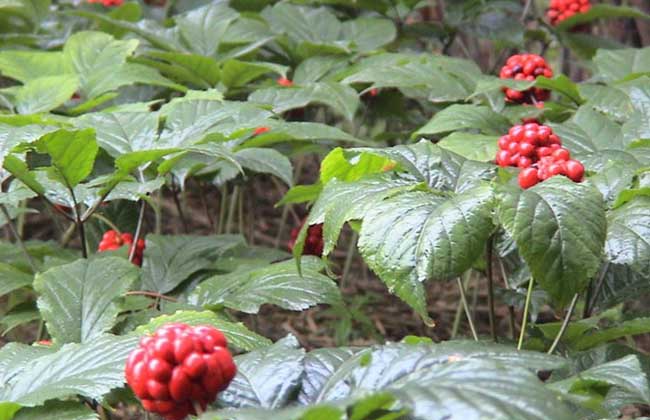
American ginseng is a valuable traditional Chinese medicinal herb that can treat chronic cough due to lung deficiency, blood loss, dry throat and thirst, and deficiency-heat with restlessness. China has a history of more than a hundred years of using it. In the past, it was mostly imported from the United States and other countries. Now it has been successfully introduced and cultivated in Jilin, Liaoning, Heilongjiang, Shaanxi, Jiangxi, Guizhou, Yunnan, Hebei, Shandong, Anhui, and Fujian, among other provinces. Let us now take a look at the pest and disease control techniques for American ginseng.
Black spot disease
[Disease characteristics] Black spot disease, also known as spot disease, has an incidence rate of 20-30%. It spreads quickly during the rainy season or when humidity is high, so it should be prevented and treated early. In the early stage of the disease, irregular brown spots appear on the leaves, petioles and stems, gradually expand and become sunken, and produce a black velvety mold layer. The leaves wither, and the plants collapse early and die. After the fruit is infected, a dark brown mold layer forms, and the fruit shrivels and falls off. Plants 3-4 years old are more severely affected than those 1-2 years old.
[Control methods] After the ginseng seedlings unfold their leaves, use mancozeb 800-fold solution or amobam 500-800-fold solution, and spray evenly on both sides of the leaves and all parts of the plants. Timely pull out and burn diseased leaves and diseased plants to eliminate the source of infection.
Damping-off
[Disease characteristics] Damping-off is a disease that occurs relatively easily during the seedling stage of American ginseng, and in severe cases the seedlings die in patches. In the early stage of the disease, water-soaked dark green lesions appear on the base of the stem near the ground. They expand quickly, and the stem shrinks, softens, and lodges and dies.
[Control methods] Generally, spray with 400-fold Bordeaux mixture or 800-1000-fold mancozeb water solution, which also controls other diseases. The ginseng garden should have good drainage and ventilation, and excessive humidity should be avoided. Immediately pull out diseased plants, and disinfect the surrounding area with 400-fold formaldehyde water solution or lime water to eliminate the source of infection.
Rusty root rot
[Disease characteristics] After the buds at the seed split and the roots and rhizome necks are infected, rust-colored yellowish-brown lesions appear, gradually expand, and cause destruction of the internal tissues. Small granular substances (pathogen spore masses) are produced at the diseased sites, and continued reproduction causes the epidermal layer to rupture and rot. It is generally spread by diseased seedlings, diseased root residues, soil water infection, and human activities.
[Control methods] The peak period of disease occurrence is from June to August. Seedlings must undergo strict quarantine. When diseased plants are found, dig them out early. Disinfect and sterilize the soil with lime. Normally ensure drainage and ventilation, and burn weeds. Soak with mancozeb 800-fold water solution, polyoxin 200 units, or amobam 500-800-fold water solution for 8-15 minutes, then dry in the shade before transplanting. Seeds must be treated with chemicals whether or not they carry pathogens.
Rhizoctonia rot
[Disease characteristics] Infection mostly occurs at the base of the seedling stem, 3-5 cm from the surface soil at the boundary between dry and wet soil. The young stem shows yellowish-brown sunken elongated spots, gradually rots inward, and the vascular tissue is destroyed, causing lodging and death, hence the name rhizoctonia rot. Generally, this disease is more likely when seedlings are too dense and growth is poor.
[Control methods] Soil and seed disinfection and sterilization are commonly treated with 400-fold Bordeaux mixture water solution, 400-fold carbendazim water solution, and 800-fold water solutions of mancozeb and amobam. Apply 4 kg of medicinal solution per square meter, allow it to penetrate 3-5 cm into the soil layer, then spray clean water to wash the leaves to prevent phytotoxicity.
Anthracnose
[Disease characteristics] It mainly damages diseased leaves, and fruits and stems can also be affected. Leaf lesions occur on both sides, are round or nearly round, and 2-6 mm in diameter. The center of the lesion is yellowish-white, and the edge is reddish-brown. The diseased part is thin and brittle, and easily ruptures and perforates when dry. Later, many small black dots grow on the diseased part, which are the acervuli of the pathogen. Stem lesions are oblong, with a light brown center and a yellowish-brown edge. In wet weather, the diseased part is prone to rot.
[Occurrence pattern] The pathogen is Colletotrichum panacicola, belonging to Deuteromycotina, genus Colletotrichum, a fungus. The pathogen overwinters as acervuli and mycelium on diseased plant residues, or as conidia attached to seeds. When conditions are suitable the following spring, conidia are spread by wind and rain to cause primary infection, and multiple secondary infections can occur during the growing season. High temperature and drought favor disease occurrence, and July-August is the peak period of disease occurrence.
[Control methods] (1) After autumn, remove aboveground stems and leaves and burn them in a centralized manner. (2) After the plants fully unfold their leaves in spring, spray once with 1:1:160 Bordeaux mixture for protection. During the disease period, spray 75% chlorothalonil 500-fold solution or 50% mancozeb 600-fold solution 1-2 times.
American ginseng phytophthora blight
[Disease characteristics] All parts of the plant can be affected. Affected leaves and petioles are water-soaked, dark green, as if scalded by boiling water, and later the diseased part turns black-green, softens, and droops. After the roots are affected, they become yellowish-brown and soft-rotted, the root bark is easy to peel off, the interior is yellowish-brown and shows dark yellowish-brown patterns, and a fishy odor is emitted. In the later stage, white mycelium attaches to the outside of the ginseng root, adhering to clumps of soil.
[Occurrence pattern] The pathogen is Phytophthora cactorum, belonging to Mastigomycotina, genus Phytophthora, a fungus. The pathogen overwinters as oospores or mycelium on diseased residues or in soil, becoming the source of primary infection the following year. Wind, rain, and flowing water are the main routes of disease transmission. When the average temperature from June to August is above 20°C and soil humidity is above 40%, the disease usually becomes epidemic. Heavier clay soil, overly dense plants, and poor ventilation and light transmission favor disease occurrence. In severe cases, it causes large-scale plant death.
[Control methods] (1) In mid-June, spray 1:1:160 Bordeaux mixture for protection. (2) During the rainy season, spray 3-4 times with 50% mancozeb 600-fold solution, 40% amobam 800-fold solution, or 200-fold agricultural antibiotic 120.
Sclerotinia rot
[Disease characteristics] It damages ginseng roots more than 3 years old. The ginseng root becomes diseased yellowish-brown, soaked in appearance, the internal tissue soft-rots, and a small amount of white downy mycelium grows on the outside. In the later stage, mouse-dropping-like, irregular sclerotia form on the diseased part. Finally, the internal root tissue decomposes and disappears, leaving only the outer skin. In the early stage, the aboveground part is no different from healthy plants, but in the later stage it wilts and dies.
[Occurrence pattern] The pathogen is Sclerotinia, belonging to Ascomycotina, genus Sclerotinia, a fungus. The pathogen overwinters as sclerotia on diseased plant residues and in soil. When the soil temperature is suitable the following spring, the sclerotia germinate and infect the ginseng roots, causing disease. 6-8°C is most favorable for the occurrence of sclerotinia rot. When the soil temperature exceeds 15°C, pathogen growth is inhibited, and disease development stops.
[Control methods] After removing the winter protection soil, disinfect the bed surface, working paths, and surrounding ground with 500-fold carbendazim solution. Regularly clear the working paths, dig drainage ditches, loosen the soil to lower temperature, strengthen field quarantine, promptly find and pull out diseased plants, and spray with carbendazim 400-600-fold solution or polyoxin 150-fold solution.
Rodent, bird, and insect pests
[Damage characteristics] The main insect pests include cutworms, white grubs, wireworms, and mole crickets. There are also rodents and birds that bite seedlings, stems, and roots. Tits and striped field mice eat fruits and seeds, while moles and field mice dig up ginseng roots to make burrows and cause damage.
[Control methods] These include trapping or poisoning pests with bait, keeping cats to hunt mice, and using scarecrows, colored flags, and firing guns to drive away pests.
Comprehensive control
1. Ginseng land cannot be continuously cropped and should have a rotation or fallow period of more than 2-3 years.
2. Land where corn, potatoes, and vegetables have been planted cannot be used immediately afterward for planting American ginseng.
3. The soil must undergo weathering, decomposition, and fumigation disinfection treatment.
4. Every winter, clean and disinfect the working paths and the surface of the ginseng beds. Sulfur powder or copper sulfate solution can be used on the working paths for sterilization to prevent human-mediated disease transmission.
5. When stratifying seeds in sand to cultivate embryos, mix seeds with captan at 0.3% of seed weight. After 1-2 months, turn and air them appropriately to prevent pathogen contamination.
6. Aboveground diseases mainly rely on spraying for prevention and treatment. In the United States, spraying begins in late May every 7-10 days, with a total of 12-15 sprayings throughout the growing period. China should attach importance to this principle of prevention being more important than treatment.