What Is the Outlook for American Ginseng Cultivation? A Detailed Explanation
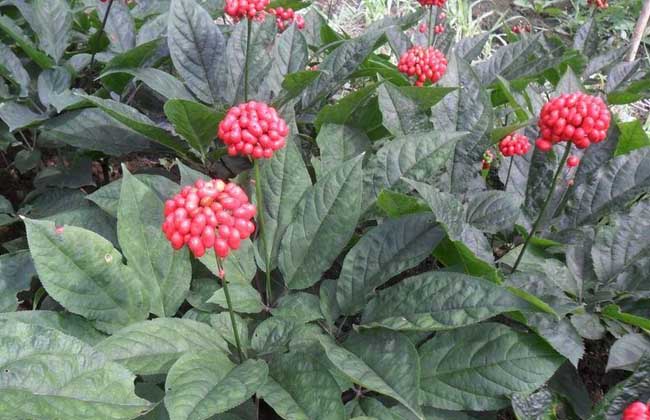
American ginseng is a valuable traditional Chinese medicinal herb. Besides suitable climatic conditions, growing American ginseng also requires considerable technical skill, sufficient time and capital. Once a certain scale is reached and a virtuous cycle is established, high returns should be achievable. Overall, American ginseng cultivation still has definite prospects. Below, let us look at the cultivation prospects and cultivation returns of American ginseng!
The Cultivation Prospects of American Ginseng
In the past, our country generally relied on imports for the use of American ginseng. Introducing and cultivating American ginseng is a matter of the past 30-plus years. In the 1940s, the Lushan Botanical Garden in Jiangxi successfully introduced American ginseng from Canada, but it was not promoted. It was not until the 1970s that our country again introduced American ginseng and conducted trial plantings at relevant research and production units in Beijing, Jilin, Liaoning and Shaanxi, among other places, achieving success in 1980.
In 1980, the Institute of Medicinal Plant Development under the Chinese Academy of Medical Sciences first promoted cultivation at a ginseng farm in Ji'an, Jilin. After 4 years, the largest harvested American ginseng root weighed 105 grams, with a saponin content of 5.44%. Afterwards, cultivation was promoted successively in Beijing (Huairou), Hebei (Zhuozhou, Dingzhou), Hubei, Shaanxi, Shandong, Hunan, Shanxi and Inner Mongolia, among other places. Coupled with the successful trial cultivation of American ginseng in the original ginseng-producing areas of Northeast China, the national American ginseng cultivation area has reached 4 million sq m. Four major cultivation regions have been formed: Northeast China, North China, Central China, and Kang-Dian (including high-altitude mountain areas at high latitudes), covering more than a dozen provinces and province-level municipalities, dozens of counties and hundreds of cultivation farms. At present, domestically produced American ginseng can not only meet domestic demand but also be exported to earn foreign exchange.
The Cultivation Returns of American Ginseng
The growth period of American ginseng is generally four years, and it is usually calculated on a four-year cycle. Initial investment is relatively high. If cultivated properly, the per-mu return is much higher than growing traditional crops. Judging from recent years, market input is around 10,000-15,000 yuan. Because materials can be used continuously, this characteristic determines that once American ginseng growers enter the business, it is not easy for them to withdraw. For ordinary growers, the average yield of American ginseng is basically stable at around 400-600 kg per mu. Some growers with rich experience, careful management and comprehensive technology can reach a yield of around 800 kg per mu.
Generally speaking, the higher the yield and the better the quality of American ginseng, the higher the purchase price. The purchase price of ordinary American ginseng is around 90-100 yuan per kg, while American ginseng of good quality can fetch a purchase price of up to around 110 yuan per kg. Poor-quality American ginseng has a purchase price of around 80 yuan per kg. If cultivated properly, the average annual income per mu over each cultivation cycle (four years) is basically stable at around 5,000-10,000 yuan, higher than the returns from grain crop production. If growers lack experience and are not good at management, yields cannot rise, and the quality of American ginseng is poor, the selling price will be far lower than that of other growers, resulting in losses. In addition, fluctuations in the price of American ginseng are also a direct cause of losses for some ginseng farmers.
The Cultivation Characteristics of American Ginseng
1. High technology: The so-called high technology cannot be mentioned in the same breath as high technology in the electronics field. It refers to the fact that the biological characteristics of American ginseng differ from those of ordinary crops (including cash crops), and each stage of the cultivation process has unique requirements. When carrying out each management task, it is necessary to be both rigorous and meticulous, timely and accurate, while also adapting to local conditions and applying methods flexibly. Only in this way can the normal growth of American ginseng be ensured and the expected returns obtained.
2. High input: American ginseng plants need shaded conditions to complete their development process normally, and shading equipment is costly. Seed prices are higher than those of ordinary crops (nearly 10,000 yuan invested per mu). In addition, American ginseng takes 4 years from sowing to harvest, and the capital turnover period is also long.
3. High returns: The economic benefits of cultivating American ginseng are very considerable. Fresh ginseng yield per mu is 300-750 kg, and seed yield is 25-40 kg. Estimating fresh ginseng at 40 yuan per kg and seeds at 200 yuan per kg, income is 17,000-38,000 yuan. The 4-year input requires around 10,000 yuan, so net income per mu is 7,000-28,000 yuan, creating an average benefit of 1,750-7,000 yuan per mu per year.
4. High risk: Because of high technical requirements, large investment and a long cycle, it entails greater risk than the production of ordinary cash crops.