Where are the production areas of American ginseng distributed? Introduction to the main production areas
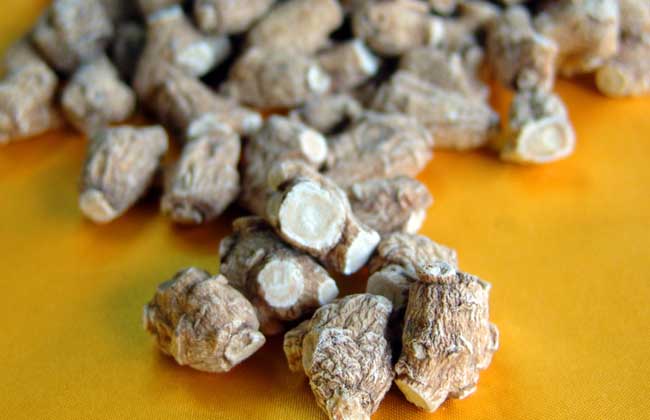
American ginseng is a perennial herbaceous plant of the genus Panax in the family Araliaceae, also known as flower flag ginseng, foreign ginseng, American ginseng, etc. It originated in Greater Quebec in Canada and Wisconsin in the United States, and is also cultivated in places such as Huairou in Beijing, China, and Changbai Mountain. What is produced in Canada is called American ginseng (xiyangshen), and what is produced in the United States is called flower flag ginseng. Let us take a look together below!
The production area distribution of American ginseng
The place of origin of American ginseng is the forest region of Wisconsin in the northern United States, and it is distributed in China and southern Canada. It grows in mountainous areas at an altitude of about 1000 m, likes scattered light and diffused light, and is adapted to grow on forest sandy loam.
The difference between imported American ginseng and domestically produced American ginseng
1. Imported American ginseng: Imported American ginseng is white in color, with fine and dense transverse lines on the surface, light in weight, low in powdery nature, a relatively flat cross-section, slightly somewhat texture-like, with fine dense chrysanthemum texture, a fragrant and strong odor, a slightly sweet and bitter taste, a refreshing mouthfeel, and a flavor that can linger in the mouth for a long time.
2. Domestically produced American ginseng: Domestically produced American ginseng has coarse and sparse transverse lines on the surface, is heavy and hard, full in powdery nature, with an uneven cross-section, and the inner layer of the slices is mostly solid without chrysanthemum-heart texture, with no distinctive fragrance. When chewed, it is strongly bitter or bland, and after a long time it becomes bland and slightly astringent, sticking to the tongue.
The production environment of American ginseng
1. Temperature: Changes in temperature have a clear effect on the growth and development of American ginseng. Research shows that American ginseng emerges 10 to 30 days later than Chinese ginseng. The reason is that American ginseng has a temperature requirement more than 5°C higher than that of ginseng. It can emerge only when the air temperature reaches above 10°C and the soil temperature (at a depth of 10 cm) is above 7°C. The plant can grow and develop normally only when the air temperature is above 20°C and the soil temperature (at a depth of 10 cm) is about 15°C. It can flower and set seed only when the air temperature is about 28°C and the soil temperature (at a depth of 10 cm) is about 20°C. When the air temperature is below 12 to 14°C and the soil temperature (at a depth of 5 cm) is 10°C, it enters the withering period. Therefore, the air temperature throughout the entire growth period of American ginseng is between 10 and 28°C. The growth period of the aboveground part is 130 to 150 days.
2. Water: Although American ginseng originated in North America, and the latitude of North America is similar to that of most parts of China, rainfall and altitude differ. During the growth period, American ginseng needs relatively high air humidity (annual precipitation of about 1000 mm), and grows poorly in places that are dry, low in humidity, and have large day-night temperature differences. For example, although the American ginseng cultivated in the Heilongjiang Forest Botanical Garden is often sprayed with water, it is still not as good as the American ginseng planted in the mountainous area of the Longfeng Mountain Ginseng Farm in Wuchang County, because Wuchang County has a cool climate and high humidity, which can promote the growth of American ginseng. Insufficient water can lead to reduced yield or poor growth of American ginseng, and it is prone to disease, but too much water and water accumulation in the ginseng bed are also unfavorable to growth.
3. Light: Light is an indispensable condition for the development of American ginseng. Having long grown under natural forest conditions in North America, it has formed a semi-shade ecological habit and needs to grow under relatively weak light conditions, so cultivation in China requires building simple sheds for shading. It likes slanting light and scattered light, and avoids strong light, especially direct light around noon, which can damage the plants and cause sunscald. Therefore, cultivation under forests can often improve the quality of American ginseng.
4. Ventilation: Good ventilation conditions are necessary for the growth and development of American ginseng, and can regulate the concentrations of carbon dioxide and oxygen as well as temperature and humidity to meet the needs of American ginseng's growth and development. However, strong wind can cause American ginseng to lodge. In areas with forests as a barrier, wind damage is reduced.
5. Soil: Soil is the foundation for the growth and development of American ginseng. It absorbs water and mineral nutrients from the soil, and the quality of the soil is the key to determining the growth and development of American ginseng. Acidic forest humus soil can meet American ginseng's requirements for water, fertilizer, air, heat, and pH, making it easy to obtain high yields. Therefore, newly developed forest humus soil must be selected for planting American ginseng. However, after many years of planting, soil fertility is greatly consumed, causing the soil to be damaged in both physical and chemical properties and to tend toward alkalinity, and the disease-causing bacteria harmful to American ginseng in the soil increase. Therefore, soil that has been used to grow ginseng cannot be used to grow ginseng again, and it must be improved or rested for several decades before ginseng can be planted.
6. Terrain: Terrain conditions also have a certain effect on the cultivation of American ginseng, because they affect ecological factors such as light, temperature (air temperature, soil temperature), and water (rainfall, atmospheric humidity, and soil moisture content), and among these ecological conditions, some play a leading role in the growth and development of American ginseng. On the same plot of land, emergence and seedling survival differ with different slopes, and seedling survival rates are higher on slopes and loess. In addition, where the terrain is flat with no slope and the plot is prone to water accumulation, American ginseng can be harmed by rust rot. Altitude also has a great effect on the growth of American ginseng. Generally speaking, for every 1000 m increase in altitude, the air temperature drops by 5.5°C, so American ginseng cultivation in southern China is all carried out on mountains.