Detailed Explanation of the Key Technical Points for Pest and Disease Control in Pseudostellaria heterophylla
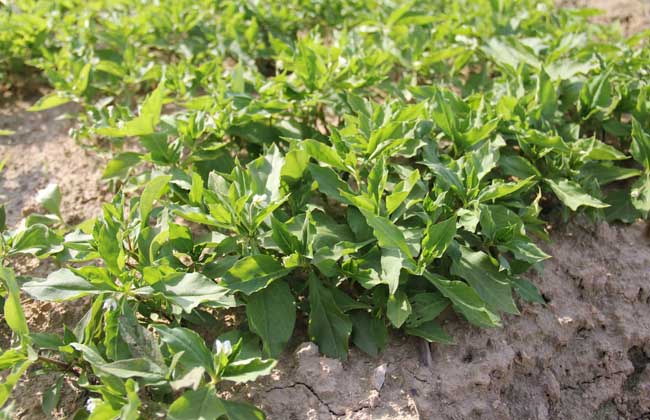
Pest and disease control in Pseudostellaria heterophylla should adhere to the principle of "prevention first, integrated control." When using chemical control, biological pesticides should be given priority, followed by chemical pesticides. In chemical control, high-efficiency, low-toxicity, low-residue pesticides should be used in a restricted manner, and the spray concentration, dosage per mu, and number of applications should be strictly controlled. No pesticides of any kind may be used within one month before harvest of Pseudostellaria heterophylla.
Viral Disease of Pseudostellaria heterophylla
[Damage Characteristics] Viral disease is the most important and most significant disease of Pseudostellaria heterophylla. Affected plants show wrinkled leaves and mosaic patterns, the plants wither early, and the tuberous roots are thin and small. This disease occurs commonly in production areas, with an incidence rate as high as 70%, severely harming and affecting the yield and quality of Pseudostellaria heterophylla.
[Control Methods] 1. Select disease-resistant varieties. 2. It is best to grow from seeds, which rarely develop mosaic disease and give high yields. Seeds treated at a low temperature of 0°C for about 50 days before sowing can produce virus-free seedling plants. 3. Virus-free seed-production fields should be established to provide seed for large-scale production. For those who propagate and save their own seed, mosaic-diseased plants in the seed-saving field must be pulled out promptly whenever found during the growing season to reduce transmission. Control insects and prevent disease in a timely manner to ensure the seedlings are virus-free. After viral disease is detected, agents such as Bingdu Bikè and Bingdu A can be selected for control.
[Precautions] The main disease of Pseudostellaria heterophylla is viral disease, and affected plants should be pulled out promptly once found. After May, black spot and powdery mildew may also occur, and should be controlled with 50% mancozeb at 500 times dilution and 15% triadimefon at 1000 times dilution. Pseudostellaria heterophylla prefers moist plots, so watering must be done immediately during drought; at the same time, drainage must also be carried out promptly on overcast and waterlogged days, otherwise root rot will occur and affect yield.
Leaf Spot Disease of Pseudostellaria heterophylla
[Damage Characteristics] Leaf spot disease occurs mostly in rainy spring and summer seasons. Brown round or irregular spots often appear on the leaf surface of diseased plants. In severe cases, it can cause leaves to turn brown and die, resulting in smaller roots and reduced yield.
[Control Methods] 1. Remove diseased plant residues and fallen leaves to reduce overwintering sources of inoculum. 2. In the early stage of disease, spray with Baolian (polyoxin) at 1000 times dilution for control; in the middle and late stages, 70% mancozeb at 800 times dilution can be used for control. Each time the pesticide is applied, appropriately add foliar fertilizer, yield-increasing bacteria, Handilong, etc., to enhance disease resistance and drought resistance and increase yield.
Root Rot Disease of Pseudostellaria heterophylla
[Damage Characteristics] When root rot occurs, the fibrous roots first turn brown and rot, then the entire root rots. It is prone to occur in the high-temperature and high-humidity season of July and August. Pay special attention to timely ditching and drainage after rain.
[Control Methods] 1. After harvest, thoroughly clean up dead branches and residues and burn them in a centralized manner. 2. Practice crop rotation; continuous cropping is not suitable. 3. In the early stage of disease, 50% carbendazim, 70% thiophanate-methyl, 75% chlorothalonil, or 25% metalaxyl at 1000 times dilution can be used to drench diseased plants.
Insect Pests of Pseudostellaria heterophylla
[Main Types] White grubs, cutworms, mole crickets, wireworms, etc. can all harm the growth and development of seedlings and roots of Pseudostellaria heterophylla and should be captured and killed promptly.
[Control Methods] 1. Apply fully decomposed manure and use high-temperature composting. 2. Use light traps to kill adult insects. 3. Spray 0.1% Lorsban or use Dichongle at 500 times dilution for root drenching.