A Complete Analysis of Cornus officinalis Pest and Disease Control Techniques
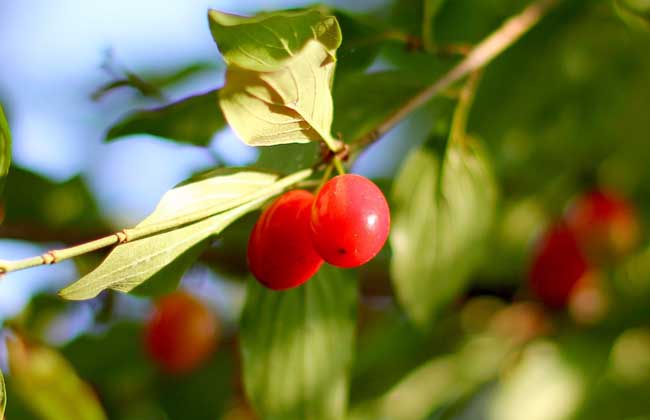
Cornus officinalis (Japanese cornel) is a medicinal herb favored in medical practice through the ages, and has been introduced and cultivated in Sichuan. The main diseases harming Cornus officinalis include anthracnose, angular leaf spot, and gray felt disease, while the main pests harming it include the Actias selene ningpoana, the large bagworm, the Cornus fruit borer moth, the yellow slug moth, the wood geometer moth, the green-legged grasshopper, the large green leafhopper, the small green leafhopper, and the spotted lanternfly. Let us take a look together below!
Anthracnose
[Damage characteristics] Anthracnose is also known as black spot disease, black fruit disease, and black scar dysentery. When young fruit is affected (fruit anthracnose), the infection mostly enters from the fruit top, and the lesion expands downward from the fruit top; the diseased part is black, the edge is reddish-brown, and the lesion gradually expands to the whole fruit; the fruit turns black and shrinks, and mostly does not fall off. When mature fruit is affected, the lesion is initially a small brownish-red spot, which gradually expands into a round or oval black sunken lesion, with a reddish-brown edge and a red halo around the outside. When the pathogen attacks leaves (leaf anthracnose), it first appears as small reddish-brown spots, which later expand into brown round lesions about 1-4 mm in diameter, with reddish-brown edges and faded halos around the outside; the lesions often perforate and fall off. The peak period for fruit anthracnose is from June to August, and the peak period for leaf anthracnose is from May to June.
[Control methods] Choose sandy loam soil with deep soil layers and good drainage for cultivation, do not plant too densely, strengthen management, apply less nitrogen fertilizer and more phosphorus and potassium fertilizer during the disease period, promote strong plants, improve plant disease resistance, and reduce damage. Remove fallen leaves and diseased mummified fruit, bury them deeply or burn them, and reduce infection sources. In the early stage of disease, spray with 1:2:200 Bordeaux mixture.
Angular Leaf Spot
[Damage characteristics] Angular leaf spot mainly harms leaves and fruit. When leaves are affected, dark purplish-red small spots first appear on the upper surface of the leaves, and the lesion edges are not obvious, only the epidermal cells are discolored, with no symptoms on the underside of the leaves. When fruit is affected, there are rusty-brown round small spots about 1 mm in diameter; when there are many lesions, they connect into patches, making the fruit top partly rusty-brown, and only the fruit skin is harmed, with the lesions not penetrating into the flesh. The disease starts in May and continues to cause damage until the end of October, with July being the peak period.
[Control methods] Strengthen management at the seedling stage, intercrop with leguminous plants to strengthen plants and reduce damage, remove diseased leaves, improve ventilation and light penetration, reduce infection sources, increase the application of phosphorus and potassium fertilizer and farmyard manure, and improve plant disease resistance. In May, spray the tree canopy with 1:2:200 Bordeaux mixture as a protective agent, once every 10-15 days, for 3 consecutive times, or spray with 50% wettable Tuzet wettable powder 800-1000 times dilution.
Gray Felt Disease
[Damage characteristics] Gray felt disease generally occurs on the trunks or branches of old trees over 20 years old. The lesions adhere to the branches and form irregular thick films, like medicinal plasters, hence the name felt disease. It is severe where the soil is poor, drainage is poor, soil moisture is high, ventilation and light penetration are poor, and plant growth is weak.
[Control methods] Strengthen maintenance and management, adjust forest density; where density is too high, remove the weak and keep the strong, remove the small and keep the large, so as to regulate light conditions, improve plant disease resistance, reasonably prune diseased old plants, remove diseased old branches, renew plants, retain growing branches sprouted from the inner canopy, gradually replace heavily diseased branches and trunks, and reduce sources of the pathogen. Use a knife to scrape off the mycelial film, apply 5 degrees Baume lime sulfur mixture or lime milk to the diseased parts, and during the occurrence period of scale insects associated with the pathogen, spray the tree canopy with dichlorvos emulsifiable concentrate 1000 times dilution for control. In the early stage of disease, spray 1:1:100 Bordeaux mixture for protection, once every 10-14 days, for multiple consecutive times.
Actias selene ningpoana
[Damage characteristics] Actias selene ningpoana is also known as the water-green moth, swallowtail moth, and large green caterpillar. The larvae feed on leaves, causing translucent spots, holes, and notches; in severe cases they can eat all the leaves, and older larvae can also eat the petioles, greatly affecting the normal growth of Cornus officinalis medicinal trees and the yield and quality of the medicinal material. It often occurs from mid-May to early October.
[Control methods] Cornus officinalis medicinal trees should avoid mixed planting with other forest trees and medicinal plants such as Chinese wingnut, elm, walnut, or Eucommia ulmoides, peony, and Chinese peony, so as to facilitate management and control. During the adult occurrence period, use black light traps to kill them. In the early stage of disease, spray with 90% crystalline trichlorfon 800 times dilution. During the peak egg-laying period, manually remove eggs, or during the peak larval outbreak, manually capture them.
Large Bagworm
[Damage characteristics] The large bagworm is also known as the large bag moth, skin worm, debt-avoiding moth, bag worm, and cloth bag worm. The larvae mainly feed on leaves, and can also damage tender branches and young fruit. When feeding on leaves, they can bite holes and notches, and even eat all the leaves leaving only branches, seriously affecting flowering and fruiting and the growth of the medicinal material. In August and September, the larvae enter the older-instar heavy-feeding stage, causing severe damage.
[Control methods] Manually remove the insect bags. During the peak larval period, spray 90% crystalline trichlorfon 800-1000 times dilution. Take care to protect various parasitic and predatory natural enemies during the larval and pupal stages, such as birds, parasitic wasps, and parasitic flies.
Cornus Fruit Borer Moth
[Damage characteristics] The Cornus fruit borer moth is also known as the stone jujube worm, cornus flesh worm, and medicinal jujube worm. Its larvae bore the flesh inside the fruit into crisscrossing tunnels, and the hollowed fruit is filled with insect droppings. The damage worsens as the fruit matures. From late September to early October, when the fruit matures, is the peak damage period.
[Control methods] Promptly remove early fallen fruit. When the fruit matures, harvest in a timely manner, which can reduce the overwintering insect population base. Treat the soil around the trunk with 2.5% trichlorfon powder, which can kill pupae and larvae that enter the soil.
Yellow Slug Moth
[Damage characteristics] The yellow slug moth is also known as the stinging caterpillar and hairy stinging worm. It damages plants by the larvae feeding on leaves. After the 4th instar, they can consume entire leaves, leaving only the main veins and petioles, seriously affecting the growth and development of host plants and the yield of medicinal materials, and even causing the death of the host. It often causes damage from late June to late September.
[Control methods] Combine with winter pruning or manually eliminate overwintering cocoons. Use black light traps to kill adults. When the young larvae gather on the underside of leaves to cause damage, manually remove them. In the early stage of disease, spray with 90% crystalline trichlorfon 800-1000 times dilution.
Wood Geometer Moth
The wood geometer moth is also known as the measuring worm, bridge-building worm, and hanging-thread worm. The larvae feed on leaves, causing branches and stems to become bare, weakening tree vigor. In severe cases, affected trees cannot bear fruit that year, and fruit already set also falls off due to poor nutrition. The larval damage period (early July to early October) lasts about 3 months.
Control methods: After the beginning of spring, dig soil within a 1 m range around the trunk to destroy pupae. In the early stage of larval occurrence, spray 90% trichlorfon 800 times dilution. During the adult stage, spray with 2.5% deltamethrin 2500-5000 times dilution.
Green-Legged Grasshopper
[Damage characteristics] The green-legged grasshopper is also known as the grasshopper. It harms Cornus officinalis leaves, often biting them into holes or notches; in severe cases, it eats all the leaves, leaving only the veins, affecting growth and fruit ripening. It is most abundant in June and July.
[Control methods] From after early autumn to early April of the following year, combine compost accumulation with digging soil and composting to kill insect eggs. When 1st-2nd instar nymphs gather to cause damage, manually capture and kill them. Spray 90% crystalline trichlorfon 800 times dilution in the morning when there is dew.
Green Leafhopper
[Damage characteristics] Green leafhoppers are divided into the large green leafhopper and the small green leafhopper. The large green leafhopper is also known as the large green leaf jumping cicada, and also as the small green leaf jumping cicada and small green planthopper. Adults and nymphs mainly harm leaves. July, August, and September are the periods of severe damage.
[Control methods] Use black light traps to kill adults, remove weeds in and around the medicinal plant garden to reduce the overwintering insect source base. In the early stage of disease, spray the leaf surface with dichlorvos emulsifiable concentrate 1000 times dilution.
Spotted Lanternfly
[Damage characteristics] The spotted lanternfly is also known as the red lady, spotted lanternfly, Ailanthus bark lanternfly, and Ailanthus chicken. Both adults and nymphs can pierce and suck sap on tender branches or leaves. At the damaged areas, small white or yellow spots appear on the surface of stems and leaves, gradually turning into dark brown polygonal dead spots. It often begins to cause damage in April and May.
[Control methods] In winter, scrape off or use a wooden hammer to kill overwintering egg masses on branches and trunks. In the early stage of disease, spray with dichlorvos emulsion 1500 times dilution for control.