Detailed Explanation of the Key Technical Points for Pest and Disease Control in Balloon Flower
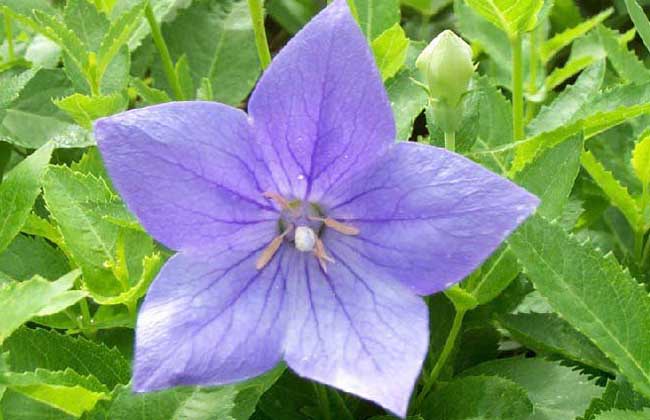
Balloon flower (Platycodon grandiflorus) prefers a cool climate, is cold-tolerant and sun-loving, and is best cultivated in hilly areas below 1100 m in altitude. It grows better in semi-shaded sandy loam and in neutral sandy loam rich in phosphorus and potassium fertilizer. It is a relatively widely cultivated medicinal herb. Let us now take a look at the pest and disease control techniques for balloon flower!
Balloon Flower Root Rot
[Damage characteristics] It damages the roots. Dark brown spots appear on the affected roots, and in the later stage the roots rot until the whole plant dies.
[Control methods] ① Irrigate the affected area with a 1000-fold dilution of carbendazim. ② Pay attention to drainage after rain; the field should not be too wet.
Balloon Flower Powdery Mildew
[Damage characteristics] It mainly damages the leaves. When the disease occurs, the diseased leaves are covered with gray powder, and in severe cases the whole plant withers.
[Control methods] At the early stage of the disease, spray with 0.3 degree Baume lime sulfur mixture or a 500-fold dilution of Baifengjing, or spray with a 1800-fold dilution of 20% triadimefon powder.
Balloon Flower Root Nematode Disease
[Damage characteristics] When affected, the roots develop diseased protrusions, and the stems and leaves above ground wither early.
[Control methods] Apply 1500 kg/hectare of tea seed cake fertilizer as a base fertilizer to reduce the damage. Before sowing, disinfect the soil with calcium cyanamide or 1,2-dibromo-3-chloropropane.
Balloon Flower Violet Root Rot
[Damage characteristics] The damage is severe in mid-September, and the roots rot in October. The affected roots turn red in the early stage and are densely covered with net-like reddish-brown mycelium; in the later stage, purple sclerotia the size of mung beans form, and the stems and leaves wither and die.
[Control methods] Never practice continuous cropping; carry out crop rotation; pull out diseased plants and burn them, and disinfect the diseased holes by pouring in 5% lime water.
Balloon Flower Anthracnose
[Damage characteristics] It is prone to occur under high temperature and high humidity in July to August, spreads rapidly, and causes plants to lodge and die in patches. It mainly damages the base of the stems. In the early stage, brown spots appear at the stem base and gradually expand around the stem; in the later stage, the diseased part shrinks and the plants lodge.
[Control methods] Before the seedlings emerge, spray a 500-fold dilution of 20% thiram wettable powder for prevention. At the early stage of the disease, spray Bordeaux mixture at 1:1:100 or an 800-fold dilution of 50% thiophanate-methyl wettable powder, once every 10 d, for 3 to 4 consecutive sprays.
Ring Rot and Leaf Spot
[Damage characteristics] They damage the leaves.
[Control methods] At the early stage of the disease, spray Bordeaux mixture at 1:1:100 or a 1000-fold dilution of 50% carbendazim wettable powder, for 2 to 3 consecutive sprays.
Balloon Flower False Wireworm
[Damage characteristics] It damages the roots of balloon flower. The larvae damage newly sown seeds and crop seedlings about to emerge, and can also bite through the root collar of seedlings, causing missing plants and broken rows.
[Control methods] During the adult mating period from March to April and the larval period from May to June, spray to kill with a 800-fold dilution of 90% trichlorfon or a 1000-fold dilution of 50% phoxim emulsifiable concentrate.