Is Platycodon grandiflorus toxic? A detailed analysis of the toxicity of Platycodon grandiflorus
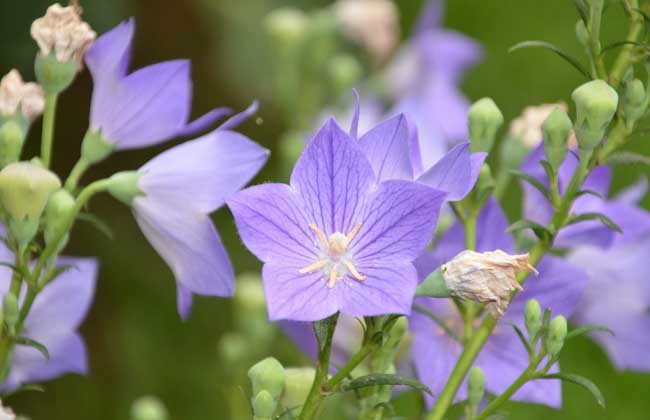
Platycodon grandiflorus can be eaten as a vegetable and also used as medicine. It is a perennial herbaceous plant, and its root can be used as medicine, with effects such as relieving cough and reducing phlegm, opening the lungs, and discharging pus. It is produced in most areas of China and has no direct relationship with oranges or the Citrus genus. Let us now take a look at whether Platycodon grandiflorus is toxic!
Is Platycodon grandiflorus toxic?
Platycodon grandiflorus is non-toxic. After being taken, Platycodon grandiflorus can irritate the gastric mucosa, and an excessive dose may cause mild nausea or even vomiting. It should be used with caution in cases of gastric and duodenal ulcers, and the dose should not be too large.
Toxicity testing of Platycodon grandiflorus
Platycodon saponins have a hemolytic effect and cannot be used for injection. After oral administration, they are hydrolyzed and destroyed in the digestive tract, so there is no hemolytic effect. When injected subcutaneously into mice, the minimum lethal dose is 770 mg/kg. The median lethal dose of Platycodon grandiflorus decoction by gavage in mice is 24 g/kg. When 40 g/kg of Platycodon grandiflorus decoction was given by gavage to rabbits, all 5 rabbits died within 24 hours; at a dose of 20 g/kg, all survived.
The hemolytic index of Platycodon saponins varies with source and producing area, growth years, collection time, processing method, and so on, ranging from 1:100 to 1:1000. The hemolytic effect of the phloem is 4.4 to 6.5 times that of the xylem, and the hemolytic effect of unpeeled Platycodon grandiflorus is slightly greater than that of peeled Platycodon grandiflorus. Therefore, Platycodon grandiflorus cannot be administered by injection. The minimum lethal dose by subcutaneous injection in mice is 770 mg/kg. The median lethal doses of crude Platycodon saponins by gavage in mice and rats are 420 mg/kg and 800 mg/kg respectively, and by subcutaneous injection are 22.3 mg/kg and 14.1 mg/kg respectively. Gavage with a large dose of Platycodon saponins can reflexively excite the vomiting center and cause nausea and vomiting.
Efficacy and effects of Platycodon grandiflorus
[Nature and flavor] Bitter, pungent, neutral.
[Meridian tropism] Lung meridian.
[Efficacy] Opens the lungs, reduces phlegm, benefits the throat, discharges pus, regulates qi, activates blood, promotes digestion, and calms the mind.
1. Cough with profuse phlegm, chest tightness and poor flow: Platycodon grandiflorus is pungent and dispersing, bitter and draining, opens and diffuses lung qi, and reduces phlegm, and can be applied regardless of cold or heat. For wind-cold, combine with perilla and apricot kernel, as in Xingsu Powder (Wenbing Tiaobian). For wind-heat, combine with mulberry leaf, chrysanthemum, and apricot kernel, as in Sangju Drink (Wenbing Tiaobian). If treating phlegm stagnation and chest stuffiness, it is often combined with bitter orange.
2. Sore and swollen throat, loss of voice: Platycodon grandiflorus can open the lungs and dispel pathogenic factors to benefit the throat and restore voice. Whenever external pathogens invade the lungs and cause sore throat and loss of voice, it is often combined with licorice, burdock seed, and others, as in Jiegeng Decoction (Jingui Yaolue) and Jiawei Ganjie Decoction (Yixue Xinwu). To treat sore and swollen throat with exuberant heat-toxin, it can be combined with belamcanda rhizome, puffball, and Isatis root, among others, to clear heat, resolve toxin, and benefit the throat.
3. Lung abscess with pus vomiting: Platycodon grandiflorus is dispersing in nature and upward-moving, and can regulate lung qi to discharge the congested pus and phlegm in the lungs. To treat lung abscess with cough and chest pain, and phlegm that is fishy and foul-smelling, it can be combined with licorice, as in Jiegeng Decoction (Jingui Yaolue). Clinically, it can further be combined with heartleaf houttuynia and winter melon seed, among others, to strengthen the effect of clearing the lungs and discharging pus.
4. Platycodon grandiflorus has an antitussive effect and can enhance anti-inflammatory and immune effects, and its anti-inflammatory strength is similar to that of aspirin. The water extract can enhance the phagocytic function of macrophages, enhance the bactericidal power of neutrophils, and increase lysozyme activity. It has a preventive effect on stress ulcers.
5. Crude Platycodon saponins have sedative, analgesic, and antipyretic effects, and can also lower blood sugar, lower cholesterol, and relax smooth muscle. Platycodon saponins have a very strong hemolytic effect, but after oral administration they can be decomposed and destroyed in the digestive tract and lose their hemolytic effect.