Where are the main production areas of licorice distributed?
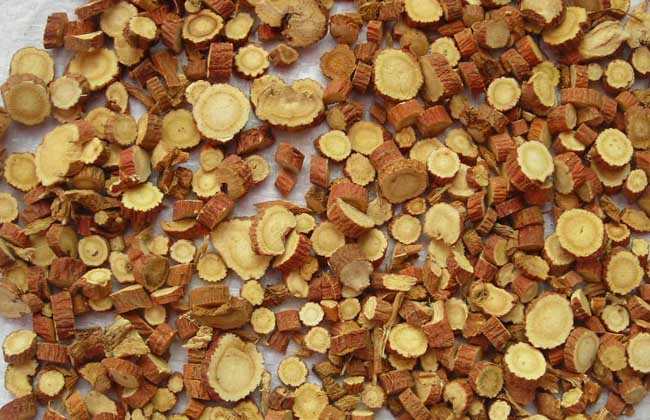
Licorice, also known as Guolao, sweet herb, Ural licorice, and sweet root, is mainly distributed in China and the Siberia region of Russia. It prefers shady and damp conditions and a dry climate with long sunshine hours and low temperatures, and mostly grows in arid and semi-arid desert steppes, desert margins, and loess hilly areas. Let us now take a look at the production areas of licorice!
Production areas of licorice
1. Domestic production areas: Licorice is mainly distributed in **, Inner Mongolia, Ningxia, Gansu, and Shuozhou in Shanxi, mostly as wild plants. Cultivated licorice is mainly produced in **, Inner Mongolia, the Hexi Corridor of Gansu, the surrounding areas of Longxi, and some areas of Ningxia.
2. Foreign production areas: It is distributed in Asia, Europe, Australia, the Americas, and other places, where most have traditional medicinal and other uses.
Production environment of licorice
Licorice mostly grows in arid and semi-arid sandy soil, desert margins, and loess hilly areas, and also reproduces easily in fields and river beach land in the Yellow River irrigation districts. It has strong adaptability and strong stress resistance.
Licorice prefers an ecological environment with ample sunlight, relatively low rainfall, scorching summers, severe winters, and large temperature differences between day and night. It has the characteristics of being light-loving, drought-tolerant, heat-tolerant, salt-alkali-tolerant, and cold-tolerant, and is suitable for growing in sandy soil with deep soil layers, loose texture, and good drainage.
How to distinguish good and poor quality licorice
Inspections of the Chinese herbal medicine market have found that licorice on the market has problems such as sulfur fumigation, bacteria, and excessive heavy metals, failing to meet medicinal requirements, and even counterfeit products appearing and being sold as licorice. The key points for identifying licorice are the following four.
1. The root is cylindrical, red-brown or gray-brown.
2. It has longitudinal furrows, wrinkles, and lenticels.
3. The texture is solid, the cross-section is yellow-white, and the cambium ring lines are obvious.
4. The odor is slight, with a special sweet taste.
The similar product Glycyrrhiza glabra, however, has fine but inconspicuous lenticels, a solid texture, fewer cracks in the cross-section, and a sweet taste. Glycyrrhiza inflata has thick and strong roots and rhizomes, is gray-brown or brown, has a hard texture and little powdery quality, and tastes sweet or slightly bitter. As for Glycyrrhiza eurycarpa and Glycyrrhiza aspera, their roots are thinner and their sweetness is slightly weaker. Glycyrrhiza pallidiflora and bitter licorice taste bitter, which can be used to distinguish them.