Detailed Explanation of Guan Fangfeng Cultivation Techniques and Management Methods
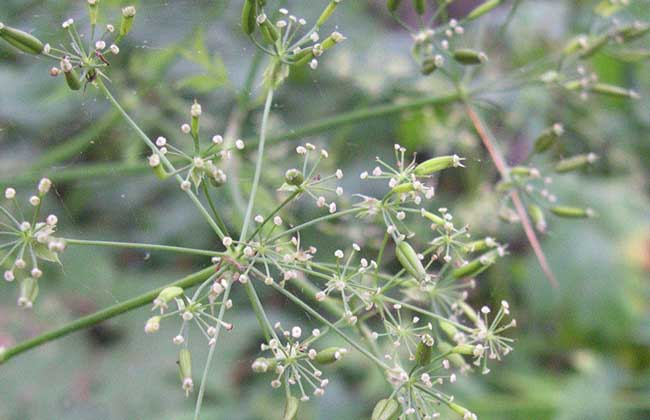
Guan Fangfeng, also known as Pangfeng, is a perennial herbaceous plant in the Apiaceae family, with its dried root used as medicine. It is mainly produced in Heilongjiang, Liaoning and Jilin. The Guan Fangfeng native to the three northeastern provinces has the best quality, hence the name Guan Fangfeng, with the best quality. Let us now look at the cultivation techniques for Guan Fangfeng!
Cultivation Preparation for Guan Fangfeng
1. Site selection: Guan Fangfeng is not very demanding regarding soil, but a sunny plot with high, dry terrain should be chosen. Sandy loam that is loose, fertile, deep and well-drained is most suitable. Clay, waterlogged low-lying land, strongly acidic or heavily saline-alkaline soil is not suitable for planting.
2. Land preparation: Guan Fangfeng is a deep-rooted plant, and in the second year its roots can reach 50-70 cm in length. Therefore, in autumn the land should be deeply plowed to more than 40 cm, and in early spring it should be leveled and harrowed fine, with root stubble and debris picked out clean, creating good basic conditions for the growth of Guan Fangfeng.
3. Fertilization: To meet the nutrient requirements for the growth and development of perennial Guan Fangfeng, sufficient base fertilizer must be applied. Apply 3000-4000 kg of high-quality farmyard manure per mu, adding 20-30 kg of superphosphate or 8-10 kg of diammonium phosphate. It is best to apply it to the ground surface before deep plowing in autumn, and then plow it into the plow layer. At the latest, it must be applied before land preparation and bed making. Fertilization should be uniform.
Cultivation Methods for Guan Fangfeng
Guan Fangfeng can be propagated either by direct seeding or by raising seedlings and transplanting. Production practice has found that the method of raising seedlings in the first year and transplanting in the second spring can achieve multiple benefits: saving seeds, facilitating centralized management, and saving land. Where conditions permit, root segment propagation can be used, utilizing root segment sprouting and rhizomes. Cut root segments 5 cm long, open furrows in early spring, and plant the root segments. Use 35-40 kg of planting root segments per mu. After planting, cover with soil, water and preserve moisture.
1. Bed making: For raising seedlings in beds, there are two types: open-field direct seeding and protected plastic arch shed seedling raising, which can be selected according to local conditions.
① Open-field direct seeding bed: The length and width of the bed surface are generally determined by the terrain conditions, adapting to local conditions and taking ease of management as the principle. The bed should be level, with straight ridges and firm.
② Medium shed: bed width 2.4 m, bed length 15-20 m. Small shed: bed width 1.2 m, bed length 15-20 m. Bed spacing 40 cm, all made into walking furrows 10-15 cm below ground level.
2. Suitable sowing time
① Seedling field: When using plastic arch sheds for early spring seedling raising, the time should be 7-10 days earlier than open-field direct seeding, because covering the shed has a moisture-retaining and temperature-increasing effect. The sowing method is mainly broadcasting.
② Open-field direct seeding: This should be carried out in early spring when the temperature reaches above 15°C, in early to mid-April, and ridge (row) sowing is preferable.
3. Seed treatment and sowing
① Seed treatment: Soak the selected seeds in warm water 3-5 days before sowing. Soak in 35°C warm water for 24 hours, or in 40°C-50°C warm water for 8-12 hours, so that the seeds fully absorb water and germinate readily. During soaking, stir while sprinkling the seeds, remove the shriveled seeds and impurities floating on the water surface, take out the plump seeds that sink to the bottom after soaking, dry them slightly and then sow.
② Broadcasting in seedling field: Prepare the bed surface well, spray water thoroughly, then broadcast the seeds by hand, using 2.5-3.0 kg of seed per mu. After broadcasting evenly, sieve on 2.0 cm of moist new soil with a bamboo sieve or iron sieve to preserve moisture, cover the seeds completely, then insert arches and cover with film.
③ Row sowing in open field: Open-field flat bed seedling raising uses row sowing. Use a hoe to open furrows by hand, with row spacing of 15-20 cm and furrow depth of 2-3 cm (slightly shallower in loam, slightly deeper in sandy soil). Use a dibbler to sow the seeds evenly in the furrows, cover with 1-1.5 cm of soil, and after it dries slightly, tread and press to preserve moisture.
④ Direct seeding in production field: The sowing method is basically the same as for open-field seedling raising, but the row spacing should be increased to 25-30 cm, and the seeding rate per mu reduced to 1.0-1.5 kg.
Field Management of Guan Fangfeng
1. Seedling stage management: For seedling raising in plastic film arch sheds, the period from sowing to emergence is the closed period. Check frequently and control the temperature inside the shed well. Generally 20°C-25°C is the suitable temperature. If the weather is too hot and the temperature inside the shed is too high, cover with straw mats for shading to lower the temperature. When the medicinal seedlings on the bed surface turn green, adjust the temperature inside the shed by uncovering the film for ventilation. As the seedlings grow, gradually enlarge the ventilation holes for hardening off until the plastic film is removed. If weeds appear in the bed, remove them promptly.
① Drought resistance and moisture preservation, striving for full stands: For open-field seedling fields and direct-seeded production fields, management during the period from sowing to emergence is very important. During this period, all drought-resistant and moisture-preserving measures should be taken, using pressing, treading, raking, rolling and stone rolling according to local and timely conditions, to ensure sufficient soil moisture in the sowing layer to meet germination needs, strictly prevent soil "drying out" and seed "bud drought", and strive to achieve full and strong seedlings.
② Weeding and loosening soil, preventing weed overgrowth and promoting strength: Weeds growing in the field and on the bed surface will affect seedling growth. Weeds should be removed as soon as they appear to prevent weeds from overwhelming the seedlings. At the same time, carry out 2-3 rounds of intertillage and soil loosening to improve the environment for seedling root growth, promote deep rooting, and achieve the effect of strong seedlings.
③ Thinning and final singling, pest control and seedling protection: 15-20 days after emergence, when seedlings reach about 3-5 cm in height, carry out thinning to open up "dead clumps" and prevent young seedlings from being overcrowded and growing thin and weak. After about one month of growth, when seedlings reach more than 10 cm in height, carry out final singling, with a seedling spacing of 2-3 cm in seedling fields and 8-10 cm in production fields, to prevent overcrowding and spindly growth. At the same time, the seedling stage coincides with the successive occurrence and damage of underground pests (mole crickets, grubs, cutworms, wireworms) and seedling-stage pests (weevils, scarab beetles), so field investigation and control work should be done well to ensure that Guan Fangfeng seedlings are not damaged. For control techniques, see the Northern Glehnia section.
2. Growth period management: Because Guan Fangfeng has strong adaptability, strong cold resistance and drought resistance, as long as a full stand is ensured, management during the growth period is relatively simple. To promote growth and development, some promotion and control measures can also be taken.
① Topdressing and watering: Under normal circumstances, artificially cultivated Guan Fangfeng in the first year rarely shows symptoms of fertilizer or water deficiency. Only when sown in sandy soil or encountering severe drought weather should appropriate topdressing and watering be done after final singling. Apply 8-10 kg of urea and 3-5 kg of potassium sulfate per mu, and water promptly after topdressing, to meet the growth needs of Guan Fangfeng seedlings under the influence of poor soil and bad weather.
② Intertillage and weeding: During the growth period, some weeds still grow at different times, and they should be pulled out promptly in combination with intertillage and soil loosening.
③ Flood drainage and waterlogging prevention: The vigorous growth period of Guan Fangfeng is in June, July and August, which coincides with the rainy season. Flooding and standing water in the field (bed) should be drained promptly, followed by intertillage, to maintain good permeability of the field surface soil, which is beneficial to root growth.
3. Overwintering period management: In the first year of Guan Fangfeng cultivation, it is vegetative growth, with the above-ground plant in a rosette shape, and bolting and flowering rarely occur. Once found, they should be removed promptly. When growth reaches early to mid-October, the above-ground leaves and stems begin to wither and yellow, entering the overwintering dormant period. Management during this period: first, water the freezing water well before overwintering, strictly preventing insufficient moisture caused by the dry climate in the north. The freezing water should be applied at the end of October or in early November, and irrigation should be uniform. Second, prevent damage from grazing and trampling by livestock and poultry, and do a good job in field management and protection. Third, manage the seedlings well in the seedling field, and do various preparatory work before transplanting in the transplanting field, such as land preparation, fertilization, water sources, etc.
4. Green-up period management: After the Guan Fangfeng rhizome undergoes a long winter "dormancy" underground, in the following spring as the weather warms and temperatures rise, the plow layer gradually thaws, the rhizome begins to sprout new buds, entering the green-up period and beginning new life activities.
① Clearing the field: Before green-up, manually clear the field thoroughly, remove the withered dry leaves and stems on the surface to outside the field and burn them, to reduce the occurrence and damage of diseases and pests.
② Topdressing and watering: Apply 1500-2000 kg of high-quality farmyard manure per mu, spread over the whole field, then water immediately, to promote green-up and achieve the goal of strong plants and strong roots.
③ Lifting seedlings and transplanting: In March-April of spring, before the seedlings "green up", in the prepared transplanting field, open furrows transversely at a row spacing of 15-18 cm for planting, with a furrow depth of 10-15 cm and a plant spacing of 8-10 cm. For compacted and dry soil, transplant with water setting, or use hole planting. Hole spacing 10-20 cm, with two plants per hole. When planting, plant straight and firm, so that the root system spreads out. After planting, cover with soil and press firm, or after planting give a general watering to settle the roots and revive the seedlings, improving the transplanting survival rate.
5. Vigorous growth period management: The production field aims to increase root yield, so strengthening management is very important. Therefore, the needs of Guan Fangfeng for growth conditions during the vigorous growth period must be met.
① Intertillage and soil loosening: From green-up to the vigorous growth period, Guan Fangfeng lasts more than two months. During this period, the production field still focuses on promoting root growth and development. Intertillage and soil loosening should be carried out frequently in the field to improve the root growth environment and promote robust root growth.
② Weeding and preventing weed overgrowth: Pull out weeds in the field promptly and prevent weed overgrowth.
③ Foliar topdressing: According to plant growth conditions, if nutrient deficiency is found, foliar topdressing can be carried out by spraying potassium dihydrogen phosphate, "Baoduoshou", root-promoting agents, etc., according to the instructions.
④ Removing bolting stems to promote roots: Because more than 80% of Guan Fangfeng plants will bolt, flower and set seed in the second year, after the above-ground plants flower, the underground roots begin to lignify, seriously affecting the quality of the medicinal root or losing medicinal value. Therefore, for plants more than two years old, except for seed fields, the flower stems must be removed early. Generally this needs to be done 2-3 times, removing any stem as soon as it is seen, to avoid nutrient consumption by flowering and affecting root development.