In which regions are the producing areas of Pinellia ternata distributed?
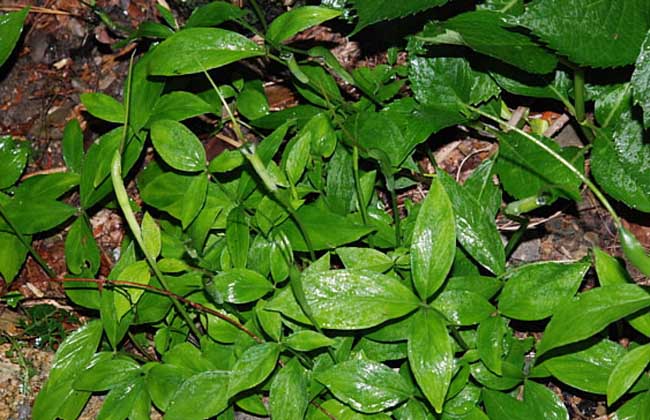
Pinellia ternata, also known as Diwen and Shoutian, is a perennial herbaceous plant of the Araceae family. It is widely distributed in the Yangtze River basin of China as well as in the Northeast and North China regions, and is also found in Tibet at an altitude of about 3000m. Below, the editor will introduce the producing areas of Pinellia ternata.
Producing areas of Pinellia ternata
Pinellia ternata is mainly distributed in Hubei, Henan, Anhui, Shandong, Sichuan and Gansu; it is also distributed in Zhejiang, Hunan, Hubei, Jiangsu, Hebei, Jiangxi, Shaanxi, Shanxi, Fujian, Guangxi, Guizhou and Yunnan.
Pinellia ternata is mainly produced in Wuchang, Laohekou, Xiangyang, Yangxin and Tianmen in Hubei; Runan, Lingbao, Lushi, Mianchi, Xi County, Huaibin and Tanghe in Henan; Huaining, Xuancheng, Ningguo, Funan and Yingshang in Anhui; Jinxiang, Juye, Jiaonan, Wulian and Laiyang in Shandong; and Suining, Anyue, Wanxian, Zhaojue, Yuechi, Bishan, Longchang, Rongchang, Zhongxian and Yingshan in Sichuan.
Ecological environment of Pinellia ternata
1. Temperature: When the average ground temperature is around 10°C, Pinellia ternata sprouts and emerges; when the average air temperature reaches 15°C-27°C, Pinellia ternata grows most luxuriantly. In some parts of China, starting in mid-July, as the plum rain season ends and temperatures rise, the maximum temperature often exceeds 35°C, and the growth of Pinellia ternata is severely affected. Without shade conditions, the aboveground parts of Pinellia ternata die off one after another, forming the summer large-scale seedling collapse. The suitable temperature for the growth of Pinellia ternata is 23°C-29°C.
2. Humidity: Pinellia ternata is not drought-tolerant and prefers to grow in soil with relatively high humidity. We once investigated a high-yield field of Pinellia ternata in Zhongxing Town, Shan County, where the average tuber yield reached 1500 kg. Its variety was the Heze-produced “narrow three-leaf Pinellia ternata”, which had almost no obvious seedling collapse process throughout the year, and even in the midsummer season its growth was very vigorous. One of the main measures was to insist on furrow irrigation once every evening with well water during summer, which both kept the soil moist and lowered the soil temperature, achieving two goals at once. Pinellia ternata both likes water and fears water. When soil moisture exceeds a certain limit, growth instead becomes poor, causing root rot, stem rot, seedling collapse and death, and a decline in tuber yield.
3. Light: Pinellia ternata is a shade-tolerant rather than shade-loving plant, and under conditions of moderate shading it can grow luxuriantly. However, if the light is too strong, Pinellia ternata finds it difficult to survive. A semi-shaded environment is suitable, and the number of bulbils and tuber weight gain can reach their maximum.
The legend of the origin of Pinellia ternata
It is said that long ago there was a girl named Bai Xia. While cutting grass in the fields, she dug up the underground tuber of a certain plant. Because she was unbearably hungry, she tried putting the tuber in her mouth and chewing it, wanting to use it to fill her stomach. Unexpectedly, after eating it she began to vomit, so she quickly chewed a piece of ginger to stop the vomiting. The vomiting stopped, and unexpectedly even a long-standing cough that had been difficult to cure was also cured. So Bai Xia used this medicine together with ginger to boil soup for the villagers to treat coughs, and the effect was very good. However, the tuber of this plant contains abundant sap and must be washed many times before it can be used. One day, while washing this medicine by the river, Bai Xia accidentally slipped into the river and died. To commemorate her, the local people named this medicine “Bai Xia”. Later, people also discovered that Bai Xia was harvested in summer and autumn, and as time passed, they gradually changed “Bai Xia” to “Ban Xia”.