What are the prospects for Pinellia ternata cultivation? Market conditions and benefit analysis
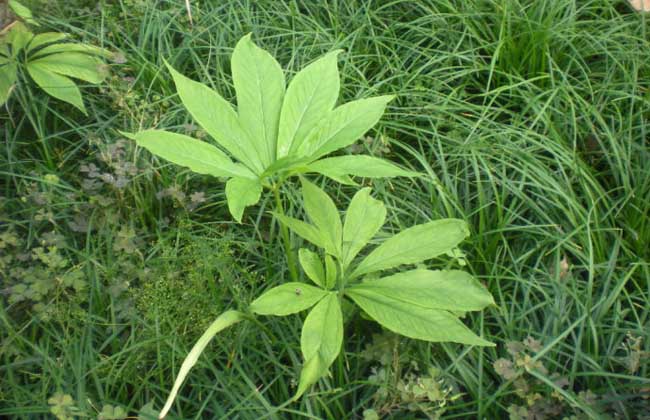
Pinellia ternata is a herbaceous plant of the Araceae family. Its underground corms are used medicinally and have the functions of drying dampness and resolving phlegm, and relieving distension and dissipating nodules. It has good effects on treating damp-phlegm cold drinks, vomiting, nausea, cough, excessive phlegm, headache and insomnia, and is used in large quantities. It is also a large-volume export variety year-round, with very high cultivation prospects!
Cultivation prospects of Pinellia ternata
According to statistical analysis of market surveys in major medicinal material markets and production areas across the country over the past ten years, the supply-demand gap for dry Pinellia ternata is relatively large, and the trend is strong. It has risen year by year from the original 40 yuan/kg, and in 2009 it rose steadily to 80-90 yuan/kg. After the autumn harvest in 2010, the price reached 150-160 yuan/kg, with selected products at 160-200 yuan, and supply fell short of demand. Over several years the price has already doubled. In September 2011 the price was 85-110 yuan. In November 2013 the price was 95-120 yuan. The long-term price trend remains high, and sustainable cultivation will continue from 2015 onward.
Current market situation of Pinellia ternata
1. Reduced output of wild Pinellia ternata: The Pinellia ternata commodity on the market has always mainly been supplied by wild products. Because rural barren hills and wasteland have continuously been reclaimed and used, its wild environment has been destroyed, and coupled with uncontrolled digging by medicinal herb growers year after year, its wild resources have nearly been exhausted in recent years. It is understood that in recent years the amount dug from new growth in main production areas is less than two-thirds of previous years.
2. Increased domestic demand for Pinellia ternata: Pinellia ternata has the effects of relieving cough and resolving phlegm, lowering adverse qi and stopping vomiting, and reducing carbuncles and swelling, and is a commonly used medicinal material. In the past two years, as domestic related pharmaceutical enterprises have developed and utilized new drugs and special drugs using it as a raw material, market demand for its commodity has increased day by day. In 2008, the transaction volume of the Pinellia ternata commodity market already exceeded 7000 tons, an increase of more than 45% over 2007 sales.
3. Increased export of Pinellia ternata in foreign trade: Pinellia ternata is one of China's main export medicinal material varieties. As the international community recognizes the therapeutic effects of traditional Chinese medicine, orders for Pinellia ternata from countries such as those in Southeast Asia are increasing day by day, and the export volume of its commodity is constantly increasing. According to statistics from foreign trade departments, in the past two years the export volume of this product has increased at a rate of 20%, and in 2008 the export volume was more than 3000 tons.
Cultivation conditions for Pinellia ternata
Judging from the current production and sales situation of Pinellia ternata, the contradiction between supply and demand of the Pinellia ternata commodity will become increasingly prominent, and it will be difficult to alleviate within three to five years. Therefore, it is currently suitable to develop Pinellia ternata production. Farmers with the conditions can cultivate Pinellia ternata according to local conditions to increase income. Below let us take a look at the cultivation conditions for Pinellia ternata!
1. The soil is loam, and it cannot be too acidic or too alkaline. The pH is between 6.5-7.0, and there are no or very few root-borne weeds and stones in the soil.
2. The soil is fertile, with organic matter content exceeding 1.2%.
3. There is sufficient water source, watering is convenient, and drainage can be thoroughly carried out.
4. The terrain has a certain slope, preferably a slope of 5-10 degrees. If there is no slope, multiple ditches should be made.