Is Pinellia ternata toxic? Understanding the toxicity and precautions of Pinellia ternata
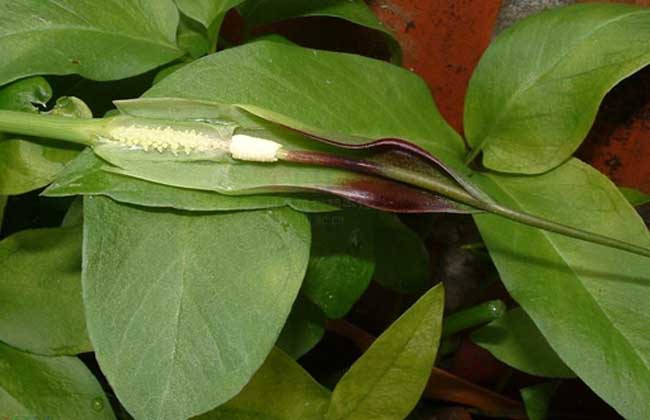
Pinellia ternata is widely distributed in South China and North China, and is also found in Tibet. It has many medicinal effects and good potency, and is a common traditional Chinese medicine. However, Pinellia ternata is toxic, and we should pay special attention when using it. Below, let us discuss the toxicity of Pinellia ternata.
Is Pinellia ternata toxic?
Pinellia ternata is toxic. Pinellia ternata has neurotoxicity. Among its water-soluble components, the substance precipitated after adding lead acetate contains substances that cause skeletal muscle spasms in frogs and mice and dilate the pupils of frogs. The filtrate contains substances that cause central and curare-like skeletal muscle relaxation in frogs. Taking even a tiny amount of raw Pinellia ternata by mistake can cause poisoning, so raw Pinellia ternata is managed as a toxic traditional Chinese medicine and must be processed before clinical use. In addition, Pinellia ternata also has strong irritation to local mucous membranes, nephrotoxicity, embryonic toxicity in pregnancy, and teratogenic effects.
What should be done in case of Pinellia ternata poisoning?
“Ginger counteracts Pinellia ternata, and Pinellia ternata fears ginger.” Simply put, ginger can neutralize or greatly reduce the toxicity of Pinellia ternata, so formulas that use Pinellia ternata generally add ginger. Even if ginger is not used in the formula, Pinellia ternata will definitely have been processed.
Pinellia ternata is toxic, but there is no need to panic. Every medicine has some toxicity. Pay attention to the doctor's instructions and take it carefully, and its effects can still be achieved and its medicinal role brought into play. Moreover, as one thing subdues another, just like ginger and Pinellia ternata, as long as you use the medicine correctly, the toxicity can also be reduced or even eliminated.
Processing methods of Pinellia ternata
1. Qing Banxia: Take clean Pinellia ternata, separate by size, soak and rinse, changing the water 2~3 times daily, until white foam appears (about 7 days). After changing the water, add alum (for every 100 kg of clean Pinellia ternata, add alum (8 kg)) and dissolve it, then soak for another 7 days. Wash with water, take out and place in a stainless steel pot, add the remaining alum, first use high heat, then low heat, and cook for about 3 hours, until there is no white center inside. Add a small amount of water, take out, air-dry until 70% dry, then cover and let stand for about 3 days, cut into thin slices, and dry in the shade. For every 100 kg of clean Pinellia ternata, use 12.5 kg of alum. The finished product is oval, nearly round, or irregular slices. The cut surface is light gray to grayish white, and grayish white dotted or short-line vascular bundle traces may be seen. It is brittle and easy to break, and the broken surface is slightly horny. It has a slight odor, a slightly astringent taste, and a slight numbing sensation on the tongue.
2. Jiang Banxia: Take clean Pinellia ternata, separate by size, soak and rinse, changing the water 2~3 times daily, until white foam appears (about 7 days). After changing the water, add alum (for every 100 kg of clean Pinellia ternata, add 4 kg of alum) and dissolve it. After soaking for 3 days, discard the alum water, then soak for another 7 days, gently stirring and changing the water 2 times daily, then add 4 kg of crushed alum and dissolve it. Add ginger water (take 8 kg of fresh ginger slices, add water and decoct twice, the first time for 2 hours, the second time for 1 hour, combine the decoctions, and let cool) to the Pinellia ternata. After soaking in the alum-ginger water for another 7 days, wash with water, cut open and taste to confirm there is no numbing or spicy sensation, take out and place in a stainless steel pot, add the remaining alum and fresh ginger, first use high heat, then low heat, and cook for about 3 hours, until there is no white center inside or outside. Add a small amount of water, take out, air-dry until 70% dry, then cover and let stand for 3 days, and dry in the shade. For every 100 kg of clean Pinellia ternata, use 12.5 kg of alum and 10 kg of fresh ginger. Jiang Banxia is slice-shaped, irregularly granular, or nearly spherical. The surface is brown to brownish brown. The cut surface is light yellowish brown and often has a horny luster. It is hard and brittle. It has a slight fragrance, a bland taste, a slight numbing sensation on the tongue, and is slightly sticky to the teeth when chewed.
3. Fa Banxia: Take clean Pinellia ternata, separate by size, soak for 10~12 days, gently stirring and changing the water 2 times daily, until there is no dry center, then soak in alum water for 3 days, remove the alum water, soak in water for another 2 days, add licorice and lime liquid (take 20 kg of licorice, add water and decoct 2 times, combine the decoctions, and pour into lime liquid made with an appropriate amount of water) and soak, stirring 1~2 times daily, and keep the pH value above 12.0, until there is a slight numbing sensation on the tongue and the cut surface is uniformly yellow. Take out, wash clean, and dry in the shade or dry at low temperature. For every 100 kg of clean Pinellia ternata, use 20 kg of licorice, 2 kg of alum, and 30 kg of quicklime. This product is nearly spherical or broken into irregular granules. The surface is light yellowish white, yellow, or brownish yellow. It is relatively loose and brittle or hard and brittle, and the broken surface is yellow or light yellow; the granular form is slightly hard and brittle. It has a slight odor, a bland and slightly sweet taste, and a slight numbing sensation on the tongue.