What are the prospects for growing Salvia miltiorrhiza (red sage)?
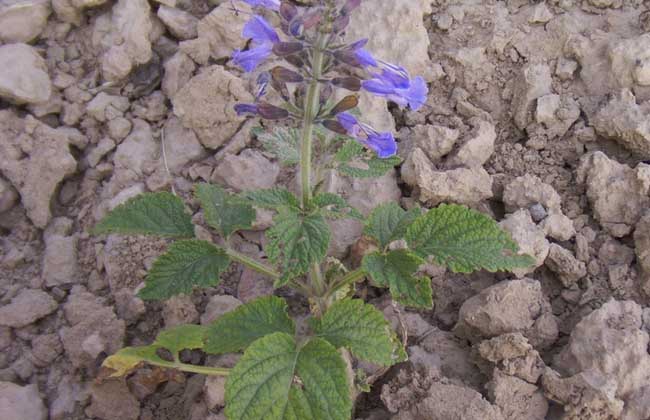
Salvia miltiorrhiza, also known as red sage, purple salvia, and red root, has the effects of invigorating blood and regulating menstruation, removing blood stasis and relieving pain, cooling blood and eliminating abscesses, clearing the heart and relieving restlessness, and nourishing blood and calming the mind. It is a commonly used bulk Chinese medicinal herb, suitable for planting in hilly areas with dry, rain-scarce conditions, scarce water sources, and sandy loam soil, with stable yield and relatively high returns. Let's take a look below at the prospects and benefits of growing Salvia miltiorrhiza!
Prospects for growing Salvia miltiorrhiza
Salvia miltiorrhiza has wide uses and high efficacy, and nationwide demand is growing rapidly; in some years, supply falls short of demand. In the early 1960s, annual nationwide demand was less than 1 million kg, and by 1978 it increased to 6.52 million kg, with sales volume growing more than 5.5 times over 18 years. The reason for the rapid increase in demand, apart from population factors, is mainly that scientific and technological development has led to more and more uses for Salvia miltiorrhiza.
Scientific research has found that Salvia miltiorrhiza not only has the function of invigorating blood and dissolving stasis, but also has new therapeutic effects on treating cardiovascular and cerebrovascular diseases, liver diseases, vasculitis, and neurasthenia, among many other diseases. There are nearly 100 kinds of Chinese patent medicines produced with Salvia miltiorrhiza as a raw material, such as Danshen Gao, Danshen Pian, compound Danshen tincture, Guanxin Pian, Danshen Gegen Liuhu Pian, Danshen Wan, Danshen injection, Shuxin granules, Guanxin granules, and compound licorice Danshen tablets. The dosage forms produced include more than 10 kinds, such as honey pills, water pills, tablets, tinctures, granules, syrups, and injections.
Especially in recent years, with changes in people's dietary structure and the emergence of an aging society, the incidence of cardiovascular diseases has shown an upward trend. Salvia miltiorrhiza plays an irreplaceable role in clinical treatment and prevention compared with other drugs, thus greatly increasing its value and doubling its usage. Demand stimulates production and also stimulates harvesting. Large-scale harvesting year after year has severely damaged wild resources, and in some places they are on the verge of extinction, with output continuously decreasing and quality greatly declining. The promotion of new artificial cultivation techniques is not fast, per-unit yield is not high, and total output is unstable. In some places, due to severe pests and diseases, large amounts of pesticides and chemical fertilizers have been applied unscientifically year after year, greatly affecting the quality of artificially cultivated Salvia miltiorrhiza.
Therefore, mid-to-high-end products on the market, especially export products, have always been in tight supply, and prices have risen steadily. From 1998 to 1999, prices in the national 75 major medicinal materials markets remained at 11-18 yuan/kg. It can thus be seen that at present, in suitable areas, choosing pollution-free and hazard-free plots, selecting excellent varieties, and adopting standardized Salvia miltiorrhiza cultivation techniques can produce good returns for green mid-to-high-end Salvia miltiorrhiza, and the market potential is still quite large.
Investment costs for Salvia miltiorrhiza (excluding land)
1. Seedlings: 8,000 Salvia miltiorrhiza seedlings are planted per 667 sq m/mu, and the market price of high-quality seedlings is 0.06 yuan/seedling, requiring an investment of 480 yuan per mu.
2. Plowing: generally deep plowing once and rotary tillage once, at a cost of about 80 yuan per mu.
3. Fertilizer: 50 kg of compound fertilizer per mu as base fertilizer, about 150 yuan. Adding topdressing, calculated at about 50 yuan. Total 200 yuan (farmyard manure not included).
4. Pesticides: in ordinary years, Salvia miltiorrhiza has fewer diseases; during the growing period, diseases occur twice, with prevention as the main approach, so the cost is relatively low.
5. Other: labor costs for planting, harvesting, and drying; due to different factors such as cultivation methods, planting time, and environmental conditions, and for unbudgeted investments, calculated at 800 yuan.
Growing benefits of Salvia miltiorrhiza
After Salvia miltiorrhiza is planted in late autumn or early spring, the growing period is one year, and it is harvested in the autumn of that same year. In ordinary years, under conditions without major natural disasters, the average yield is 50 grams of dry goods per plant. With 8,000 plants cultivated per mu and calculated at a 90% survival rate, 360 kg of dried Salvia miltiorrhiza can be harvested per mu.
If calculated at the market price of 14-18 yuan/kg for general goods (regardless of size), the income per mu is 6,000-6,500 yuan, and after deducting costs, the profit is 3,300-4,800 yuan.