How is the growing prospect for Dendrobium officinale really?
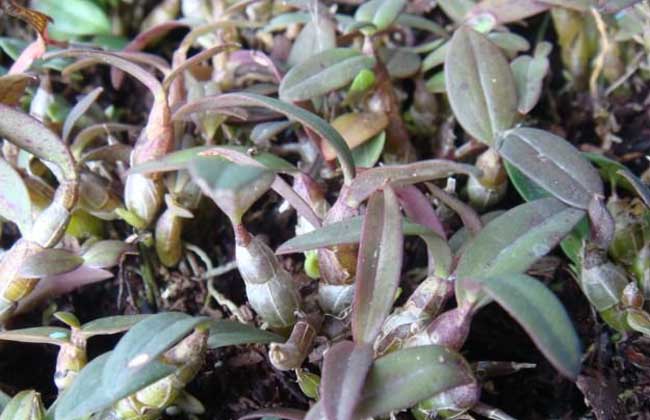
Dendrobium officinale is a perennial epiphytic herb of the orchid family, listed as "the first of China's nine great immortal herbs." In recent years, Dendrobium officinale has been deeply loved by people, and many have begun to pursue its cultivation. So how exactly is the growing prospect for Dendrobium officinale? Below, the editor will analyze the growing prospect for Dendrobium officinale for you!
The growing prospect of Dendrobium officinale
Wild Dendrobium officinale is a nationally protected plant in China, and digging it up is prohibited, which means most Dendrobium officinale plants are artificially cultivated. However, because growers understand the growth habits of Dendrobium officinale and manage artificial cultivation scientifically, Dendrobium officinale cultivated by imitating the wild growing environment has the same components and effects as wild Dendrobium officinale. Wild Dendrobium officinale prefers shady, cool and moist environments, and often grows attached to high-altitude cliffs or in tree trunks and rock crevices in forests. Due to its high medicinal value, special growing conditions and limited distribution, and after long-term human digging, wild resources are on the verge of extinction, so the domestic market supply is in shortage. Dendrobium officinale is the finest among Dendrobium officinale, with the highest medicinal value, and it is named for its iron-green surface. However, because its growing conditions are extremely demanding, natural output is extremely scarce, and because of long-term excessive digging by people, wild resources are on the verge of extinction. Huoshan Dendrobium officinale produced in Huoshan County, Anhui Province, is the finest among Dendrobium officinale. On the market, only a few major brands, such as Fulinmen and Beijing Tongrentang, can offer genuine Dendrobium officinale, and Fulinmen Dendrobium officinale is relatively affordable.
It is precisely because of the extremely low reproductive and survival capacity of Dendrobium officinale, combined with reckless harvesting by those blinded by greed, that Dendrobium officinale is on the verge of extinction. In view of the medicinal value of Dendrobium officinale and the scarcity of its resources, it is not surprising that it has been crowned with the fine name "plant gold." Just as "a person in the spotlight attracts gossip," Dendrobium officinale, with its uniqueness superior to other Chinese herbal medicines, has become the "darling" of market consumers.
Market price of Dendrobium officinale
The purchase price of fresh stems of Dendrobium officinale is mostly above about 700 yuan/kg. Recently, because the large-scale harvest period has passed, the price of fresh stems of Dendrobium officinale has even exceeded 1,200 yuan/kg. In the last two years, the price of Dendrobium officinale has also continued to show an upward trend. In 2010, the price of Dendrobium officinale was 500 yuan per kg, and by 2013 it had risen to 1,000-1,200 yuan/kg, while this year such a price has achieved an almost complete victory among all agricultural products. The average price from national statistics on Chinese medicine resources:
1. Fresh stems of Dendrobium officinale: 2,500-3,000 yuan per kg.
2. Premium Dendrobium fengdou: 16-20 yuan per gram.
3. High-grade Dendrobium fengdou: 14-18 yuan per gram.
Risks of growing Dendrobium officinale
As a new type of precious Chinese medicine industry, Dendrobium officinale cultivation has attracted widespread attention from various places in recent years, and more than 10 provinces, municipalities and autonomous regions across the country have already been cultivating and developing this industry. Overall, growing Dendrobium officinale has good benefits and large market demand, and many people are optimistic about this business opportunity, eager to try, and want to seize a beachhead in this "golden" industry. Here, we remind those who are unfamiliar with Dendrobium officinale cultivation not to develop it blindly under any circumstances, for the following reasons:
1. High difficulty of cultivation technology: Although after more than 10 years of research and exploration, the artificial cultivation technology of Dendrobium officinale is basically mature. However, it is still very difficult for ordinary people to master skilled cultivation techniques in a short period. At present, cultivation techniques vary unevenly across places, and product quality and benefits also differ greatly, with cultivation failures occurring from time to time.
2. Large investment and high risk: Calculating by an actual effective planting area of 400 sq m per mu under intensive greenhouse cultivation, each mu requires 30,000-50,000 clusters of seedlings. Calculated at the current 2.5 yuan per cluster, the seedling investment requires more than 80,000 yuan. Adding the cost of greenhouses and other facilities, as well as 2 years of labor and management fees, the investment per mu exceeds 100,000 yuan. Once cultivation fails, the loss is heavy, and such examples have appeared many times.
4. Long cycle: From tissue culture of seedlings to acclimatization of bottle seedlings takes about 15 months. In Dehong and other places in Yunnan with relatively high temperatures, it takes 15-18 months for preliminary harvest, while in some areas with lower temperatures, the harvest period takes 18-30 months.
5. Difficult to guarantee the quality of Dendrobium officinale: China currently has as many as 76 varieties of Dendrobium officinale, and Dendrobium officinale alone also has several seedlings of different qualities, such as hybrid species, original-place species, soft-stem species and hard-stem species, which are difficult even for ordinary professionals to distinguish. In addition, factors such as substrate selection, planting mode, fertilization and pest and disease control all affect the quality of Dendrobium officinale. If the techniques are not mastered well, the quality of the cultivated product is poor, and pesticide residues, heavy metals and other substances exceed standards, making it generally very difficult to sell.
6. Follow the principle of Dao-di medicinal materials: Although they are all Dendrobium officinale, their quality differs greatly due to different growing places. At the current initial stage of the industry, consumers do not yet attach much importance to the place of origin. With market expansion, the Dao-di principle will be taken seriously, and Dendrobium officinale grown artificially in greenhouses in some places unsuitable for cultivation will lose the market due to quality and other reasons.
7. Unstable market conditions: Due to the participation of enterprises in Zhejiang, Guangdong and other places, large one-time planting areas, plus the impact of greenhouse cultivation quality, Dao-di nature and various other factors, the Dendrobium officinale market is unstable, and later benefits are difficult to predict.
Behind the rapid development of Dendrobium officinale, the problems facing the industry are becoming more and more obvious. "The Dendrobium officinale industry is a new thing, and there are many problems in the development process. The speed of Dendrobium officinale cultivation and production is far greater than the speed of consumption development, and the market will experience a 'shock' within 3-5 years."