What exactly is the planting prospect for yew?
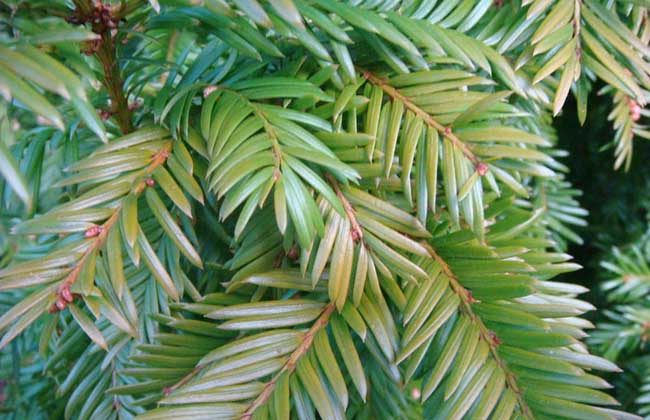
The yew is a relict plant from the Tertiary period, known as a “living fossil” in the plant kingdom. Because its resources are scarce, it is listed as a rare tree species in the world and protected. The medicinal value of the yew is mainly embodied in its extract—a secondary metabolic derivative—taxol. Taxol was first isolated from the bark of the Pacific yew (Taxus brevifolia) as an antitumor active ingredient, and it has very high planting value. Let us take a look below at the planting prospect of yew!
The planting prospect of yew
1. The yew combines medicinal, timber and ornamental uses, and has extremely high development and utilization value. Taxol extracted from yew bark, branches and leaves is internationally recognized as an anticancer drug, priced at 5 to 10 million USD per kilogram.
2. Taxol is used to treat advanced breast cancer, lung cancer, ovarian cancer, head and neck cancer, soft tissue cancer and digestive tract cancer.
3. Yew branches and leaves are used to treat leukemia, nephritis, diabetes and polycystic kidney disease.
4. Natural yew resources are scarce and medicinal sources are in short supply, so extensive research and development is being carried out in various places.
Every part of the yew is valuable, so the yew tree is also called the “golden tree”, and its planting prospect is promising. Places with mature conditions can develop it appropriately.
The planting value of yew
1. The yew has irreplaceable medicinal value: from the international market perspective, taxol products have maintained a growth rate of 20%. At present, the global trade volume of taxol has remained above 1.5 billion USD. After entering the 21st century, about 1500-2500 kg of taxol is consumed each year, and the United States alone needs to consume about 300 kg. Yet the United States can only produce about 50 kg; from the domestic market perspective, although China's taxol stock solution output is about 50 kg, only a very small part is used for domestic patients, and it is mainly exported to Europe, the United States and Japan. China's demand for taxol is conservatively estimated at more than 1000 kg per year, and the current sources of raw materials and taxol pharmaceutical products are still far from meeting the needs of the domestic market. Therefore, under China's policy of continuously expanding domestic demand, the domestic production of taxol and the construction of yew bases alone contain huge market prospects.
2. Landscaping: the yew has a very developed root system and can be widely used to build soil and water conservation forests and water source conservation forests. It is a preferred seedling for national key ecological construction projects.
3. Horticulture: through artificial pruning, the yew's tree shape can be turned into round, umbrella, tower and other artistic shapes, and it is widely planted on both sides of roads, in courtyards, parks and around buildings.
4. Indoor bonsai: the yew's unique air-purifying function has a clear effect on improving air quality.
Differences among common types of yew
1. Korean yew: leaves long and pointed, light in color; trunk whitish; seeds black-red in color, slightly triangular, pointed at the front and small at the rear.
2. Southern yew: leaves broad and long, dark in color; grows fast; can tolerate as low as 15°C; seeds light in color, greenish, flat and round, with a flat and large rear.
3. Northern yew: leaves narrow and short, darker in color; seeds red in color, round with a pointed head, and the smallest rear.