When do yew trees generally bloom and bear fruit?
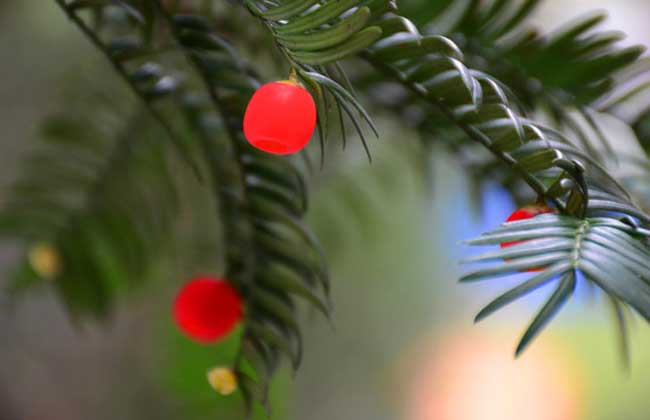
The yew is a shallow-rooted plant with an inconspicuous main root and well-developed lateral roots. It is recognized worldwide as a rare natural anti-cancer plant on the verge of extinction, an ancient relict tree species left over from the Quaternary glaciation, with a history of 2.5 million years on Earth. Let's take a look below at when yew trees bloom and bear fruit!
Flowering and fruiting time of the southern Chinese yew
The southern Chinese yew (Taxus wallichiana var. mairei) bears fruit at 7-8 years of age. It is dioecious, with a flowering period from April to May and a fruiting period from June to November. The fruit is shaped like a cherry and colored like a ruby, and looks very attractive hanging on the branches and leaves. The fruit is ornamental and edible. Before the yew bears fruit, it is impossible to distinguish male from female, and due to changes in environment and climate and other factors, the sex can change between male and female. Long-term cultivation and care experience has proven that the proportion of female trees is far greater than that of male trees.
Flowering and fruiting time of the Media yew
The Media yew (Taxus x media) is dioecious, with female and male plants planted in a 9:1 ratio; female plants can bloom and bear fruit after 4-5 years of planting, with a flowering period from April to May and a fruiting period from June to November. The fruit grows on the fruiting mother branches of the previous year, so when pruning female plants, the number of fruiting mother branches must be ensured so that the yew can bear fruit the following year.
Conditions for yew trees to bloom and bear fruit
1. The tree age must reach the conditions for blooming and bearing fruit.
2. Suitable growing conditions
2. The yew is dioecious, and cross-pollination between male and female plants is required for it to bear fruit, so the planted yews need to include both female and male plants.