What Is Cordyceps? A Comprehensive Guide
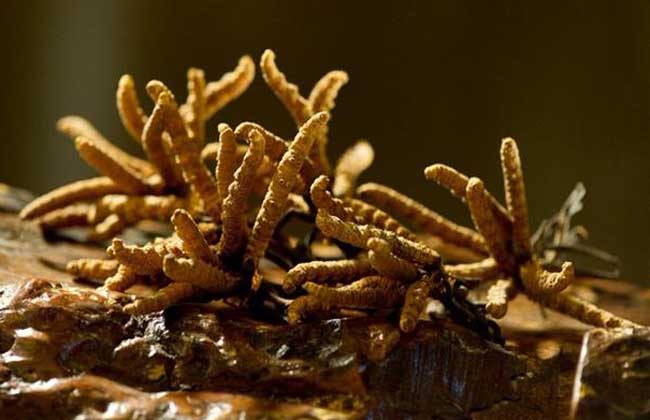
Cordyceps is formed by the fungus Cordyceps sinensis of the order Hypocreales, family Ophiocordycipitaceae, genus Ophiocordyceps, which parasitizes the larvae of ghost moths in alpine meadow soil, causing the larval body to become rigid, and under suitable conditions, in summer a long club-shaped stroma grows out from the head end of the dead larva, that is, a complex composed of the fruiting body of Cordyceps sinensis and the sclerotium of the dead larva. It is a precious tonic medicinal material commonly used in Chinese folk medicine, and its nutritional content is higher than that of ginseng. It can be used as medicine and also eaten, and is a superior delicacy with high nutritional value.
The winter worm and the summer grass are two different species. The winter worm is the larva of an insect, which is invaded by the fungal species of the summer grass during its growth, and the summer grass grows inside the winter worm's body, causing the death of the winter worm. When summer arrives, the fruiting body of the summer grass grows out of the winter worm's body, just as if the winter worm had grown into the summer grass. If there were no invasion by the summer grass fungus, the winter worm would complete its life cycle of egg, larva, pupa and adult. It is precisely because of the invasion of the summer grass fungus that the winter worm's life ends at the larval stage, becoming food for the summer grass, which has led to the misunderstanding that it is a worm in winter and becomes a grass in summer.
Cordyceps is formed by the connection of the insect body and the stroma, with a total length of 9-12 cm. The insect body resembles a silkworm after its third molt, about 3-6 cm long and about 0.4-0.7 cm thick. The surface is dark yellow, rough, with many transverse wrinkles on the back, and 8 pairs of feet on the ventral surface, of which the 4 pairs located at the middle of the insect body are clearly visible. The cross-section is solid inside, white, slightly yellowish, with the periphery showing dark yellow. The stroma grows from the head of the insect body, is club-shaped, curved, and slightly swollen at the upper part. The surface is grayish brown or blackish brown, up to 4-8 cm long, about 0.3 cm in diameter. When broken, the interior is hollow and powdery white.
Cordyceps is mainly produced in the upper reaches of the three river basins of the Jinsha River, Lancang River and Nu River, from Liangshan in Sichuan Province in the east to Burang County in Tibet in the west, from the Minshan Mountains in Gansu Province in the north to the Himalayas and Yulong Snow Mountain in Yunnan Province in the south. The output of Cordyceps in Tibet accounts for about 41% of the national output of Cordyceps, the output of Qinghai Province accounts for about 33% of the national output of Cordyceps, and the output of Cordyceps in Yunnan Province and Sichuan Province each accounts for around 11-16%.
The main active ingredient of Cordyceps is cordycepin, which can enhance the body's immunity and nourish the lungs and kidneys. It has a significant inhibitory effect on lung cancer, liver cancer, etc. Clinically, it is effective for chronic cough due to lung deficiency, asthma, hemoptysis due to pulmonary tuberculosis, night sweats, soreness and weakness of the waist and knees due to kidney deficiency, impotence and seminal emission, neurasthenia, and decreased red blood cells after chemotherapy and radiotherapy. It is suitable for consumption by people with cancer, diabetes, lupus erythematosus, chronic nephritis, chronic bronchitis in the elderly, emphysema, pulmonary tuberculosis, bronchial asthma, cough with shortness of breath, asthenic asthma with hemoptysis, as well as those with reduced white blood cells, physical weakness with excessive sweating, spontaneous sweating, night sweats, weakness after illness, prolonged deficiency without recovery or aging and frail constitution, insufficient kidney qi, soreness and weakness of the waist and knees, and impotence and seminal emission.
There is no unified standard for the grading of Cordyceps. The retail market has terms such as "grade one, premium grade, king grade," but they are not universally applicable. The Cordyceps trading market by default uses the size and number of pieces as the specification basis, but this method of distinguishing good from bad Cordyceps by shape is a product of an era when science was underdeveloped. Modern technology has already confirmed that the main active ingredient responsible for the effects of Cordyceps is cordycepin, and it can also precisely determine the various components in different types of Cordyceps. Therefore, grading Cordyceps by the content of the main active ingredient cordycepin is the most scientific method.