What are the prospects for Isatis root cultivation? Benefit and market analysis
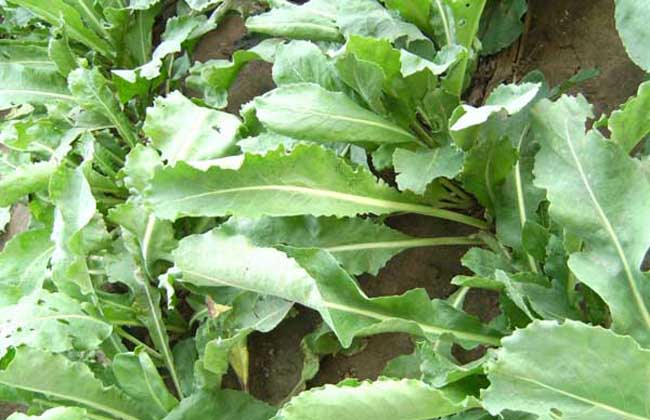
Isatis root, also known as indigo root, blue indigo root, and Daqing root, is a traditional Chinese medicinal material. It is the dried root of the cruciferous plant Isatis indigotica (woad), usually harvested in autumn, and can be used as medicine after processing. It is produced throughout China. Let us take a look at the cultivation benefits and prospects of Isatis root!
Cultivation conditions for Isatis root
Isatis root has strong adaptability to climate and soil conditions. It is resistant to severe cold and prefers warmth, but fears waterlogging. It can grow normally in the Yangtze River basin and most northern regions of China. The seeds germinate easily and germinate well within the range of 15°C to 30°C, with a germination rate generally above 80%. The seed lifespan is 1 to 2 years.
The normal growth and development process of Isatis root must go through a low-temperature winter stage before it can flower and set seed. Therefore, production takes advantage of this characteristic by sowing in spring or summer, harvesting the leaves and digging up the roots in the same year, with a growing period of 5 to 7 months. If cultivated according to the normal growth cycle, it is only used for seed production.
Cultivation benefits of Isatis root
Isatis root is a plant of the genus Isatis in the cruciferous family. Its root is used as medicine, and it is one of the commonly used bulk medicinal materials. In recent years, due to continuously increasing social demand, the commercial price of Isatis root has risen steadily. At present, the medicinal material market has already seen a situation where supply falls short of demand, and it has been recommended by the National Administration of Traditional Chinese Medicine as one of the 63 scarce traditional Chinese medicinal materials for key development. Therefore, the prospects for artificial cultivation of Isatis root are very promising, and medicinal herb growers can develop production on an appropriate scale according to local conditions. Isatis root is suitable for cultivation throughout China and can be sown in spring, summer, and autumn. It takes only 6 to 7 months from sowing to harvest and can be continuously cropped twice a year. It is a medicinal material variety with low cost and quick returns. Taking the cultivation of 1 mu of Isatis root as an example:
1. Input: seed usage 2 kg, seed cost 200 yuan, fertilizer (50 kg phosphate fertilizer, 20 kg compound fertilizer, 10 kg urea) 100 yuan, pesticides, herbicides, etc. 30 yuan, totaling 330 yuan.
2. Income: Isatis root normally produces 250 to 350 kg of root tubers (in high-yield cases it can reach more than 400 kg). The current market purchase price is 20 to 25 yuan/kg. Calculated at the lowest yield and price, the output value is 250 kg × 20 yuan/kg = 5000 yuan.
3. Net profit: 5000 yuan - 330 yuan = 4670 yuan.
Prospects for Isatis root cultivation
Isatis root is one of the commonly used bulk traditional Chinese medicinal materials in China, with the effects of clearing heat and detoxifying, cooling the blood, and benefiting the throat. Isatis root has the most obvious antiviral effect and is a good medicine for preventing and treating epidemic diseases such as influenza, mumps, Japanese encephalitis, and infectious hepatitis. Therefore, historically, whenever epidemics or diseases were discovered in various places, Isatis root was present. Since China's reform and opening up last century, the Isatis root market has fluctuated greatly under the influence of various factors. For example, in 1987, when an epidemic of infectious hepatitis broke out in Shanghai, Isatis root soared from about 2 yuan (price per kilogram, the same below) before the incident to a high price of 22 yuan; the second time was in the spring of 2003 during “SARS” in Guangzhou, where the epidemic was most severe, and the price at its highest rose to more than one hundred yuan; the third time was in 2005 when avian influenza occurred in certain areas of China, and prescriptions were also mainly based on Isatis root. It is not difficult to see that the glorious history of Isatis root is closely linked to sudden epidemics.
Because Isatis root has an obvious antiviral effect, new products have been continuously launched in recent years, and sales of Isatis root have continued to increase. The annual sales volume of Isatis root (excluding the 2003 SARS period) has remained around 15,000 tons in recent years. Medicines mainly using Isatis root as a raw material include: Isatis root granules, Isatis root injection, Isatis root syrup, Isatis root tablets, Isatis root lozenges, Isatis root tea, etc. Among them, Isatis root granules are well known to everyone. They are cheap, convenient to take, obviously effective, and free of side effects. They are a good medicine for preventing colds in spring, autumn, and early winter, and their sales volume is huge.
Isatis root is also used in large amounts in veterinary medicine. With the continuous development of China's breeding industry, various livestock diseases occur frequently, such as the avian influenza that occurred this year. Isatis root has an obvious antiviral effect, and its annual sales volume in veterinary use is also above 2,000 tons.
In addition, since 2004, Isatis root began to see large-scale abandonment or reduction of planting. There are mainly two reasons. First, under the influence of national preferential policies such as rising grain prices and direct subsidies for grain cultivation, farmers abandoned medicinal herbs and switched to grain, and the area planted with medicinal materials decreased year by year. Second, when Isatis root was at its peak, the price was extremely high, and when the market collapsed, the price fell and was difficult to recover. Price changes were dramatic, sudden, and prolonged. In addition, Isatis root easily changes color, loses oil, and becomes infested with insects, making it difficult to store for a long time. As a result, producers and operators missed opportunities during every price fluctuation, and farmers in production areas were hit the hardest.
In view of the above reasons, people in the pharmaceutical field predict that the prospects for developing Isatis root are broad. It is hoped that favorable opportunities will be seized to develop Isatis root cultivation according to GAP standards.