What Are the Prospects for Bletilla striata Cultivation? Market Conditions and Cultivation Profit Analysis
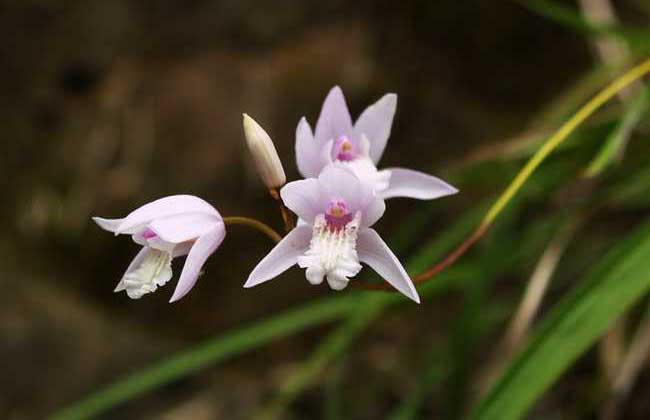
Bletilla striata belongs to the category of wild small medicinal herbs of the third class. With the impact of the market economy, its resources are gradually being depleted. The contradiction between supply and demand and the gradual rise in prices have begun to attract widespread attention. Below, the editor will introduce the cultivation prospects and cultivation benefits of Bletilla striata for everyone!
The Cultivation Prospects of Bletilla striata
1. Resource output. Bletilla striata, also known as Gan Gen, Bai Gen, Bai Wu Er Tou, Yang Jiao Qi, etc., is an orchid family plant. The tuber of Bletilla striata is irregularly flattened and round, with 2-3 claw-like branches, and its surface is yellowish-white or grayish-white. It is a rare species. In China, it is mainly distributed in Guizhou, Sichuan, Yunnan, Guangxi, Zhejiang and other places, with the main production areas in Sichuan, Yunnan and Guizhou. The detailed production areas are: the Xichang area of Sichuan, such as Muli Tibetan Autonomous Prefecture, with the main distribution center being the Hehuachi medicinal materials market in Chengdu, Sichuan; Wenshan, Simao, Lijiang and Chuxiong in Yunnan; Dushan, Zunyi and Anshun in Guizhou; while the Huaihua area of Hunan, the Enshi area of Hubei, the Shangluo and Hanzhong areas of Shaanxi, and the Funiu Mountain area of Henan also provide goods to the market, but in very small quantities. Bletilla striata grows in warm and humid valleys or on the shady sides of mountains, and has a long growth cycle. Once over-harvested, it takes a long time to restore its output. In recent years, large-scale harvesting by people has led to a sharp reduction in the distribution areas of Bletilla striata, already causing a serious shortage of Bletilla striata resources and a gradual decline in output. At present, the supply of Bletilla striata on the market is extremely scarce, and most of the medicinal materials are small in size, with few large ones, high moisture content and poor quality. The harvesting locations are also getting farther and farther away, and the difficulty of harvesting is increasing. The number of harvesters is decreasing year by year, and costs are therefore continuously rising. Tracking the production areas reveals that this year's supply is far less than last year's, and the gradual rise in Bletilla striata prices is also an inevitable trend and a matter of course.
2. The social inventory of Bletilla striata. Although the market is mainly concentrated from July to October, in fact Bletilla striata can be harvested at any time except winter, which prevents many people from hoarding this goods. Even if hoarded, merchants will consider the cost issue, because once stored in a warehouse, the storage costs will continuously increase over time, and costs will naturally rise accordingly. If the price increase is not significant enough to generate profit, naturally no one will be willing to hoard and store it. A few years ago, due to financial constraints in the pharmaceutical sector, the purchasing work for Bletilla striata was neglected, causing the inventory of Bletilla striata to decline. When manufacturers needed large quantities, the market often had no goods available. Sometimes an abnormal phenomenon of “price available but no goods” even appeared on the market. At present, the social inventory of Bletilla striata is relatively weak. With the pull of demand, the intensifying contradiction between supply and demand will inevitably lead to an upward float in the price of Bletilla striata.
3. Market demand. Cold in nature, bitter and astringent in taste, it has the functions of astringing to stop bleeding, reducing swelling and promoting tissue regeneration. It is a good medicine for treating stomach diseases. For example, the relatively well-selling “Kuai Wei Pian” commonly taken by patients uses Bletilla striata as its largest raw material variety; the “Bletilla striata granule” and oral liquid produced from single-ingredient Bletilla striata have remarkable efficacy and have sold well since entering the market, and manufacturers' annual demand for Bletilla striata is correspondingly large. In addition to treating stomach diseases, Bletilla striata is also widely used as an adhesive in industrial production. For example, in cigarette production, the cigarette tip uses Bletilla striata as an adhesive, and the adhesive used for mounting calligraphy and paintings is also made from Bletilla striata. In addition, Bletilla striata polysaccharide gum can also be applied to daily chemical products, replacing chemical thickeners, and has functions such as reducing irritation, protecting the skin and delaying aging. With continuous deepening of research and development and utilization, the application scope of Bletilla striata is becoming increasingly broad, which has also led to increasing demand for Bletilla striata. According to 2014 statistics, the annual domestic usage can reach several thousand tons.
Market Forecast for Bletilla striata
From 4.8 yuan per kilogram in 1992 to about 600 yuan per kilogram in 2015, it has risen all the way. Especially in recent years, as traditional Chinese medicine has been recognized by the international market, prices have soared. At present, the supply of Bletilla striata basically still relies on wild resource harvesting. Since 2014, the supply of goods in the market and production areas has been seriously insufficient, and it is not suitable to organize supply. Currently, it is hard to find cultivation bases of even ten mu anywhere in the country. For Bletilla striata to develop to the point of supplying top-grade products to the market, even the shortest period would require more than three years. Therefore, it can be foreseen that within the next 4-6 years, the market for the Chinese medicinal material variety Bletilla striata will continue to rise, which is truly startling!
The market demand for Bletilla striata is enormous, wild resources are depleted, and artificial cultivation has not yet matured. Things are precious when they are rare, and developing Bletilla striata cultivation as a Chinese medicinal material will yield substantial benefits.
Benefit Analysis of Cultivating Bletilla striata on a 100-mu Scale
1. Input: Bletilla striata input is divided into four aspects: seeds, fertilizer, management and others:
① Seeds: vegetative propagation seeds. The dosage per mu is 300 jin, and the market price is 80 yuan per jin, requiring an input of 100*300*80=2400000 yuan; sexual propagation seeds (tissue-cultured acclimatized seedlings), 8000 plants per mu, at a market price of 2 yuan per plant, requiring an input of 100*8000*2=1600000 yuan.
② Fertilizer. It is estimated that 200 yuan of fertilizer is needed per mu per year, requiring an input of 100*200*4=80000 yuan.
③ Management wages. It is estimated that 400 yuan is needed per mu per year, requiring an input of 100*400*4=160000 yuan. Fourth is other expenses, requiring about 100000 wan.
④ Total input: 1940000 (1.94 million) - 2740000 (2.74 million) yuan.
2. Income
① The yield of fresh Bletilla striata per mu is 2000-4000 jin, and the market price of fresh Bletilla striata is about 45-50 yuan per jin (2014 market conditions). The estimated income is 100*2000-4000*45-50=9000000 (9 million) - 20000000 (20 million) yuan.
② The net income for 100 mu is: 6.26 million yuan - 18.06 million yuan, and the pure income per mu per year is 15,600 yuan - 45,150 yuan.
③ Changes in the market, climate influences and management levels directly affect income, so the above data are for reference only.