A Detailed Guide to the Growth Habits of Bletilla striata (Hardy Orchid), Essential Reading Before Planting
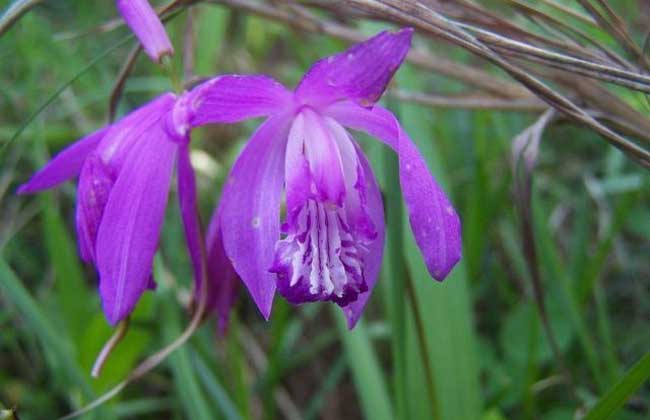
Bletilla striata has a wide range of medicinal and garden value. It is mainly used to astringe and stop bleeding, reduce swelling and promote tissue regeneration. Its flowers come in colors such as purple-red, white, blue, yellow and pink. It can be grown in pots for indoor viewing, and can also be used as a highlight in relatively shaded flower terraces, flower borders or a corner of the courtyard. It is mainly distributed in China, Japan and northern Myanmar.
The Growth Habits of Bletilla striata
Bletilla striata prefers a warm, shady and moist environment, such as in the wild under valley forests. It is slightly cold-tolerant and can be cultivated in the open field in the middle and lower reaches of the Yangtze River. It has strong shade tolerance and dislikes direct strong light; in summer, when high temperatures and drought occur, its leaves tend to turn yellow and wither. It is best suited to well-drained sandy loam rich in humus.
Bletilla striata often grows on relatively moist stone walls and among moss layers, often combined with shrubs, or grows at forest edges, in grass clumps, and in places with mountain springs. It also grows under evergreen broad-leaved forests, oak forests or coniferous forests at altitudes of 100-3200 m. It is cultivated in Beijing and Tianjin. The stones on which Bletilla striata grows are all sandstone types, so that Bletilla striata can absorb capillary water and thus firmly attach itself to them.
The Origin and Distribution of Bletilla striata
Bletilla striata is native to China and is widely distributed in the provinces of the Yangtze River basin. It is produced in southern Shaanxi, Lianyungang, Nantong, Nanjing, Jurong, Yixing, Liyang, Shanghai, southeastern Gansu, Jiangsu, Anhui, Zhejiang, Jiangxi, Fujian, Hubei, Hunan, Guangdong, Guangxi, Sichuan and Guizhou.
It is also distributed on the Korean Peninsula and in Japan.