What Are the Producing Areas of Honeysuckle? A Detailed Explanation of the Main Producing Regions
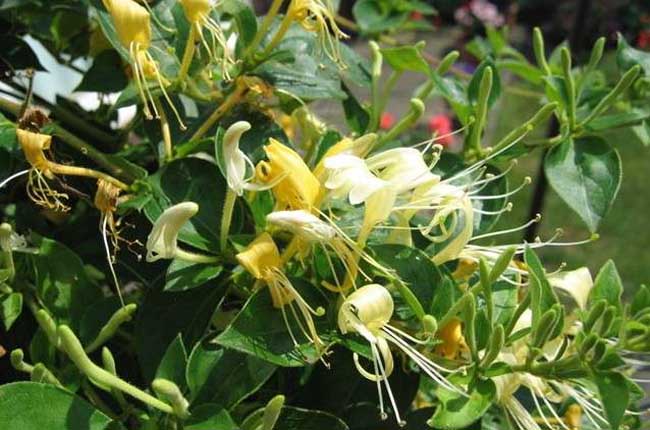
Since ancient times, honeysuckle has been praised as a fine medicine for clearing heat and detoxifying. It is sweet, cold in nature and aromatic; being sweet and cold, it clears heat without harming the stomach, and its aromatic, penetrating quality also dispels pathogenic factors. Honeysuckle can both disperse wind-heat and is good at clearing blood toxins; used for various heat-related diseases such as fever, rashes, skin eruptions, heat-toxin sores and abscesses, and sore, swollen throat, it has marked effects. But do you know what the producing areas of honeysuckle are?
Distribution of Honeysuckle Producing Areas
It is distributed in every province of China, and also in North Korea and Japan. In North America it has escaped cultivation and become a difficult-to-eradicate weed. Honeysuckle cultivation areas are mainly concentrated in Shandong, Shaanxi, Henan, Hebei, Hubei, Jiangxi, Guangdong and other places. China is rich in honeysuckle, and many provinces and regions plant it in both the north and the south. Among them, the three major producing areas in the north are the most famous, namely Fengqiu in Henan, Pingyi in Shandong and Julu in Hebei.
Fengqiu County, Xinxiang City, Henan Province
Fengqiu County lies in the heart of the Central Plains, known as Huangchi in ancient times, and is located in the northeastern part of Henan, facing the ancient capital Kaifeng across the river to the south. Open Fengqiu is creating a favorable investment atmosphere, with the tide of reform surging everywhere. In recent years, the Fengqiu honeysuckle producing area has been heading toward decline and can no longer be called a major producing area. The reason is that in recent years Fengqiu honeysuckle has suffered severe disease, dying off in patches, and even when replanted it is very difficult to keep alive. The provincial agricultural technology bureau sent technicians to solve the problem of honeysuckle plant death, tested the soil many times, and provided pesticide formulas, but the problem was never solved. The area under cultivation has shrunk year by year; last year's output was less than 200 tons, and this year it will be even less. Much of the goods sold out of Fengqiu are Hebei and Shandong goods purchased from Julu and Pingyi.
Pingyi County, Linyi City, Shandong Province
Pingyi County is located in the Yimeng Mountain area, a hilly region, where farmers make rational use of the land, planting honeysuckle on hillsides, roadsides and field ridges. According to the flower farmers, their total inventory now is no more than 500 tons. Every year, large, medium and small pharmaceutical factories such as Harbin Pharmaceutical, Jinling and Taihang come to the Pingyi honeysuckle producing area for large-scale purchases.
Julu County, Xingtai City, Hebei Province
Julu County is a poverty-stricken county in Hebei Province. Through vigorous reform, the county government has reduced the burden on farmers, making their lives better day by day. Although the Julu County honeysuckle producing area is not large, business is booming. Traders from Anguo, Bozhou, Shandong, Henan and other producing areas keep moving through the market. Even though prices are very unstable and have been rising all along, some traders still buy about 20 tons within two or three days. Generally, stock is still plentiful; the reason goods are abundant in the producing area is that holders are reluctant to sell, hoarding goods in hopes of high prices. Julu's current area under Japanese honeysuckle has reached 170,000 mu. It has already jumped to first place among the three major producing areas, and with centralized trading at the Julu market, it has formed the largest distribution center for northern honeysuckle, with growing prosperity day by day.
The Effects and Functions of Honeysuckle
Honeysuckle is cold in nature and sweet in taste, entering the lung, heart and stomach meridians. It has the effects of clearing heat and detoxifying, fighting inflammation, tonifying deficiency and treating wind. It mainly treats distension and fullness with diarrhea, warm-disease fever, heat-toxin sores and tumors and other conditions. It has a certain therapeutic effect on ailments such as dizziness and lightheadedness, dry mouth and thirst, excessive sweating and restlessness, enteritis, bacillary dysentery, measles, pneumonia, Japanese encephalitis, epidemic meningitis, acute mastitis, septicemia, appendicitis, skin infections, carbuncles, boils and sores, erysipelas, mumps, and suppurative tonsillitis.