Detailed Explanation of Pinellia Seed Treatment Methods and Key Technical Points
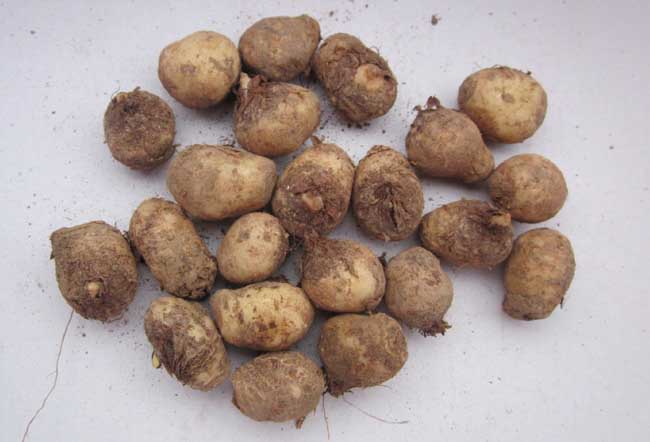
How should Pinellia seeds be treated before sowing? The Pinellia seed sowing method is usually used when seedlings are insufficient or for breeding. About ten days after flowering in autumn, when the spathe withers, the mature seeds are harvested and stored in moist sand ready for sowing. Sowing is done in two seasons, spring and autumn. In spring, trenches are opened on prepared beds at a row spacing of 10-13 cm, the seeds are evenly scattered into the trenches, covered with 10-13 cm of soil, and covered with rice straw to preserve moisture. When the seedlings reach 10 cm in height, they are transplanted.
Treating Pinellia seeds before sowing plays a major role in preventing and controlling pests and diseases, increasing the germination rate, and achieving uniform, complete and strong seedlings. It is the primary prerequisite for stable and high yields, and can generally increase yields by 5%-20%. The Pinellia seed treatment methods are introduced below:
First: before sowing, soak the seeds in a 3-fold dilution of 50% carbendazim plus 40% phosethyl-Al (significant yield increase).
Second: soak the seeds separately in 300-fold diluted vinegar, 50 mg/L potassium permanganate, and 5% plant ash solution (prevents root rot).
In addition, Pinellia also has a very extensive propagation method. Pinellia has a very strong reproductive capacity; on land where it has been planted, Pinellia will grow continuously year after year, so there is no need to sow it separately. With proper management, it can be harvested, but the yield is low.