Where is the origin and distribution of Solomon's seal? Introduction to the main producing areas
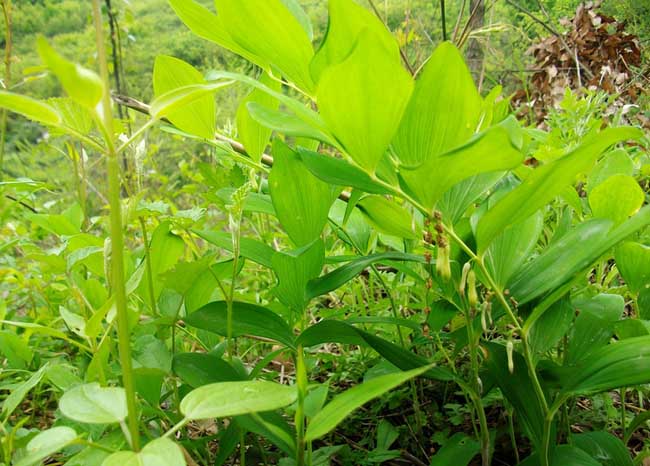
Solomon's seal (Polygonatum odoratum) is a perennial herbaceous plant of the Liliaceae family. The rhizome creeps horizontally, is fleshy and yellowish-white, and is densely covered with numerous fibrous roots; the leaf surface is green and the underside is gray. The flowers are axillary, usually in clusters of 1 to 3. It is native to southwestern China, but its wild distribution is very wide. It is cold-resistant and also shade-tolerant, prefers moist environments, and is suitable for growing in loose soil rich in humus.
The origin and distribution of Solomon's seal
1. Domestic distribution: Within China, it is mainly produced in Heilongjiang, Jilin, Liaoning, Hebei, Shanxi, Inner Mongolia, Gansu, Qinghai, Shandong, Henan, Hubei, Hunan, Anhui, Jiangxi, Jiangsu, and Taiwan, China. It grows under forests or on shady mountain slopes, at an altitude of 500-3000 m.
2. International distribution: Solomon's seal is also widely distributed in the temperate regions of Eurasia.
The growth habits of Solomon's seal
Solomon's seal is cold-resistant, shade-tolerant, and moisture-tolerant, and it avoids direct strong light and windy conditions. Wild Solomon's seal grows in cool, moist, well-drained sparse mountain forests or shrub thickets. The soil where it grows is deep and rich in sand and humus.