A detailed guide to Andrographis paniculata cultivation techniques, from sowing to field management
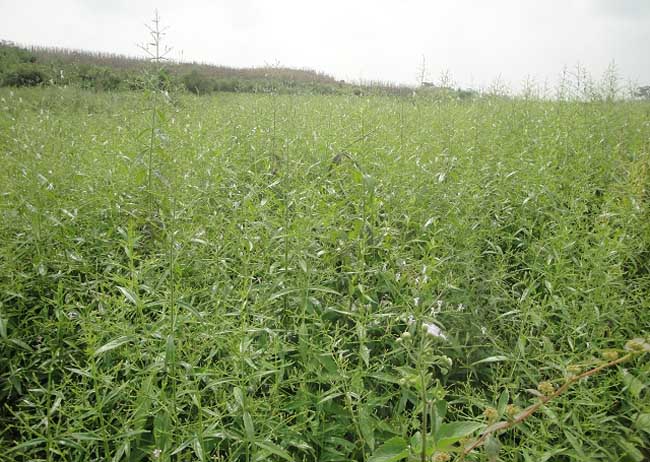
Andrographis paniculata, also known as lanhexian and yijianxi, is a plant of the Acanthaceae family. The whole herb is used as medicine, and it has effects such as clearing heat and detoxifying, reducing inflammation, and reducing swelling and relieving pain. It is commonly cultivated in Fujian, Guangdong, Hainan, Guangxi and Yunnan in China, and has also been introduced for cultivation in Jiangsu and Shaanxi. Let us now take a look at the cultivation techniques for Andrographis paniculata.
Seedling propagation
1. Seedbed construction: Because Andrographis paniculata seeds are tiny and the seedlings have poor emergence ability, the seedbed soil needs to be deep-plowed 2-3 times and the clods broken up, then beds are made. For every 30 sq m of seedbed, apply 200 kg of fully fermented and decomposed manure, mix the manure and soil thoroughly, then level the bed surface.
2. Sowing time: The sowing time for Andrographis paniculata is chosen around Qingming Festival. Before sowing, first soak the seeds in warm water at 40-45°C for 1-2 days (or treat them by mixing with fine sand to scratch the seed coat). When sowing, scoop out the seeds, mix them evenly with plant ash, broadcast them on the seedbed, then sprinkle a layer of fine soil about 3 mm thick, and immediately spray clear water with a sprayer so that the soil is thoroughly wet.
3. Seedbed management: After sowing, cover with agricultural film, and then cover the film with a layer of rice straw to keep warm and moist. The sowing rate is preferably 50-60 g per 30 sq m of seedbed (the seedlings raised can be used for transplanting to 1-2 mu of field). When 50%-70% of the seedbed has sprouted, promptly remove the film laid close to the ground and the rice straw. After emergence, combine with watering and apply dilute manure water once every 7 days to promote rapid seedling growth.
Field land preparation
1. Field selection: Before transplanting, choose mountain land or flat land with a soil pH between 5.6-7.4, flat terrain, sheltered from the wind and facing the sun, fertile and loose, and convenient for irrigation and drainage as the transplanting field.
2. Apply sufficient base fertilizer: Deep-plow the field, apply 2000 kg of decomposed pig and cattle manure and 20 kg of calcium magnesium phosphate fertilizer per mu as base fertilizer, then rake level and make beds 120-130 cm wide and 15-20 cm high, and dig drainage and irrigation ditches 30 cm deep around the field.
Transplanting and planting
1. Transplanting with soil: One month after sowing and raising seedlings, when the seedlings are 10 cm tall and have 4-5 pairs of true leaves, they can be transplanted to the planting field. One day before transplanting, first irrigate the nursery land thoroughly. Select robust seedlings from the seedbed and transplant them with soil. The planting row and plant spacing is about 20×20 cm, and 12,000 plants are planted per mu.
2. Seedling management: One week after transplanting the seedlings, apply a light manure water once to promote root establishment and growth.
Field management
1. Water management: Andrographis paniculata likes moisture and fears drought, and is sensitive to water. It should be kept moist often, but not too wet. The key point of seedling-stage management is to keep the bed surface moist. After transplanting, if there is no rain, generally water 1-2 times a day; after the seedlings recover, the ground still needs to be kept moist, watering once every 3-7 days.
2. Reasonable topdressing: The production of Andrographis paniculata requires a large amount of nitrogen fertilizer, so topdressing must be applied at the right time. Generally, topdressing is required 3 times. After the seedlings recover, apply 3000 kg of diluted human and animal manure or 10 kg of urea per mu to promote seedling growth. After that, apply topdressing once every 20-30 days, applying 15-20 kg of ammonium sulfate or other nitrogen fertilizer per mu. After the plants close the rows, fertilizer can be applied with irrigation water.
3. Topping and hilling: Andrographis paniculata is used as medicine as the whole herb. When the seedlings are about 30 cm tall, remove the top to promote the growth of lateral buds; at the same time, combine with intertillage to hill up soil and weed, promoting the growth of adventitious roots to prevent lodging. If seeds are to be kept, do not top during the full flowering stage, and at the same time remove the inflorescences that cannot set fruit and mature.
Pest and disease control
1. Damping-off, which occurs at the 1-2 pairs of true leaves stage. Soil moisture can be reduced, soil can be treated with 50% carbendazim, or the diseased area can be drenched with a 1000-fold solution.
2. Seedling blight occurs at the 2-3 pairs of true leaves stage. Temperature can be controlled, ventilation should be paid attention to, and seedbed management should be strengthened.
3. Black stem disease occurs at the adult plant stage. Field management can be strengthened, accumulated water should be drained promptly, continuous cropping should be avoided, and during the disease period, spray or drench the diseased area with a 1000-fold solution of 50% carbendazim. There are also damage from Phytophthora blight, viral diseases, and others.
4. Pests include cotton bollworm, mole cricket, and others.
Harvesting and processing
When Andrographis paniculata grows to the flowering and budding stage, it can be harvested. At harvest, use a sickle to cut at 2-3 nodes from the stem base and dry it in the sun.
Planting Andrographis paniculata can yield two harvests a year, and the annual dry yield per mu can reach 500-800 kg. The dried Andrographis paniculata after harvesting and drying is best when it is dry, green in color, has many leaves, and is free of impurities and mildew.