A Detailed Guide to the Artificial Cultivation Techniques of Cordyceps sinensis
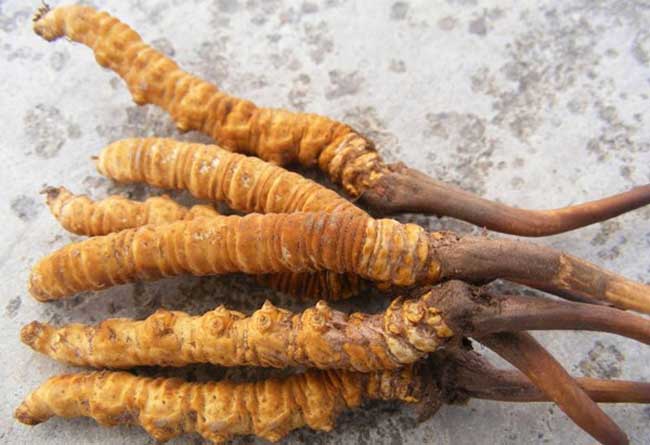
Is anyone artificially cultivating Cordyceps sinensis now? Is artificial cultivation of Cordyceps sinensis very difficult? Wild Cordyceps sinensis is truly very rare, and people are now researching how to artificially cultivate Cordyceps sinensis. In recent years, research on the artificial cultivation of Cordyceps sinensis has been carried out extensively and in depth both domestically and abroad, but under completely artificially controlled conditions, research work on infecting host larvae with Cordyceps fungus to produce the same fruiting bodies as natural Cordyceps has still not achieved a breakthrough. Let's take a look together below!
Can Cordyceps sinensis be artificially cultivated?
Since Cordyceps has such great medicinal value and is so scarce in nature, can it be artificially developed? The answer is yes. Currently, there are mainly the following three methods or approaches in the industry:
1. Artificially cultivating "Cordyceps sinensis": Theoretically speaking, a phenomenon like fungal infection of larvae is actually quite easy to achieve in the laboratory: simply simulate the living environment of the Cordyceps bat moth, and then directly inoculate specific fungal strains onto the larval body. However, this is limited to small-scale experiments. If scaled up for production, there will be many technical problems. A brief introduction follows below.
2. Cordyceps mycelium culture. This means directly isolating the Cordyceps fungal strain, culturing it artificially, obtaining the product, and then carrying out artificial development. In the market, it is also often called "artificial Cordyceps sinensis."
3. Seeking substitutes with the same medicinal functions as Cordyceps sinensis, such as Cordyceps militaris, also known as northern Cordyceps sinensis, which is also a precious medicinal fungus. The fruiting bodies of Cordyceps militaris produced mainly from rice and silkworm pupae are priced at around 600-800 yuan per kilogram, and Cordyceps militaris produced from silkworm pupae with the pupa and stroma as one integrated body is priced at a minimum of around 1000-1500 yuan per kilogram, much lower in price than Cordyceps.
The Main Techniques for Artificially Cultivating Cordyceps sinensis
1. Fungal strain: The fungal strain mostly comes from natural Cordyceps sinensis, obtained through conventional isolation and culture. According to research, during the occurrence of the sexual stage of Cordyceps fungus, a certain humidity is needed to meet the water requirements of complex physiological changes in the body, and there is a correlation between temperature and humidity. Under a certain humidity, if temperature changes slowly or remains relatively constant, it is unfavorable for the emergence of fruiting bodies. The occurrence of the sexual stage must go through low-temperature and variable-temperature treatment. The Sanming Fungal Research Institute of Fujian Province, after many years of subculturing, only grew small, incompletely developed young stromata. They believe that the generation of Cordyceps fungus must involve certain active substances from bat moth larvae in order to be completed.
2. Bat moth breeding technology: The Sichuan Institute of Chinese Materia Medica has conducted long-term research on artificial rearing of bat moths. Even under constant temperature conditions, it takes 230-570 days to complete one generation, let alone the need to properly handle the specific operations for each insect stage as well as feed and rearing environment. Such demanding conditions are impossible for ordinary people to meet.
3. Infection pathway: Cordyceps sinensis only grows fruiting bodies after Cordyceps fungal spores contact and infect larvae, causing death. According to observations, the infection rate is highest in host larvae at the 4th-5th instar. Mature larvae are rarely infected, and larvae below the 3rd instar are not infected. How to grasp the timing is also very difficult for ordinary people to master. Regarding the issue of infection, if the conditions for artificially breeding insects are relatively good, the insect body is too strong and has strong antibacterial ability, making infection difficult. If conditions are poor, the insect dies after fungal invasion. Either of these two situations will lead to failure.
4. Simulating the ecological environment of the place of origin: that is, the conditions of temperature, humidity, light, soil, and vegetation found on high mountains at an altitude of 3500-5000 m. This is also difficult for ordinary people to achieve. It is precisely for these reasons that ordinary people absolutely cannot grow Cordyceps sinensis. Claims about how much yield can be harvested in a very short time are all deceptive. Even so, why are there still some reports of successful artificial cultivation in some newspapers and magazines? In fact, what they describe is merely mycelium culture of Cordyceps sinensis or culture of species in the same genus as Cordyceps sinensis, not true Cordyceps sinensis. Recently, scientist Daiki Sato and others at the Forestry and Forest Products Research Institute of Japan announced that cultivating Cordyceps sinensis takes only one and a half months, but what he cultivated was actually only a kind of Cordyceps militaris, not true Cordyceps sinensis.
The above is the main content of some key points on artificially cultivating Cordyceps sinensis. Cordyceps sinensis is a traditionally precious medicinal material in China, distributed in Tibet, Qinghai, Sichuan, Gansu, Yunnan and other places, with special pharmacological effects and therapeutic efficacy. If artificial cultivation can be developed, it will be a major development!