How to treat root rot in Dendrobium orchids? Detailed prevention and control methods
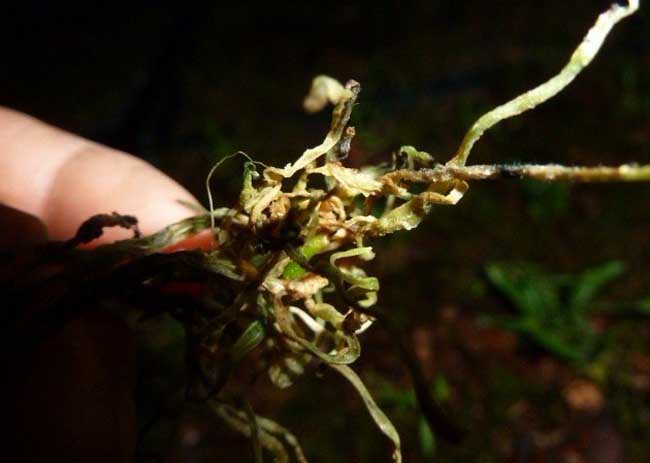
Root rot in Dendrobium orchids is also called nematode disease. Nematodes parasitize the roots of Dendrobium orchids, causing root rot, poor growth of aboveground leaves, leaf chlorosis and yellowing, and even plant wilting. Nematode damage creates numerous wounds and also causes infection by other soilborne pathogens, leading to plant disease and accelerating plant death.
Causes of root rot in Dendrobium orchids
Nematodes generally overwinter as eggs, larvae and adults in diseased residual tissues or cultivation substrate. They are generally transmitted through nematode-infested soil, irrigation water and human contact during handling. In early spring they invade through wounds caused during transplanting, and the disease is more severe under high temperature and high humidity.
Root rot in Dendrobium orchids mostly occurs in cultivation beds using moss as the growing substrate. Nematodes exist in a dormant state in dry moss plants. After watering, the moss absorbs water and swells, and the nematodes change from a dormant to an active state, then harm the Dendrobium orchids. On affected plants, white curved lines form on the stems and leaves, and the nematodes can be clearly seen under a microscope. The harm to Dendrobium orchids is relatively great.
Symptoms of root rot in Dendrobium orchids
If the leaves of a mature Dendrobium orchid lose color, appear greenish, shrunken and wilting, or the leaf tips scorch and wither, or new shoots are slow to emerge and growth is abnormally slow, then root rot may be occurring. During inspection, if ring-shaped or elongated ring-shaped brown spots appear on the rhizome, root tips or other parts, and the spots show obvious water-soaked rotting with slight white or brown attachments, then root rot in Dendrobium orchids can be confirmed. If the brown spots are squeezed firmly, water will spurt out.
Prevention and control methods for root rot in Dendrobium orchids
Because most fungicides can only be transported upward and do not have bidirectional transport, spraying chemicals is not effective for controlling root rot. Drenching the roots must be used to be effective. Commonly used methods are drenching roots with 600 times dilution of Dexon or 600 times dilution of triadimefon (Yunda Puling). Other agents can also include 600 times dilution of 70% Kameitong and 1000 times dilution of “Lvbang 98” for root drenching.
1. When using bark and moss plants as substrate, they must be soaked in water for 1 week before use.
2. For wild seedlings, the moss plants on the stems and roots should be carefully removed and burned.
3. Apply nematicides: such as aldicarb, ethoprophos, cadusafos, etc., and apply the dosage according to the instructions.