Detailed Explanation of White Peony Cultivation Techniques and Management Methods
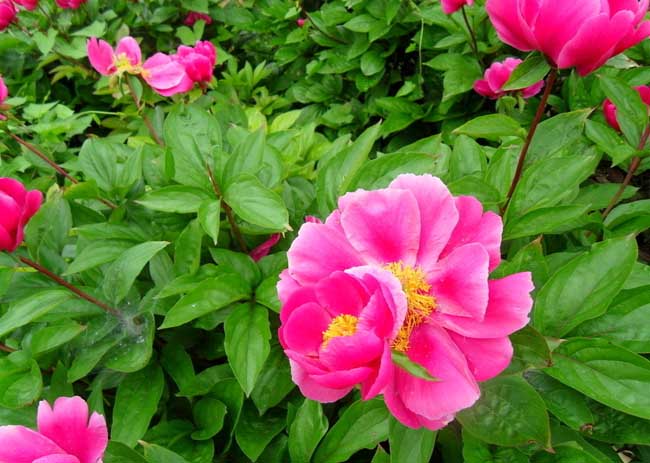
White peony is the dried root of Paeonia lactiflora, a plant in the Paeoniaceae family, also known as Chinese peony. It has the functions of nourishing blood and soothing the liver, and relieving acute pain. It is mainly produced in Zhejiang and Anhui. Sichuan, Guizhou, Shandong and other provinces. Below, the editor of Qiannong Network introduces the cultivation techniques of white peony for everyone!
Site Selection and Land Preparation
The land for planting peony must be plowed only after the white peony harvest 3-4 years later. Therefore, land preparation before planting must be done with intensive and meticulous cultivation. After the previous crop is harvested, choose a sunny day when the soil does not stick to the feet, plow 30-40 cm deep, till the soil clods fine and level, and apply organic fertilizer and 40-60 kg of ternary compound fertilizer.
Planting Techniques
Before planting, the peony sprout roots must be divided into two categories according to size and planted separately for future management. If the planting stock is large and management is good, the harvest can be lifted one year earlier. The planting time is generally around Cold Dew, and the earlier the better, at the latest no later than Frost's Descent. If too late, on the one hand, because the stored peony sprouts have already developed new roots, they are easily broken during planting; on the other hand, after planting, the temperature gradually drops, rooting is poor, affecting germination and growth the following year. When planting, open holes with a row spacing of 40-45 cm, a plant spacing of about 30 cm, and a hole depth of 16-20 cm. About 3500-4000 plants can be planted per mu. After opening the holes, place 1-2 buds in each hole, retain 2-3 main roots, and the roots should preferably be planted obliquely with branching, with the buds facing upward, and cover with soil level with the bed. It is best for the buds to be about 5 cm underground. The soil covering operation should be meticulous, and the soil must be fine and crumbly; soil clods must not be used for covering. Buds covered with soil clods cannot closely combine with the soil, ventilation is strong, and the buds are prone to drought and freezing damage, which will delay germination or even prevent germination.
Field Management
1. Intertillage and weeding: Peony is most afraid of weed infestation, especially in the second year after planting. Because the row and plant spacing is wide and each plant sends out few shoots, weeds are likely to grow. If not weeded in time, it will hinder the growth of peony. Therefore, after planting, when the seedlings sprout and emerge from the soil, intertillage and weeding should be carried out, and thereafter about once every one month, and the requirement of loose soil and no weeds must be achieved. Each intertillage can only shallowly loosen the surface soil 3-5 cm to avoid damaging the roots, and care should be taken not to break the sprouts. If broken, they will no longer sprout that year, affecting growth. If planting on a large scale, it is recommended to use herbicides.
2. Topdressing: After peony is planted that year, topdressing is not necessary. In the second and third years, topdress 4 times. The first time is after intertillage and weeding in March, the second and third times are from May to July, and the fourth time is in November-December. In the spring of the fourth year, topdressing can be applied 1-2 times according to the growth of the peony. Each topdressing should be applied in holes or shallow ring trenches opened beside the plants, and covered with soil after application to prevent fertilizer loss. The recommended topdressing amount is 15-20 kg of ternary compound fertilizer and bio-organic fertilizer.
3. Irrigation and drainage: Peony is relatively drought-tolerant, but if there is long-lasting clear weather and excessive dryness, it is unfavorable for growth, so irrigation is still necessary during drought. Peony is also afraid of waterlogging and often suffers from diseases caused by water accumulation, so more attention should be paid to drainage.
4. Bud removal: When buds appear in mid-April, choose a sunny day to remove all the flower buds, so as to concentrate nutrients, promote root growth, and improve yield and quality. Bud removal should not be too late.
5. Intercropping: Within 1-2 years after planting, the plants grow slowly and the clumps are small. To make full use of the land, vegetables, beans, and sesame crops can be intercropped.
Disease Control
1. White peony rust
This is a relatively threatening disease in white peony production. It occurs after flowering in early May, is severe from July to August, and continues until the aboveground part dies. It is prone to occur under conditions of intermittent sunshine and rain, warm and humid weather, or low-lying terrain that easily accumulates water.
[Control methods] At peony harvest, collect and burn diseased leaves and residual branches to reduce overwintering inoculum sources. Choose high, dry terrain with good drainage for planting on raised beds. For chemical control, triadimefon, Nongkang 120, etc. can be used.
2. Gray mold
The pathogen mainly overwinters in the soil as sclerotia left with diseased leaves. It occurs after flowering in May, is relatively severe from June to July, and continues to damage the aboveground part until it dies. It is prone to occur under conditions of continuous rainy weather or heavy dew.
[Control methods] Crop rotation should be implemented in peony fields, disease-free seed buds should be selected for planting, timely drainage should be carried out after rain, and the ventilation and light transmittance of the field should be enhanced during normal times. For chemical control, polyoxin, iprodione, Sumilex, etc. can be selected.
3. Root rot
It mainly damages the roots of peony. The roots of affected plants often show unilateral water-soaked rot.
[Control methods] Soak the seeds with carbendazim when planting. The main point is to open ditches for drainage and reduce field humidity. For chemical control, hymexazol, thiram, etc. can be selected.
Pest Control
1. White grubs
Damage is severe from May to September. The larvae gnaw on the roots of white peony, causing many mottled holes on the root surface of the peony, affecting yield and quality.
[Control methods] Drench with phoxim or chlorpyrifos.
2. Black cutworm: Damage is generally severe from April to May.
Harvesting and Processing
Peony is used medicinally as a root. When propagated by seed, it is harvested after 4-5 years; when planted with peony heads, it is harvested after 3-4 years. It is dug in September, the rhizomes and fibrous roots are removed, washed clean, the coarse bark scraped off, briefly boiled in boiling water to soften the peony root, then removed and sun-dried. The general dry yield per mu is 250 kg.